

Renovation journal
Restoring an outdoor space after the builders leave
An extension or external refurbishment can leave the garden and access route looking like the last unfinished room. Packaging, spare slabs, dusty furniture and muddy thresholds may all be present, but they do not form one simple pressure-washing task. Clearing the area, cleaning surfaces and repairing damage need a sensible order.
- Sort retained materials and collection before washing
- Inspect surfaces, drainage and unfinished details
- Treat repair and landscaping as separate decisions

Start with a joint inspection while the contractor can still identify leftover materials and explain unfinished work. This guide focuses on outdoor handover after building work. It separates retained items from waste, ordinary dirt from bonded residue and cleaning from landscaping or repair, without assuming that every exterior surface should be washed under pressure.
Walk the whole access route before the patio
Follow the route used by trades and deliveries, from entrance to work area. Check gates, steps, paths and thresholds as well as the main patio. Dust, grit and offcuts often concentrate where materials were stored or turned, while damage can remain hidden beneath temporary protection.
Record loose paving, broken edging, exposed services and unfinished installation for the contractor. Cleaning should not conceal a defect or turn an unsafe route into an apparently completed handover. Ask which areas are released for ordinary use and which remain part of the work site.
Photograph surfaces before collection equipment or new furniture arrives. Keep an overview and close details, with notes on the likely cause. This gives the next person a useful starting point without assuming that every mark is removable dirt or every leftover item is waste.
Choose what stays before arranging what leaves
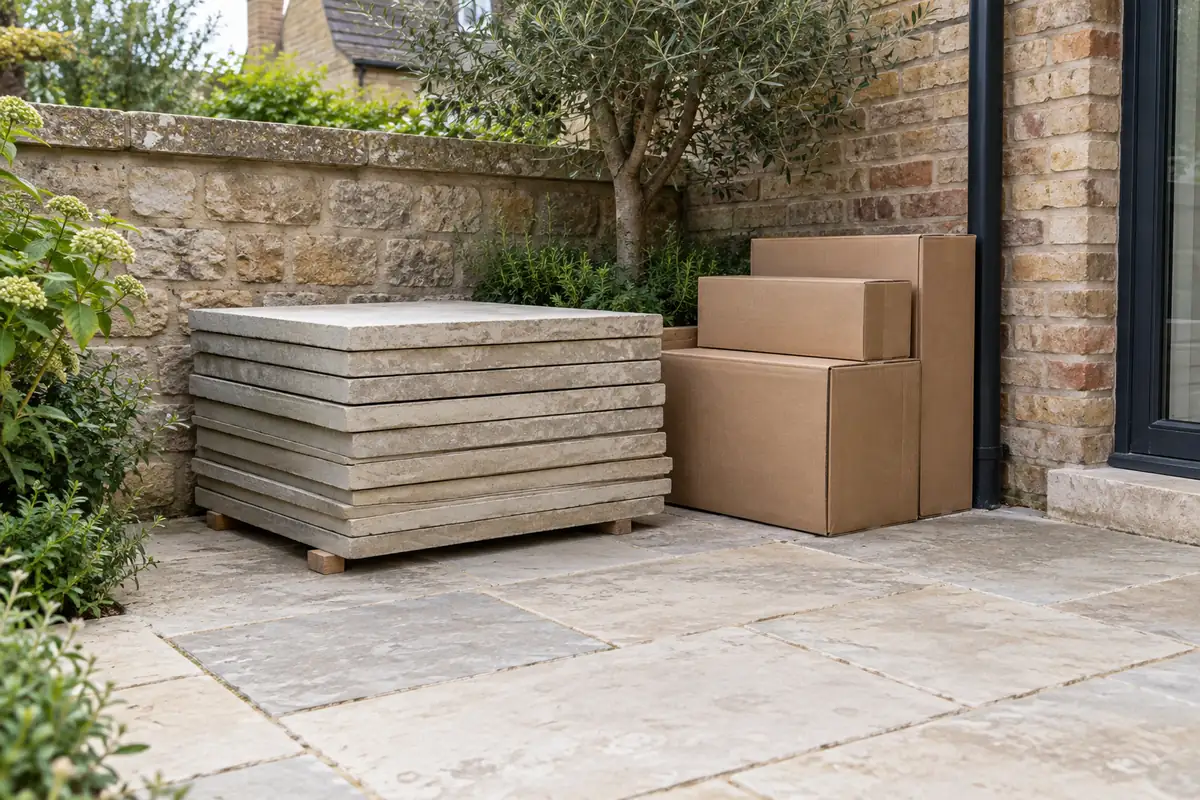
Separate matching paving, tiles, bricks and labelled finishes that the owner wants to retain. Store them somewhere suitable and accessible, with the relevant product information. Leftover materials can be valuable for later repairs, but they should not remain scattered across the cleaning route indefinitely.
Identify packaging, offcuts, broken components and other material for collection. Ask the contractor about anything uncertain, including old coatings or unfamiliar sheets. Do not break an unknown item down simply to fit it into a bag. The collection arrangement needs an accurate material description, not just a photograph of a mixed pile.
For a separate collection, discuss building-waste removal and confirm access, quantity and exclusions. Keep that appointment ahead of detailed washing where possible, so that heavy movement does not immediately track dirt over newly cleaned paving.
- Retain matching paving and tiles in a labelled place.
- Keep manuals and coating information away from rubbish.
- Ask the contractor to identify unfamiliar leftover materials.
- Agree collection access before detailed surface cleaning.
Remove loose residue without sending it elsewhere
After bulky items have gone, inspect the remaining dust, fragments and dirt. Choose a controlled collection method appropriate to the assessed material and surface. Vigorous sweeping of construction dust can raise particles, and washing loose debris towards a drain merely moves the problem out of view.
Keep sharp pieces separate from ordinary loose dirt and avoid dragging them beneath brushes or equipment. Check around planter bases, gate tracks and the edge of stored materials. Outdoor grit can be carried back into the property, so include the threshold and footwear route in the plan.
If the same fine material has entered the home, the construction-dust guide explains the indoor collection limits. Unknown or hazardous contamination is not an ordinary garden-tidying task; ask the responsible contractor to identify and address it before a normal cleaning sequence proceeds.
Decide whether the hard surface needs washing at all
Inspect the paving or other surface after loose residue has been addressed. A small local mark may call for assessment rather than washing the entire area. New mortar, sealant, grout and installed finishes can also impose restrictions on water and mechanical cleaning.
Pressure washing is not a universal cure for paint, cement deposits or weathered surfaces. A jet can affect joints, weak material and coatings. Ask the installer about the exact surface and current condition, then consider the least disruptive compatible method instead of starting with the most powerful equipment available.
The pressure-washing suitability guide covers these decisions in more detail. This handover stage should establish whether washing is appropriate, which areas are excluded and whether a test or specialist assessment is needed before a wider treatment is agreed.
Plan where washing water will go
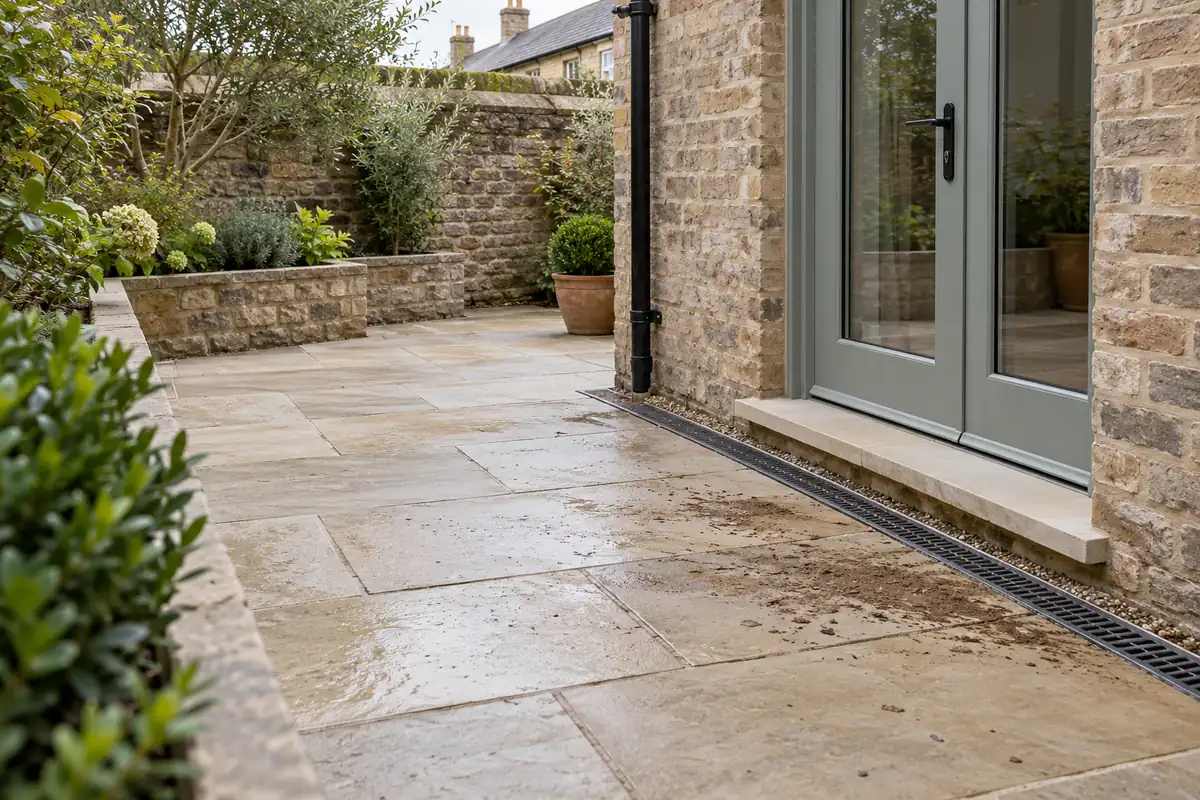
Look at falls, channels, thresholds and nearby drains before introducing water. A surface that slopes towards a doorway or a neighbour’s property needs a different plan from an open paved area. Check how equipment and collected material will be managed without obstructing the route.
For business cleaning activities in England, Environment Agency guidance requires pollution prevention and appropriate handling of contaminated water. Do not assume that a surface-water drain is a disposal route for detergent or construction slurry. The drainage and collection arrangement should be established before washing, with relevant advice or permissions where needed.
Even a water-only process can carry material removed from the surface. Calling a product biodegradable does not settle where runoff may go. Ask the provider how the actual residue and water will be managed, and keep that answer part of the scope rather than an afterthought once the area is already wet.
Treat furniture, fixtures and planting as separate items
Garden furniture can combine timber, coatings, metal, glass and fabric within one piece. Follow its care information rather than sending the same jet across every component. Inspect for construction deposits and existing damage before applying a cleaning product or moving a heavy item onto finished paving.
For exterior lighting, cameras, sockets and other fittings, respect the manufacturer’s limits and keep electrical work with the responsible person. Do not spray unfamiliar fittings to remove a visible dust line. Reachable exterior cleaning is distinct from dismantling equipment or checking its installation.
Planting and soil affected by building work need a landscaping decision, not a promise that cleaning will restore them. Record compacted areas, broken edging and damage for discussion with the contractor or appropriate gardener. Do not assume the cleaning provider supplies garden restoration simply because the original work took place outdoors.

Complete doors and windows with material care
Exterior frames and glass may carry dust, handling marks and paint or adhesive deposits. Identify coatings and protection before treatment. A blade, strong solvent or abrasive pad can damage a surface that looks robust from a distance, particularly around seals and decorative finishes.
The guide to windows after renovation distinguishes panes, frames, sills and tracks. Confirm access to each face and any high-level glazing rather than improvising a reach from garden furniture or a stack of leftover slabs.
For a separate visit, discuss the external window-cleaning requirements with photographs of the whole opening and surrounding access. Coordinate this with any appropriate exterior washing so that dirty splash does not undo a finished detail clean on the same elevation.
Inspect the outdoor handover when surfaces are dry
A wet surface can hide pale films, altered sheen and uneven colour. Review the area after it has dried sufficiently for a fair inspection. Distinguish remaining residue from damage, weathering and installation variations before asking for another stronger wash.
Record any joints, coatings or planting requiring specialist follow-up. Cleaning is not repointing, sealing, resurfacing or landscaping, and those tasks should not be quietly added to a completion promise. If a sealer is proposed later, obtain the surface and product guidance rather than assuming every cleaned patio should be sealed immediately.
The final handover should leave a clear access route, identified retained materials and understood next steps. Use the property handover checklist for adjoining indoor areas. Where appropriate washing remains part of the agreed exterior scope, the pressure washing service can be discussed against the actual surface condition and runoff plan.
Questions about this guide
Should I pressure-wash straight after the builders leave?
Not automatically. Clear and identify material first, check the installation stage and establish whether the surface and joints are suitable for washing.
Does outdoor cleaning include garden repair?
Do not assume so. Planting, soil restoration, repairs and landscaping need separate agreement with an appropriate provider.
Can I wash building residue into the nearest drain?
Do not treat a drain as a default disposal route. Establish the drainage type and an appropriate plan for the actual residue and wash water before work begins.