

A cleaning routine that fits the working day
Office Cleaning London
An office cleaning brief should explain how the workplace is used. A small shared studio, a client-facing reception and an office with shifts have different priorities. Define the areas, tasks and access arrangements before choosing a frequency.
- Agree desks, shared areas, kitchens and washrooms separately
- Set access, security and confidentiality boundaries
- Match task frequency to use rather than a generic package
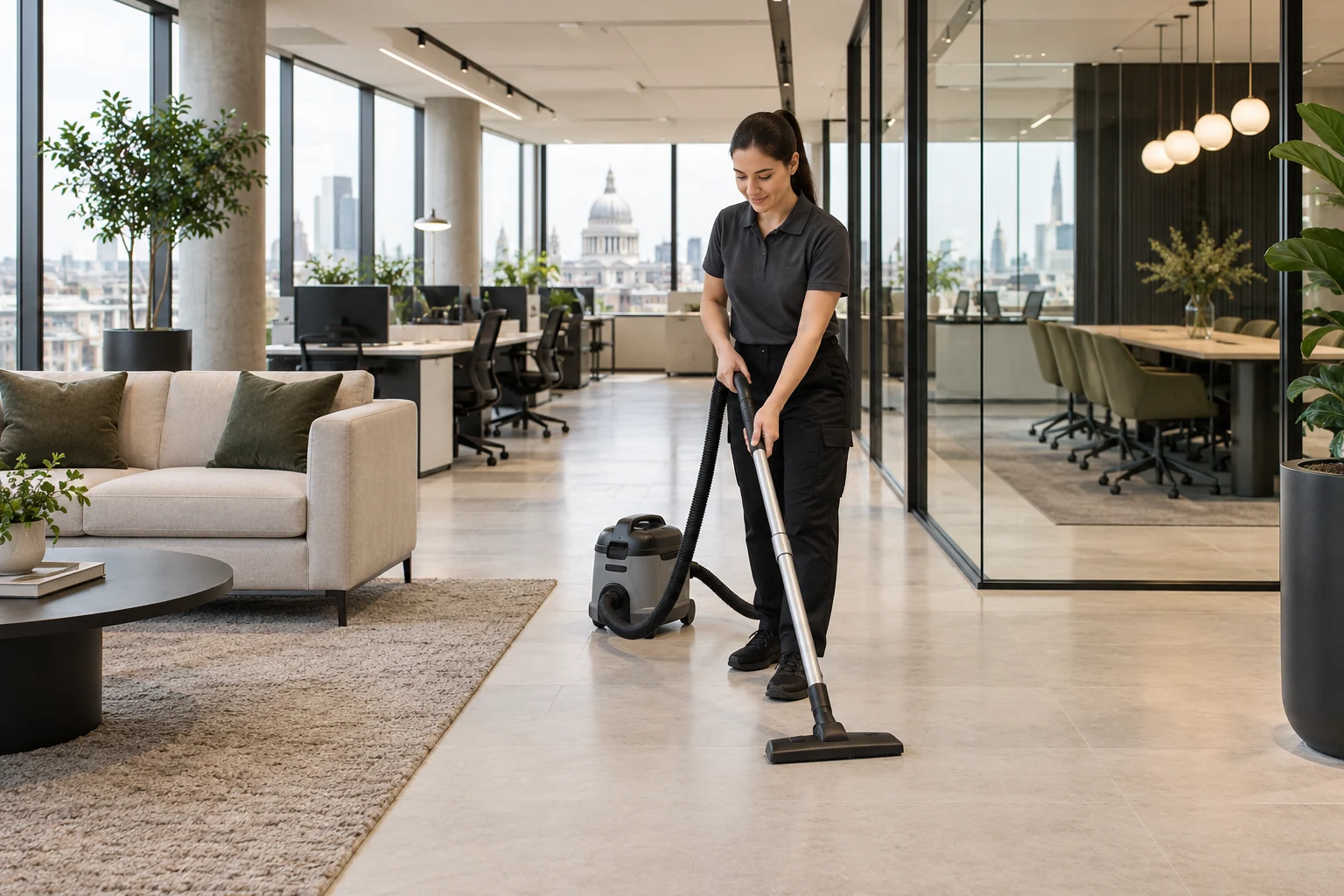
ABC Cleaning London provides office cleaning across London and the M25 area. Daily, weekly and one-off requirements can be discussed directly. The specification below helps separate ordinary workplace cleaning from post-refurbishment work, specialist equipment cleaning and responsibilities that remain with the occupier.
Begin with occupancy
Build the schedule around how the office works.
Tell us the floor area, approximate number of people using it and the pattern of attendance. Hybrid occupancy may leave some desks unused while kitchens and meeting rooms remain busy. Include visitors, shifts and any customer-facing spaces. Those details help distinguish areas that need frequent attention from tasks that can be planned less often.
An effective brief also explains which rooms can be accessed during working hours. A meeting room in use throughout the morning needs a different arrangement from an empty suite after closing. Discuss noise-sensitive periods, secure rooms and any areas shared with another tenant before a regular schedule is agreed.
Workstations and meeting rooms
Clean the surfaces without handling the business.
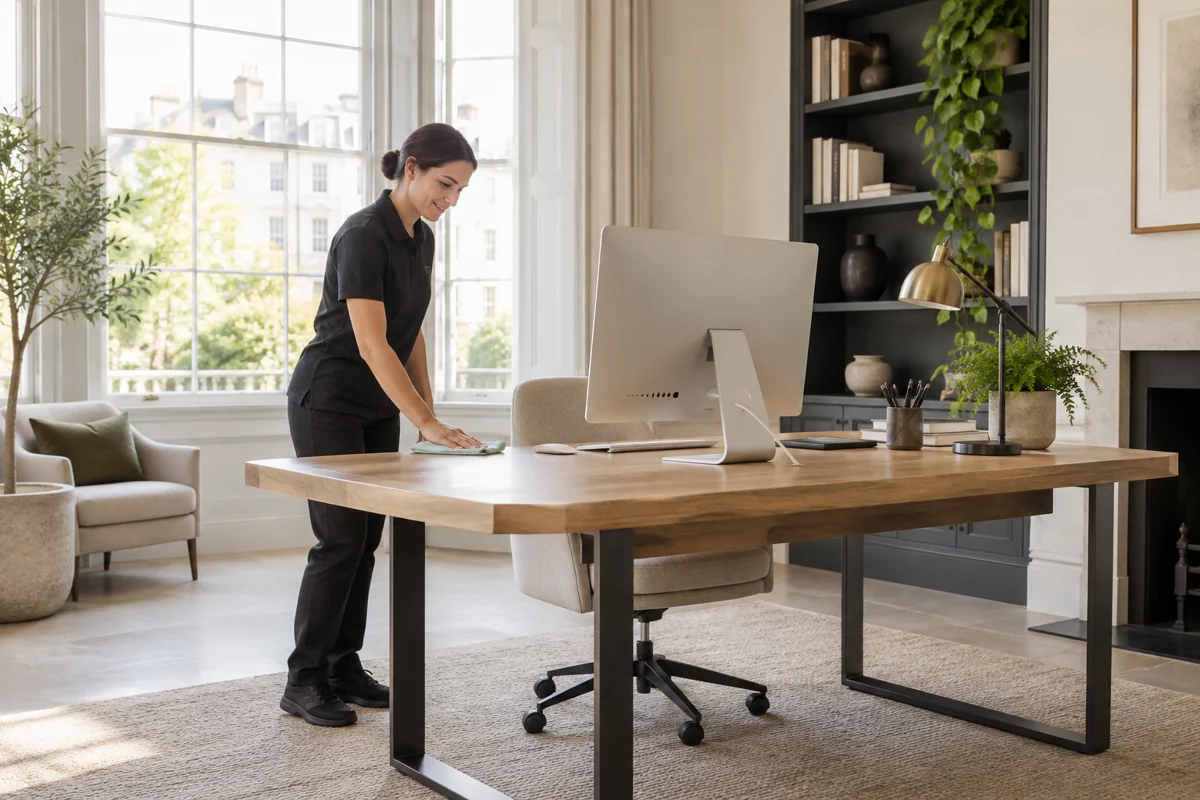
Accessible desks, meeting tables, chair surfaces and reachable ledges can be specified for dusting or wiping as appropriate. Employees should clear working surfaces of papers, cables and personal items where cleaning is expected. The cleaner should not have to decide whether a document is confidential or move a stack of unfinished work to reach the desk.
Computers, monitors, servers and specialist devices are not ordinary furniture. Agree any equipment cleaning with the responsible person, following manufacturer instructions. Opening equipment, disconnecting cables, accessing files and handling technical faults are outside a general cleaning brief. A clear-desk policy, if used by the office, helps define what can be cleaned without ambiguity.
Shared kitchen spaces
Separate routine surfaces from appliance interiors.
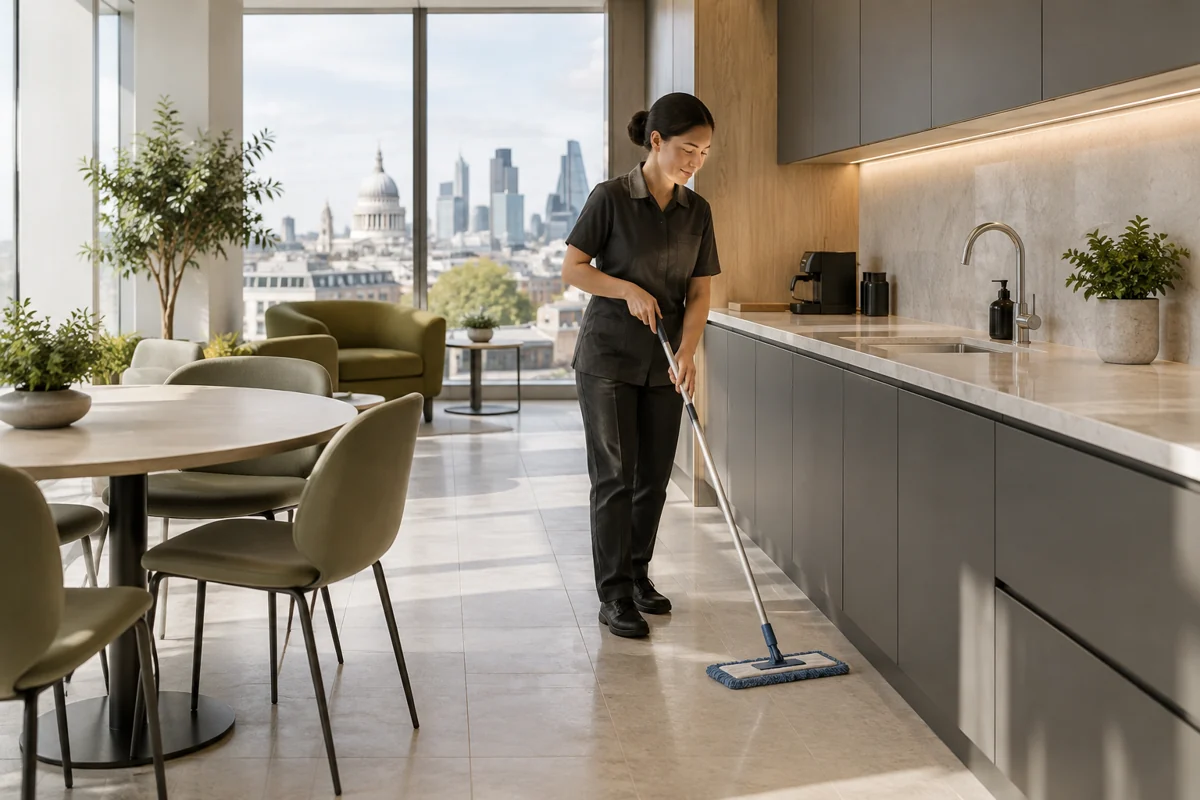
Shared sinks, taps, worktops, cupboard fronts and accessible tables can be included in a workplace routine. Their condition depends on use and what staff are expected to do between visits. State who handles dishes, food left out and daily spillages rather than allowing those responsibilities to remain assumed.
Fridges, microwaves and other appliance interiors need a separate frequency and clear permission. Food disposal should follow the office’s instructions, not a cleaner’s guess about ownership or expiry. Catering equipment and professional food-preparation areas may need a different specification. Catering operations should confirm their specific cleaning and compliance requirements with an appropriately qualified provider.
A defined washroom routine
Cleaning and replenishment are two separate decisions.
Specify toilets, basins, taps, mirrors, dispensers and floors in accessible staff washrooms. Discuss cleaning products and any surface restrictions. A visibly clean room and a particular disinfection claim are different things; methods and products should be suitable for the intended use rather than described with a blanket germ-removal promise.
Consumables require their own arrangement. Confirm who supplies soap, paper and bin liners, where stock is kept and who reports shortages. Plumbing repairs, blocked drains and damaged dispensers remain maintenance matters. A cleaner can report a problem, but should not be expected to repair it during an ordinary visit.
- Identify restricted or single-occupancy washrooms.
- State whether replenishment is included.
- Give a clear route for reporting leaks and damaged fittings.
Carpet and hard-floor care
Use a method that respects the finish.
Routine vacuuming and suitable hard-floor cleaning can be planned around footfall. Entry areas may collect more grit than quiet rooms, while kitchen floors have different contamination. Identify the floor materials and any specialist coating before products or machinery are chosen. New flooring should come with supplier care instructions.
Carpet extraction, stain treatment, polishing, stripping and re-coating are separate from an ordinary maintenance clean unless expressly included. HSE points out that wet floors and trailing equipment can introduce slip or trip hazards during cleaning. Discuss timing and controlled access so staff do not walk through the working area while a floor remains wet.
A task-led specification
Not every area needs the same interval.
A useful schedule names each task and its intended frequency. Busy washrooms may need more attention than high shelves. Shared touch surfaces may be prioritised over unused storage, while periodic tasks can be planned for quieter times. Review the specification when occupancy changes rather than simply adding hours to an old routine.
Agree each task and its frequency with the person responsible for the premises. Review the schedule when occupancy changes or tasks regularly exceed the time allowed.
| Area | Planning question | Useful detail |
|---|---|---|
| Desks and meeting rooms | When are surfaces clear? | Occupancy and confidentiality rules |
| Kitchen | What do staff clean themselves? | Dishes, food and appliance boundaries |
| Washrooms | How heavily are they used? | Task frequency and consumable supply |
| Floors | When can areas be restricted? | Material and drying requirements |
| Periodic detail | What is outside the routine? | Separate scope and agreed interval |
Access and responsibility
A regular visit needs a clear handover.
Agree an authorised contact, building entry procedure, key or pass arrangements and the rooms that may be entered. Alarm instructions and security information should be supplied through a suitable private channel. Do not include passwords or sensitive access details in a public enquiry form or an unsecured photograph.
Explain lone-working restrictions, visitor sign-in, lift access and closing procedures. Decide who checks windows, doors and lights if those checks are part of the arrangement. Security, reception and facilities-management duties should not be implied by a cleaning booking. A short written specification reduces uncertainty for everyone using the office.
Bins are not a clearance service
Define where ordinary office waste goes.
Routine bin emptying should state the agreed collection points and any separation rules used by the building. Paper, general waste and other streams need the containers and instructions provided by the occupier. Confidential shredding, batteries, electronics and clinical waste require specific arrangements rather than inclusion in an ordinary bin round.
Large unwanted desks, storage units and refurbishment debris belong in a separate commercial waste collection. If useful furniture is being transferred to another location, discuss office removals. Neither task should be left to a cleaner without an agreed handling and transport plan.
After the contractors leave
A fit-out clean is a different starting condition.
Plaster dust in cable trays, residue around new glazing and dust inside empty units cannot be treated as a normal weekly routine. Identify whether the premises need a post-build clean before regular cleaning begins. Contractors should complete dusty work and clear tools and waste first, so the maintenance schedule starts from an agreed condition.
Use our after builders specification to plan that handover. External glazing and high partitions may also need separate window cleaning. Keep those scopes distinct so a routine office-cleaning price is not interpreted as covering installation residue or specialist access.
Our office fit-out handover guide sets out how to coordinate contractors, furniture deliveries, IT and the final detail pass.

Estimate the work, then agree the visits
A reliable office quote needs more than a floor area.
Share the room layout, occupancy, current condition, required tasks and access hours. Include periodic requirements and whether materials, equipment and consumables are supplied under the arrangement. The planned time should be sufficient for the agreed work; an attractive hourly figure alone says little about what will be completed.
Office cleaning is quoted individually. Confirm the visit frequency, task list, equipment and consumable arrangements, minimum visits and exclusions. Read the quote guidance, then call 020 3404 5120 with the workplace postcode and access hours.
Questions about the visit
Can the clean take place outside office hours?
Discuss the preferred hours and building access rules when requesting a quote. Confirm appointment availability for your premises before relying on an overnight or weekend visit.
Are computers and screens included?
Not automatically. Equipment needs an agreed scope and appropriate manufacturer guidance. Disconnecting equipment, opening devices and handling data are not ordinary cleaning tasks.
Who supplies soap and paper?
Confirm that before the service starts. Replenishment, stock supply and reporting shortages are separate responsibilities that should be written into the office specification.
Can a weekly visit remove refurbishment dust?
Heavy construction residue requires its own post-build assessment. A regular maintenance visit should not be assumed to include detailed cleaning after contractors have worked.
How is the cleaning schedule reviewed?
Use changes in occupancy, room use and observed task requirements to review it. If a new area or periodic task is added, confirm the time allowance and price rather than relying on an informal request.
Sources and further guidance
Put the workplace routine in writing.
Bring the area schedule, occupancy hours and access requirements to the conversation. Agree responsibilities for equipment, sensitive spaces and reporting before the service starts.