

Make the move legible before moving day
Removals London
A move is easier to organise when the brief shows what is travelling, where it is going and the route at both ends. A room count alone cannot explain a heavy table, a narrow staircase or a lift that must be booked.
- Prepare an item list and photographs of bulky furniture
- Show access at the collection and destination addresses
- Agree packing, dismantling and placement before the move

ABC Cleaning London lists home and office removals across London and the M25 area. Discuss the inventory, packing requirements and access before choosing a date. Transport, packing and any additional handling need explicit confirmation; no service should be inferred simply from the word removals.
What is actually moving?
Start with the awkward items, then count the boxes.
List the largest furniture first, with approximate dimensions and photographs. Include beds, wardrobes, desks, dining tables and appliances, noting whether they are assembled. State the number and likely size of boxes once packing is sufficiently advanced. A volume estimate based on a final inventory is more useful than an early guess about a small flat.
Tell us which items are fragile, unusually heavy or difficult to grip. Pianos, safes, large stone tops and specialist machinery need capability confirmation and may require another provider. Do not assume a standard moving crew can handle them. The quote should identify any item excluded or awaiting further assessment.
Two addresses, two access plans
The destination can be the harder half of the move.
Provide the full collection and delivery addresses, the floors involved and whether lifts can be used. Measure narrow doors and note tight landings. A sofa that fits through one entrance may not pass through another, so destination photographs matter as much as photographs of the property being left.
Check lift dimensions and booking requirements with the building manager. Explain parking, loading windows, courtyards and the distance from a vehicle to the entrance. Access permissions should be arranged before the move, not left to the crew to negotiate on arrival. Shared entrances and emergency routes must remain usable during the operation.
Contents and protection
Agree who packs, and what the packing includes.
Packing support is a separate scope to confirm. Specify which rooms or objects need packing, who provides materials and whether unpacking is required at the destination. Fragile items need an appropriate packing plan, while paperwork, jewellery and essential medication are best managed directly by the owner rather than placed anonymously in a general load.
If packing yourself, use manageable containers suited to the contents. Label each box with its destination room and identify fragile contents clearly. Avoid combining heavy books into oversized boxes or leaving loose sharp objects inside unmarked containers. Keep an inventory of valuable items and discuss how any relevant terms apply before handing them over.
- Keep keys, essential documents and chargers accessible.
- Label boxes for the destination room, not only the current room.
- Flag items that must remain upright or need special handling.
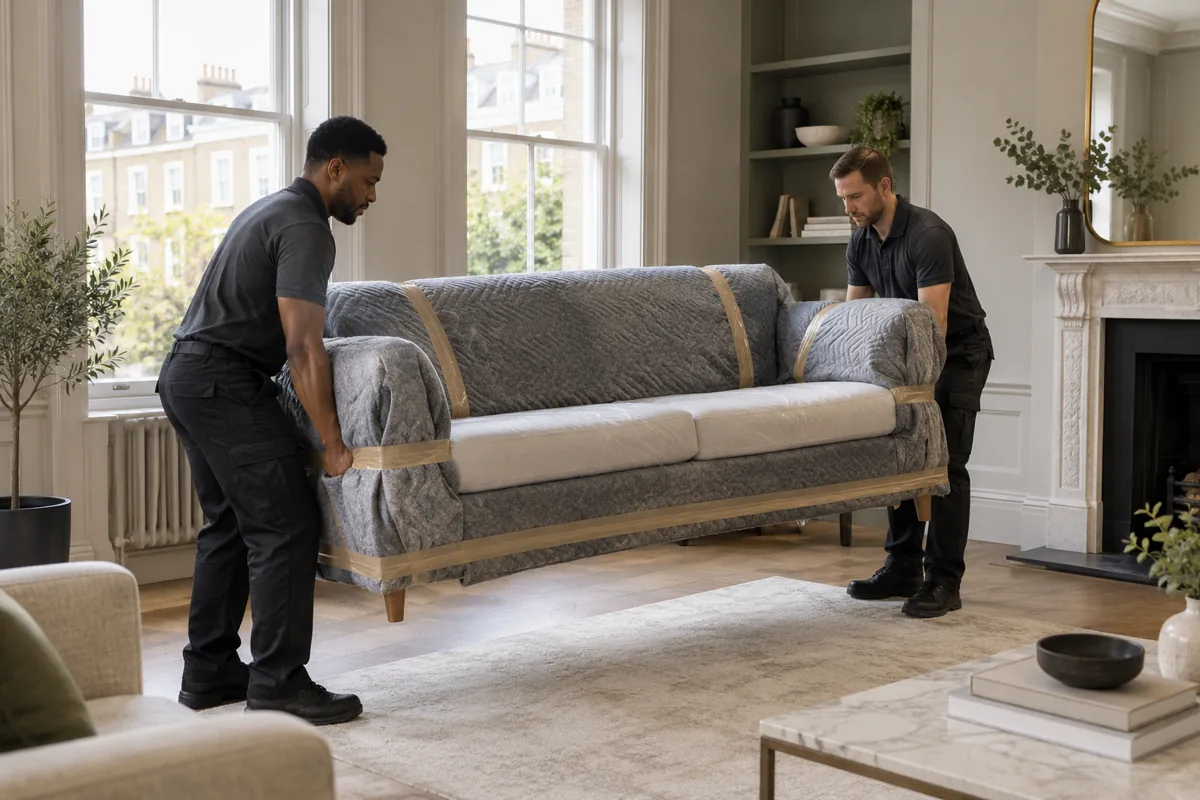
Dismantling is a distinct task
Make furniture decisions before the vehicle arrives.
Some beds and wardrobes need dismantling to pass through the route. Confirm whether that work is included and whether reassembly is required. Supply instructions where available and identify damaged or previously repaired pieces. Flat-pack furniture that has been moved several times may not tolerate another dismantling without risk.
Do not assume the crew can remove a door, detach a fitted unit or modify a building. Fixed cabinetry, wall-mounted furniture and electrical connections require the appropriate trade or prior preparation. If an item cannot pass through the agreed route, a different handling plan may be necessary; it should not be improvised at the cost of property damage.
| Item or task | Decision before moving day |
|---|---|
| Large assembled furniture | Measurements and route feasibility |
| Bed or flat-pack unit | Dismantling and reassembly scope |
| Appliance | Who disconnects and prepares it |
| Specialist heavy item | Capability and handling assessment |
| Fragile or valuable object | Packing, inventory and applicable terms |

A household move
Keep one small set of essentials outside the load.
Prepare a clearly separate essentials bag for the first evening: keys, documents, medicines, basic toiletries and a change of clothes. The removals inventory should distinguish things travelling with you from things being loaded. Tell everyone in the household which room or corner is reserved for items that must stay behind.
Pets and children need arrangements away from carrying routes while the move is in progress. Explain any accessibility needs and who will be available to answer questions at each address. A person authorised to make decisions should be reachable if an item is damaged, does not fit or differs from the agreed inventory.

Workplace relocation
Move the furniture without losing track of the office.
An office move needs a destination plan that shows where desks, chairs and storage should go. Label items by their destination area or workstation code. Keep asset records and confirm which equipment is leased or owned. If departments are moving in stages, make the loading sequence reflect the agreed operational plan.
IT disconnection, server handling, data security and network recommissioning are specialist responsibilities. A removals booking does not imply technical support. Agree a handover with the office’s IT provider and authorised contact. After the move, workplace cleaning can be discussed separately for the premises being occupied or vacated.
Moving around building work
Do not move belongings into unfinished dust.
If the destination has just been refurbished, check that the final cleaning and builder’s handover are complete before delivery. Fresh dust can settle onto boxes and soft furnishings, and wet finishes can be marked by moving equipment. Ask the installer to confirm when new floors are ready for traffic and furniture.
Arrange after builders cleaning before the move where possible, leaving enough time for the property to be usable. If the completion date is uncertain, ask whether storage, temporary holding or repeat deliveries can be arranged, and confirm the practical options and applicable terms before booking transport.
Use the post-renovation property checklist to inspect the destination before boxes and furniture return.
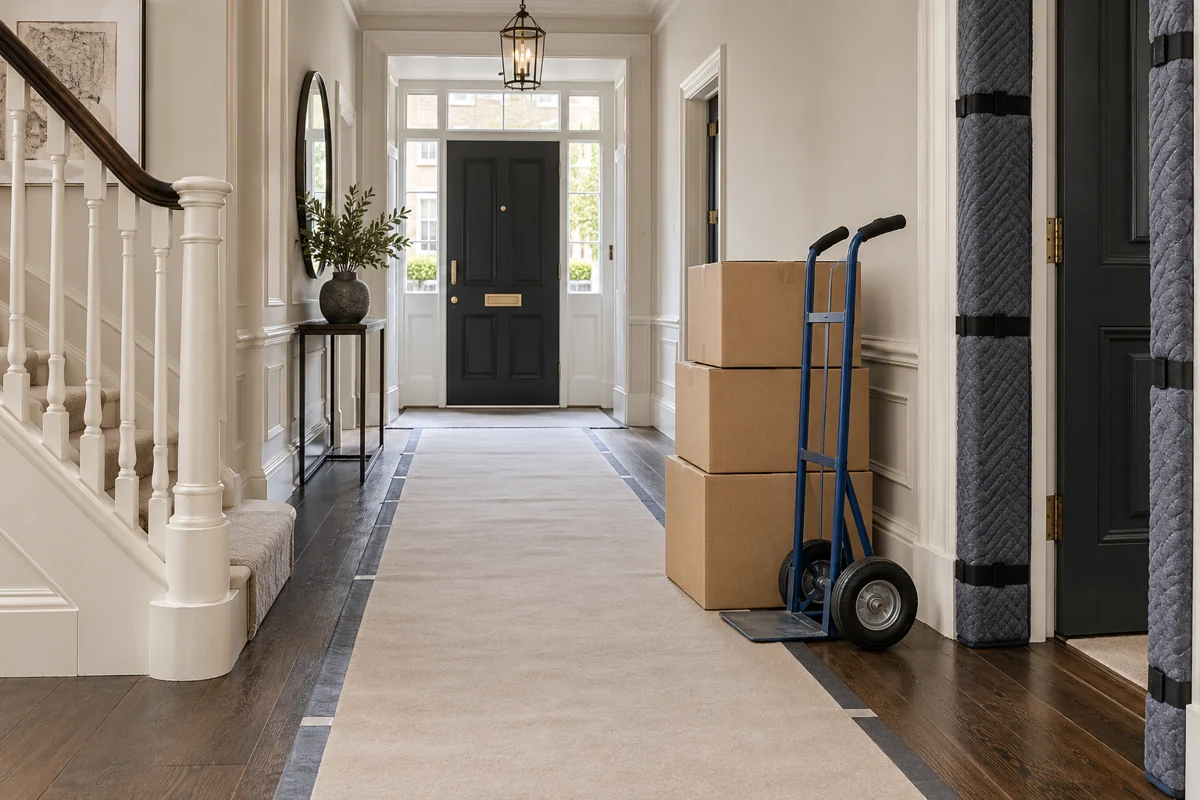
Keep and discard are different instructions
Do not mix the moving inventory with the rubbish.
Separate unwanted items before packing begins. A box labelled kitchen might otherwise contain either useful equipment or things intended for disposal. Mark collection and disposal areas clearly and check that everyone arranging the move is using the same list. This matters particularly in shared homes and offices with several decision-makers.
Waste disposal is not automatically part of a removals quote. If old furniture, packaging or refurbishment debris needs to go, discuss waste removal as a separate service with the relevant acceptance and carrier details. Moving possessions to another address and disposing of them have different requirements.
A quote based on the route
Distance is only one part of the price.
The inventory, carrying distances, stairs, lifts, packing tasks and timing can all influence a removals estimate. The collection-to-destination distance matters, but it cannot describe hours spent carrying furniture through a difficult building. Include both addresses and complete access details when requesting a figure.
Ask the quote to identify the inventory, vehicle and crew arrangements, minimum charge, waiting terms and exclusions. Check the cover and limits that apply to your belongings in the actual terms. Our quote guidance helps separate transport and optional tasks.

The moving-day handover
Make the first and last checks deliberate.
Before loading, walk through the agreed inventory and point out existing damage or delicate finishes. Check that drawers, doors and loose parts have been prepared as agreed. The route should be clear and access permissions in place. If the inventory has changed, raise it before loading rather than expecting additional items to fit automatically.
At the destination, identify the intended rooms and keep the carrying route free of packing waste. Check the delivered inventory and raise concerns promptly through the agreed contact process. London and M25 arrangements are confirmed by route and availability. Call 020 3404 5120 with the addresses, dates and photographs to start a practical moving brief.
Questions about the visit
Can I book using only the number of bedrooms?
That is a starting detail, but the actual furniture, boxes and access are more useful. Send an inventory and photographs of large items so the quote reflects what needs moving.
Are packing materials included?
Only if confirmed in the quote. State whether you need materials, packing labour, unpacking or a combination. Do not assume those tasks are part of transport.
Can the crew disconnect appliances?
Disconnection is not assumed. Discuss each appliance in advance and arrange any required qualified trade. Appliances should be prepared according to the agreed plan before loading.
What if my completion time changes?
Contact the service as soon as the uncertainty is known. Waiting, rescheduling, storage and additional journeys have separate practical and contractual implications that must be confirmed directly.
Do you handle pianos or safes?
Give dimensions, approximate weight and access information before booking. Confirm whether the item can be handled; a specialist provider or handling plan may be necessary.
Plan both ends of the move.
Share both addresses, the item inventory, stairs and loading restrictions. Confirm the handling scope, timing and applicable cover before setting the moving day.