

Renovation journal
When pressure washing is suitable for outdoor surfaces
Pressure washing is a method, not a result in itself. The same stream that lifts dirt can disturb weak joints, mark soft material or change a coating. Choosing a machine before identifying the surface reverses the useful order of decisions, particularly after building work when the installation may still be new.
- Identify surface, finish, joints and installation stage
- Agree a compatible test and inspect it after drying
- Plan access, nearby materials and contaminated-water handling
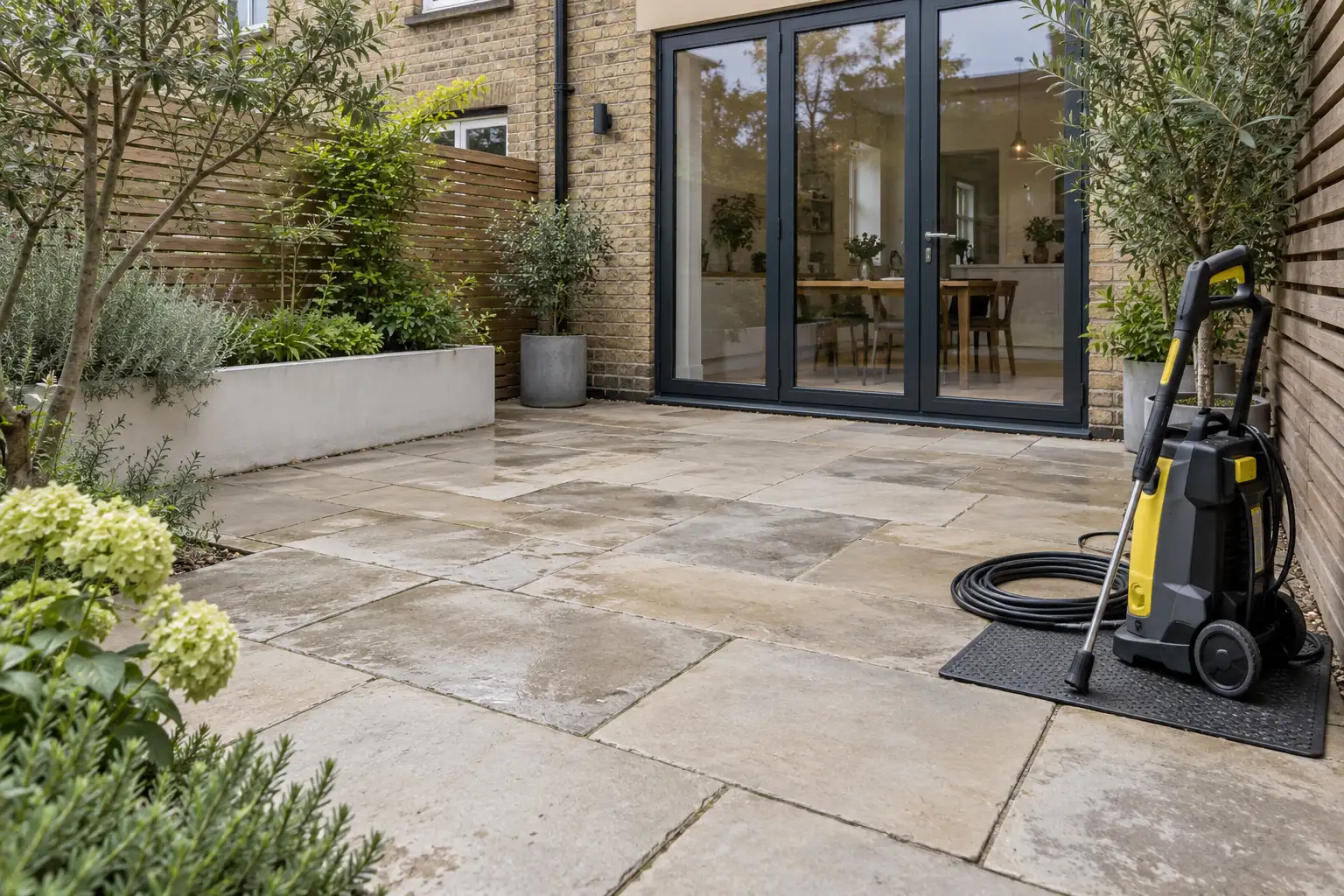
This guide explains how to decide whether pressure washing belongs in an outdoor cleaning plan. It avoids universal pressure settings because the machine, nozzle, working method and material condition all matter. The aim is a compatible, controlled clean with understood limits, rather than the strongest possible jet or a promise that every mark will disappear.
Describe the surface as an assembly
Start with the base material, but also identify coatings, sealers, joints and neighbouring components. A patio may combine stone, mortar, metal edging and painted joinery. An approach suitable for the paving centre may be unsuitable at its edge or where runoff meets a different material.
Ask the installer or manufacturer for cleaning restrictions, especially on newly laid or recently sealed surfaces. Age alone is not a reliable guide: an established patio can have weak joints, while a new installation may not yet be ready for a water-based mechanical clean.
Photograph loose pieces, flaking finishes, cracks and soft or worn areas before work. These observations should inform the decision whether to proceed at all. A test patch does not turn an unstable or otherwise unsuitable surface into an appropriate pressure-washing job.
Distinguish ordinary dirt from a different problem
Loose soil, weather-related surface growth, oil, paint and cement deposits are different conditions. A jet that removes one may leave another unchanged or spread it into a larger area. Identify the likely deposit and the substrate before choosing a treatment or promising the final appearance.
Some marks are changes to the material rather than removable dirt. Weathering, fading, etching and mechanical damage do not disappear simply because water pressure increases. Inspect a dry area and ask the installer or an appropriate specialist where the condition is uncertain.
For the end of a building project, use the outdoor handover guide first. Clearance and residue assessment come before washing. The paint and adhesive guide also explains why a stubborn deposit should not trigger an improvised chemical or scraping experiment.
Use a material comparison to ask better questions
The table is a planning aid rather than a list of approved treatments. Each surface still needs its own instructions and condition assessment. Where pressure washing is excluded, do not treat a lower setting as automatic permission to proceed.
| Surface or component | Question before washing | Reason to pause |
|---|---|---|
| Natural stone | What stone, finish and sealer are present? | Unknown treatment or vulnerable surface |
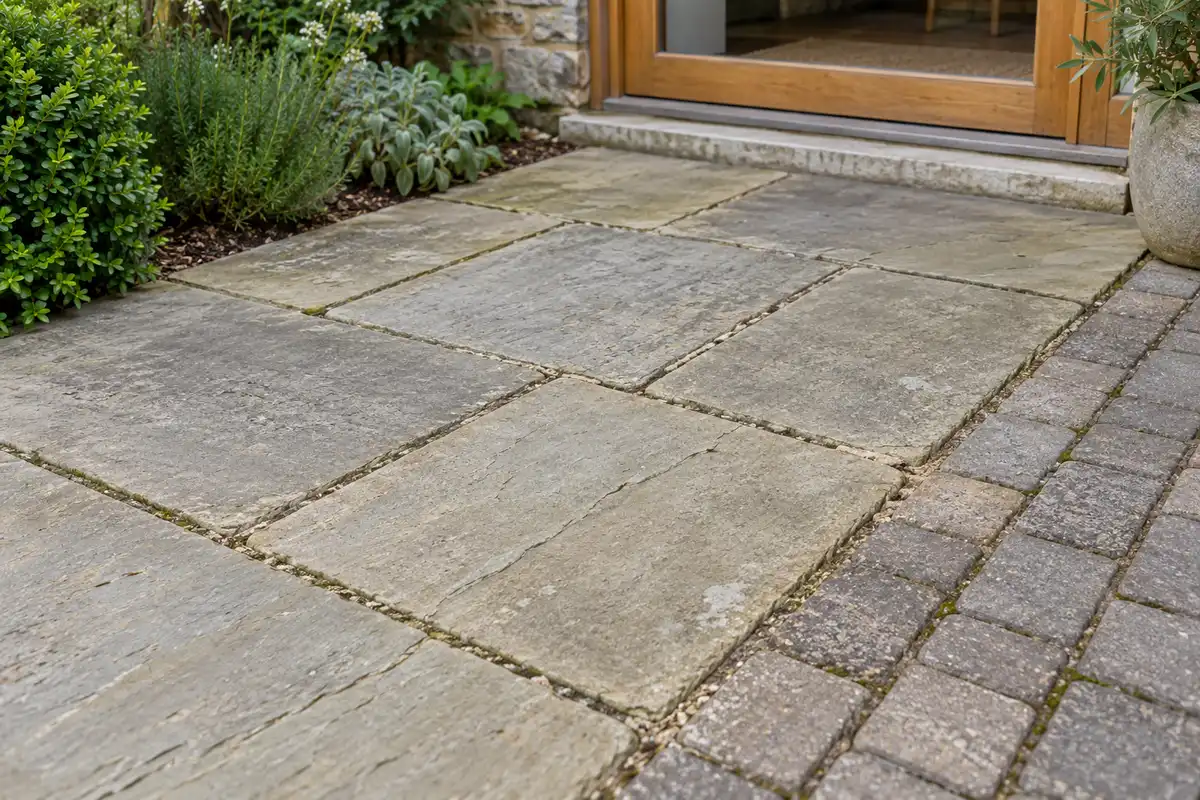
| Paving with joints | Are the joints sound and ready for cleaning? | Loose, incomplete or weak joint material |
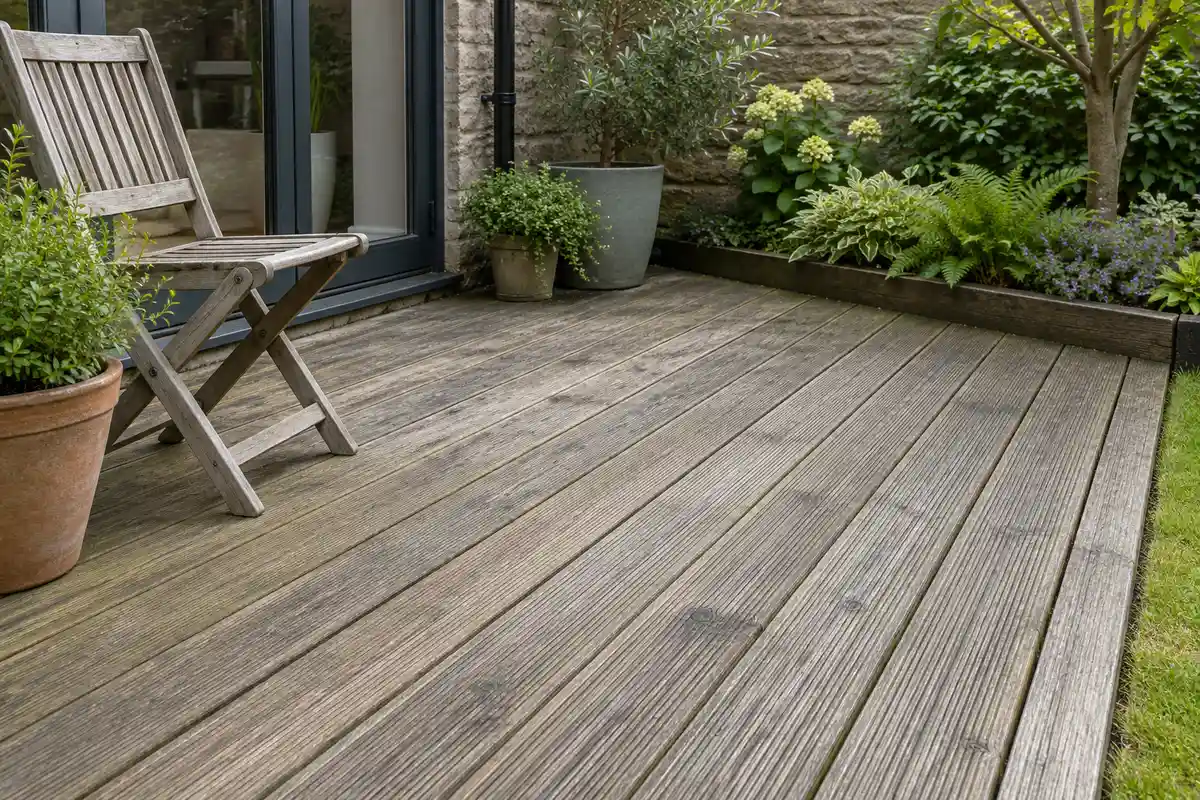
| Timber or decking | What care method does the manufacturer permit? | Soft fibres, coating damage or unsuitable product |
| Painted or coated surface | Is mechanical washing allowed for this finish? | Flaking, uncured or unidentified coating |
| New installation | Has the installer released it for this method? | Curing, sealing or completion restrictions |
| Adjacent fixtures | Can splash and runoff be controlled appropriately? | Electrical fittings or sensitive nearby materials |
Do not reduce the method to one pressure number
Machine specifications do not describe the whole effect on a surface. Nozzle pattern, flow, working distance, angle, dwell and the operator’s movement all affect the treatment. A setting copied from a different machine or online video cannot establish compatibility with the paving in front of you.
Follow the equipment instructions and the surface guidance together. If they do not support the intended use, choose a different method or obtain advice. Do not try to compensate for an unsuitable setup by holding the jet unusually close or lingering on a resistant spot.
Access also matters. The operator needs a stable working position and room to control hoses without crossing an occupied route. Stop where the area cannot be managed appropriately. Improvised work from ladders or furniture is not justified by a small patch that remains just out of reach.
Plan a test with a clear decision afterwards
Where the method is permitted, agree a discreet test area and an intended standard. Record the initial condition and avoid a location that conceals problems or includes several unidentified materials. The purpose is to check the proposed approach, not to keep increasing force until something changes.
Inspect after the area has dried enough to reveal the surface properly. Look for altered texture, colour, coating, joint condition and an edge where the treated patch meets the untreated surface. A clean-looking wet patch can hide damage or uneven appearance that becomes obvious later.
If the test is unsatisfactory, pause and review the method. Do not continue across the whole area in the hope that a uniform change will make the result acceptable. Explain any limitation before proceeding, especially where permanent weathering or an installation defect affects the attainable appearance.
- Does the dry test change the texture or sheen?
- Are joints and coatings unchanged?
- Does the proposed result address the actual dirt?
- Is further specialist advice needed before the area is extended?
Keep chemical choices specific and documented
A detergent should be appropriate for the identified deposit, surface and equipment, with its label followed. Do not mix products or add an improvised ingredient to make the solution stronger. Describing a cleaner as natural, eco-friendly or biodegradable does not establish material compatibility or settle how its runoff must be handled.
Consider the neighbouring materials as well as the main surface. A compatible paving treatment may still be unsuitable for painted doors, metal trims, plants or a coated window frame if splash reaches them. The scope should explain how those areas will be protected or excluded.
For glazing beside the wash area, consult the window and frame care guide. Do not aim a jet at an unidentified assembly to remove a small residual mark. Separate detail cleaning can be more appropriate than extending the pressure-washing method to every object nearby.
Agree the runoff arrangement before starting
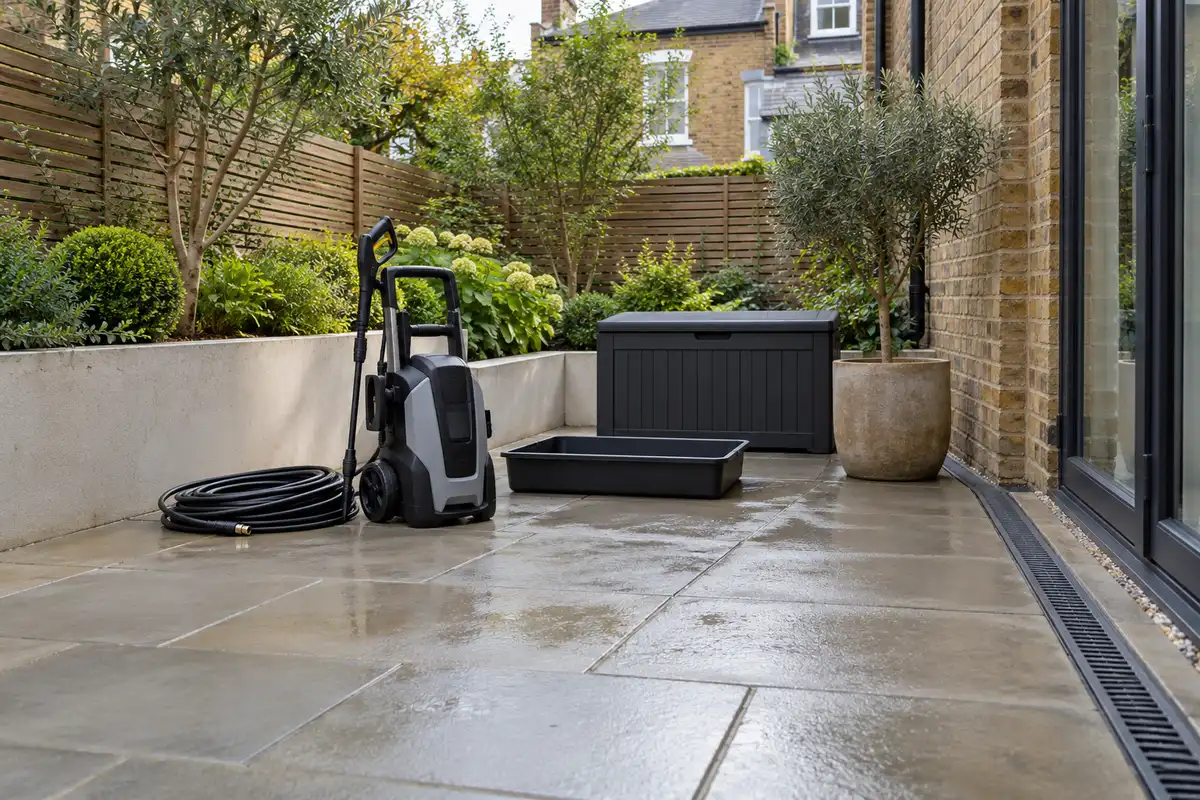
Identify the slope of the area, the route of water and the relevant drains before equipment is used. Consider adjoining entrances and property boundaries. A plan that removes dirt from one patio by sending it into another area is incomplete, regardless of how good the cleaned surface looks.
Environment Agency guidance for business activities in England requires prevention of pollution and appropriate contaminated-water disposal. Surface-water drains are not a default route for detergent or construction slurry. Establish how water and residue will be managed, with the necessary advice or permissions for the actual job.
Water-only washing can still carry contaminants removed from the surface. Ask the provider about that material, not just the cleaning product. If the drainage arrangement is unknown, settle it before work rather than trying to identify a suitable outlet once the area is already producing dirty water.
Set a realistic scope for the finished area
Pressure washing does not automatically include repointing, resealing, repainting or repair. Ask which changes can reasonably be expected and which conditions may remain. If further treatment is proposed, it needs its own surface assessment and instructions rather than a routine upsell after every wash.
Inspect the result dry and record any item requiring a separate specialist. Return furniture only when the surface and any permitted treatment are ready under the relevant guidance. Check feet and castors for grit so that moving items back does not immediately mark a newly cleaned area.
Discuss the pressure washing service with photographs, material information and access details. If the property has just been refurbished, use the outdoor clearance and handover sequence to arrange debris removal before any agreed washing.
Questions about this guide
Is a low setting safe for every surface?
No. Some materials or conditions may be unsuitable for pressure washing at any practical setting. Follow the exact surface and equipment instructions.
Should every cleaned patio be sealed?
No. Sealing is a separate product and material decision, with its own preparation and application requirements.
Can pressure washing remove all paint or cement?
Do not assume so. Identify the deposit and substrate first; stronger pressure can damage the surface without resolving the residue.