

Understand the moisture. Define the work.
Mould Removal London
Mould removal needs more than a promise to make a dark patch disappear. The surface, extent of growth and source of moisture affect the next step. Cleaning a visible mark is not the same as diagnosing damp, repairing a leak or remediating hidden contamination.
- Identify the moisture question before choosing a treatment
- Separate surface cleaning from diagnosis and repair
- No treatment availability or price until the scope is confirmed
Mould treatment is not currently available to book. The company’s capability and treatment scope must be confirmed before this service is offered.

ABC Cleaning London’s mould-treatment capability and accepted scope are not yet confirmed. Please contact us to clarify what can be considered before requesting an appointment. No treatment, inspection, diagnosis or price is currently offered. Start by describing the affected surfaces, previous water damage and any advice already received; those details help distinguish an ordinary cleaning question from work requiring a building or remediation specialist.
The underlying condition
A stain is visible. Its cause may not be.
Mould is fungal growth associated with damp conditions. Condensation, rain entering through building defects and leaks can all create moisture problems; more than one cause can occur together. Government guidance stresses that removing visible mould without addressing underlying causes does not prevent recurrence. A photograph alone is not a dependable diagnosis.
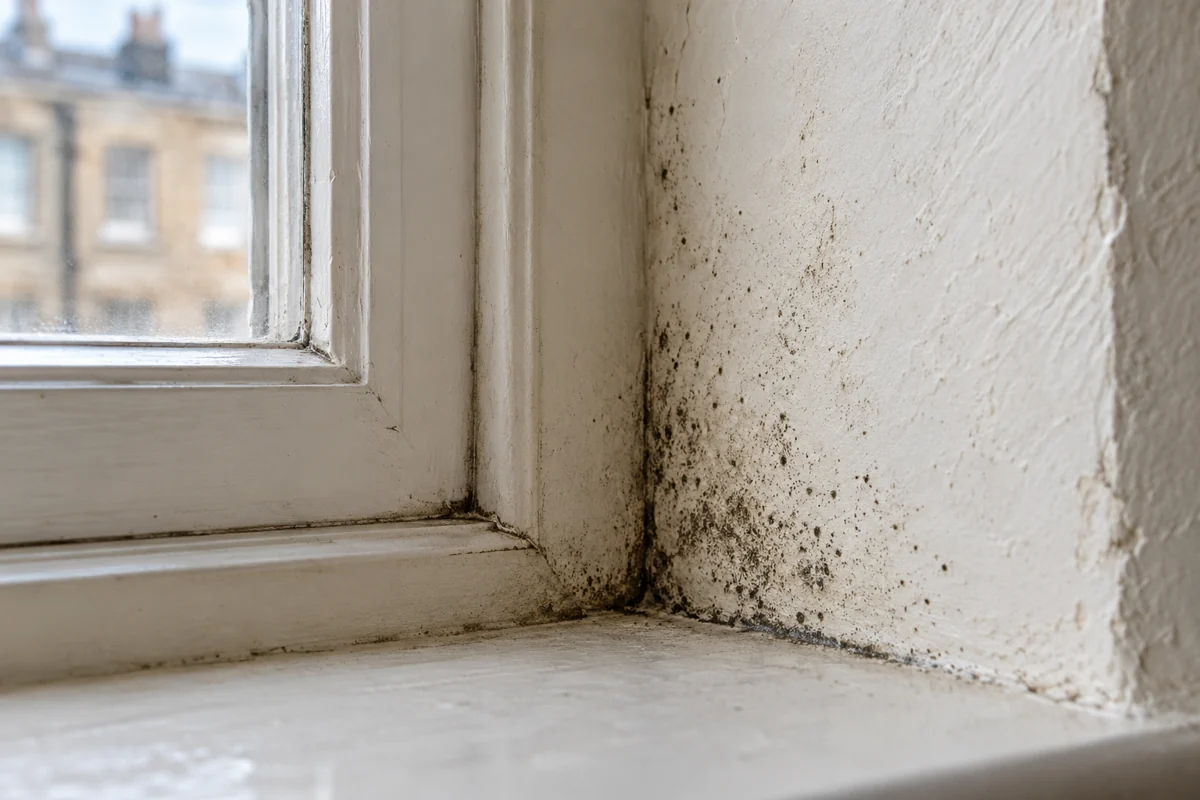
Treat a location description as evidence to investigate, not a conclusion. A patch beside a window could involve condensation, a frame defect or another source of water. Record where it appears, how it changes and any related building work. The professional responsible for investigating should explain what information supports their conclusion and what remains uncertain.
One possible mechanism
Condensation is a building-and-ventilation question.
Moist air can condense on colder surfaces. Effective ventilation removes indoor moisture, while inadequate ventilation can allow it to accumulate. Kitchens and bathrooms deserve attention because normal use produces moisture. The government’s home ventilation guide explains why ventilation provision and correct system use both matter, particularly after changes that make a home more airtight.
A useful enquiry records the ventilation present, whether it works as intended and any instructions supplied with it. Do not assume a noisy fan is extracting effectively, or that a recirculating cooker hood necessarily removes moisture outdoors. Ask the appropriate building professional to assess the system rather than relying on the appearance of a grille.
Another possible mechanism
A water mark should lead to a repair question.
A stain that follows rain, a plumbing incident or a recurring leak should be described with that history. Keep dates and photographs, including the wider wall or ceiling. Tell the landlord, building manager or relevant contractor about ongoing water entry. Cosmetic treatment should not become a reason to delay the investigation of a leak.
A visual comparison can explain possible moisture mechanisms, but it cannot diagnose your property. Condensation and water ingress cannot always be distinguished by colour, shape or position alone. A professional may need access beyond the visible face of the wall. Opening structures, tracing leaks and repairing the building require an appropriately qualified contractor and a separately agreed scope.
| Observation | Possible question | Appropriate next step |
|---|---|---|
| Moisture on cold glazing | Is condensation occurring? | Review ventilation and the building conditions |
| A patch changing after rain | Could water enter from outside? | Arrange an appropriate building investigation |
| A mark near pipework | Has a plumbing leak occurred? | Ask the responsible plumbing professional |
| Growth returns after cleaning | Was the moisture cause resolved? | Reassess the cause and treatment scope |
| Odour with little visible growth | Is the extent unclear? | Seek a suitable professional assessment |
After a refurbishment
Ask what changed, not only when the mould appeared.
Keep a record of the renovation: windows replaced, walls insulated, rooms converted, plumbing moved and ventilation altered. Include completion dates and handover information. That record gives an investigator a more useful starting point than the statement that the mould appeared after the builders. The timing may be relevant, but it does not establish responsibility or mechanism.
New paint can hide the previous condition of a wall, while furniture may conceal a corner for months. Provide earlier photographs if they exist and identify any repeat treatments. A normal after builders clean addresses construction residue; it should not be purchased as a substitute for moisture investigation or specialist mould work.
Walls, ceilings and fittings
The material changes the treatment conversation.
Describe the affected material rather than only the room: painted plaster, wallpaper, sealant, timber, a window frame or a cupboard back. Note peeling finishes, softness, staining and any previous repair. Those observations help a competent contractor decide what needs inspection; they do not establish whether cleaning alone will be appropriate.
A bathroom sealant line, an external wall and a ceiling below a leak should not automatically receive the same scope. Ask what surfaces the proposed method is intended for, what happens to damaged or porous materials and which limitations remain afterwards. Do not authorise painting over the area simply to make a comparison photograph look better.

Knowing when to involve specialists
A larger or recurring problem needs a wider brief.
Seek suitable professional advice where growth is extensive, keeps returning, follows significant water damage or may involve concealed areas. Avoid disturbing unknown materials to inspect them yourself. If the building may contain asbestos or other hazardous material, that requires the relevant specialist process before any surface is opened or aggressively cleaned.
NHS guidance identifies damp and mould as a concern for respiratory health, including people with asthma. If you are concerned about symptoms, speak to a healthcare professional. A cleaning business cannot assess the medical significance of someone’s symptoms, certify a room as safe for a particular occupant or replace advice from the appropriate health or housing professional.

Questions for a proposed contractor
An inspection should explain its own limits.
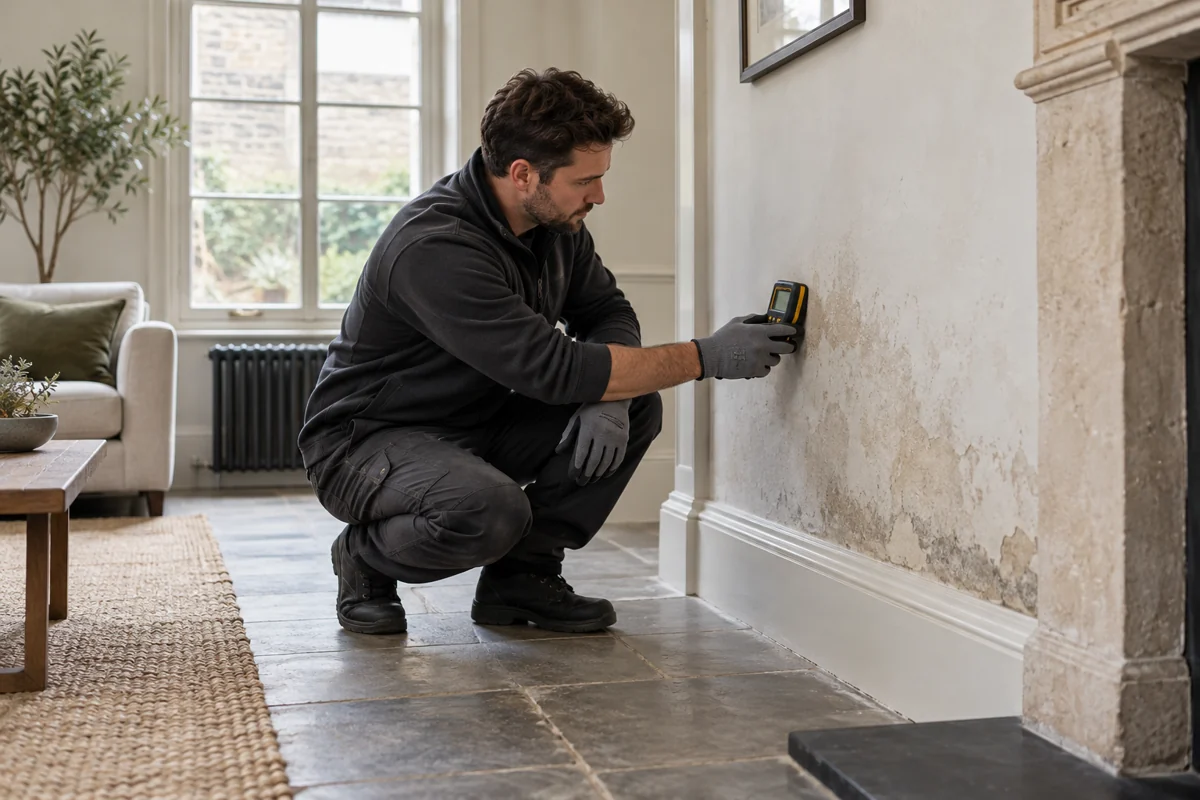
Before commissioning work, establish who will inspect, what the inspection covers and whether a written report is provided. Ask which methods or measurements are proposed, why they are relevant and whether intrusive access is expected. Equipment readings should be interpreted in context; possession of a meter does not itself demonstrate a reliable diagnosis.
The report should distinguish observations, likely causes, unresolved questions and recommended action. Ask who will carry out repairs and who will confirm readiness for treatment. Damp surveying, laboratory testing and structural diagnosis are separate specialist services; they are not confirmed ABC Cleaning London services. Choose the appropriate professional on the basis of demonstrated competence and a clear scope.
Before any work is agreed
A credible treatment proposal is specific.
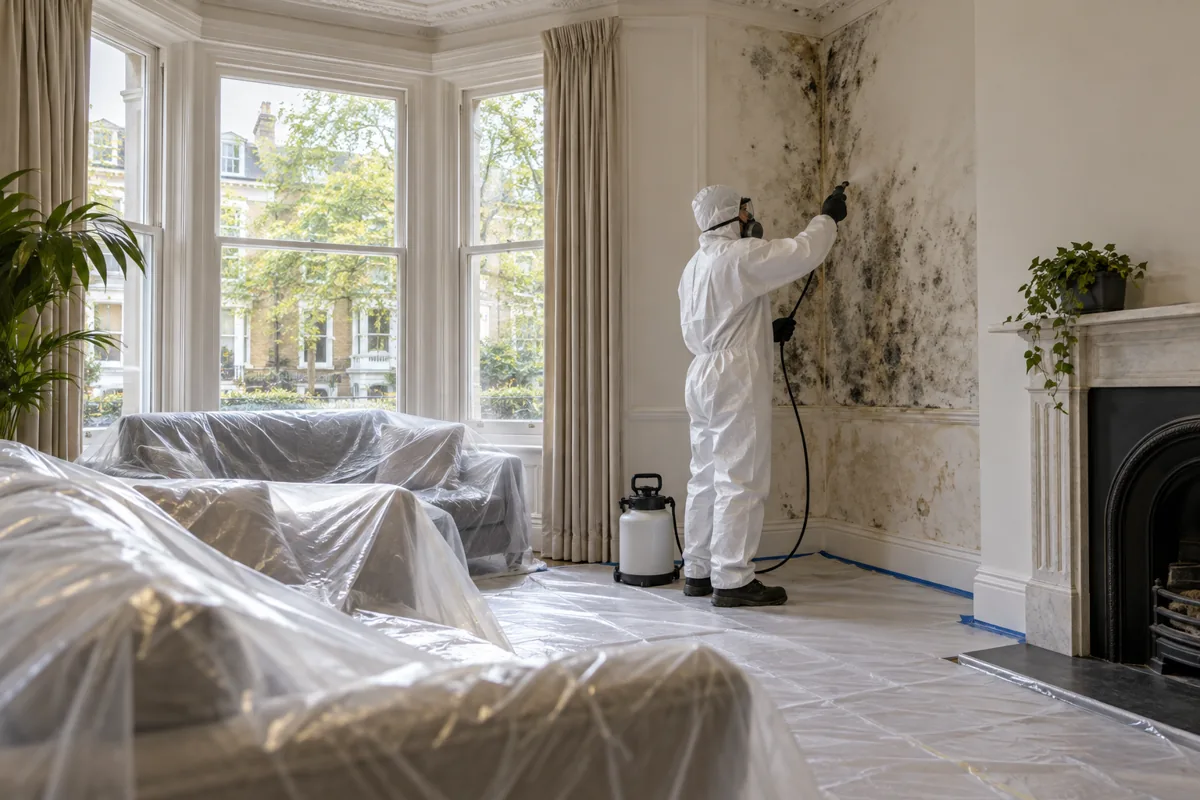
A proposed professional treatment should name the affected area, materials, preparation and intended method. It should explain how occupants and nearby belongings are managed, what access is needed, what waste is produced and when the room may be used afterwards. The exact controls depend on the task and product; obtain the provider’s instructions rather than following a general chemical recipe.
Ask whether the work is limited to surface cleaning or includes removal of affected materials, drying and wider remediation. These are not interchangeable services. Product selection, specialist equipment, containment and protective measures must be decided by a competent provider for the actual conditions. Ask directly which tasks the proposed contractor can undertake and which require another specialist.
Understand the service boundaries
Know who is responsible for each part of the work.
Before accepting any proposal, ask for the surfaces and extent covered, assessment process, intended products and relevant experience. Clarify what is excluded, who handles waste and when the contractor would refer the work to a different specialist. Keep that agreement separate from any repair or investigation contract. If the cause is unresolved, ask what the proposed treatment can realistically achieve and what follow-up will be needed.
Structural repairs, leak tracing, ventilation design, laboratory testing, certification and hazardous remediation require the appropriate specialist; confirm who is responsible for each task. General window cleaning may address ordinary glass deposits, but mould around a window can involve a moisture problem beyond a glazing-cleaning visit. Keep those enquiries distinct.

After the immediate work
Follow up on the conditions, not only the appearance.
Ask for a written plan identifying repairs or ventilation work, who is responsible and how progress will be checked. Keep dates, photographs and contractor records so a return of the problem can be compared with the original condition. Do not treat a fresh coat of paint as proof that the underlying issue has been resolved.
Follow the manufacturer’s instructions for ventilation systems and report faults through the appropriate maintenance channel. Any proposed improvement should be suitable for the building rather than a universal instruction to open windows or heat more. Household circumstances matter, and building deficiencies should not be dismissed as an occupant’s fault. The relevant professionals should explain practical, feasible next steps.
Cost cannot be separated from scope
What to compare in a treatment quotation.
There is no verified mould-treatment price for ABC Cleaning London. Neither the £29 after builders cleaning starting rate nor the £58 waste-collection minimum describes mould work. See the service pricing distinctions before comparing unrelated figures.
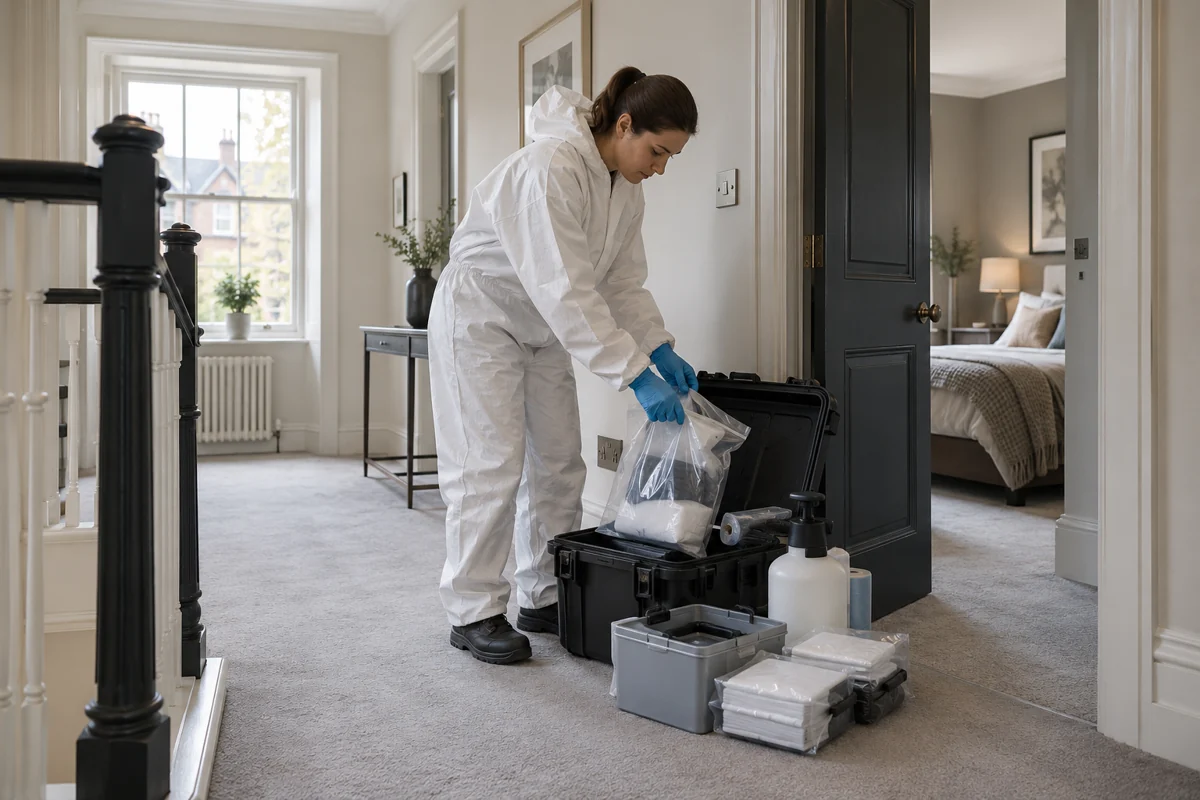
For any future proposal, ask how inspection, treatment area, surface access, material removal, drying, repairs and repeat visits are priced. Clarify which organisation is responsible for each task. A low surface-cleaning figure cannot be compared fairly with a wider remediation quotation unless their inclusions and limits are the same.
Questions about the visit
Can I book mould treatment with ABC Cleaning London now?
A mould-treatment appointment is not currently offered. Contact 020 3404 5120 to clarify whether the required work can be considered. Describe the surfaces, extent and any existing professional advice; specialist diagnosis and remediation must not be assumed available.
Does black colour identify a particular dangerous mould?
Appearance alone does not identify the species or provide a reliable risk assessment. Describe the location and extent and seek suitable professional advice rather than diagnosing a problem from its colour.
Will removing the stain stop it returning?
No lasting result can be promised while the moisture cause remains unresolved. Ask separately about investigation, repairs and the purpose of the proposed cleaning or treatment.
Does a photograph establish condensation rather than a leak?
No. A photograph helps document the condition but does not prove the source of moisture. The history, building condition and appropriate inspection may all be relevant.
Is mould cleaning included in an ordinary office clean?
Do not assume it is. Routine office cleaning and a mould assessment have different scopes. Report the affected area to the responsible premises contact before arranging normal cleaning around it.
What should a tenant record?
Record the affected locations, dates and changes, then report them promptly through the landlord or managing agent’s process. Keep copies of correspondence. For housing rights and formal action, use current official guidance or qualified legal advice.
Sources and further guidance
Clarify the service status before making plans.
Call to ask whether an appropriate mould service has been established. This page does not confirm treatment availability, an inspection or a price.