

Renovation journal
Caring for newly installed floors after renovation
A newly laid floor is not simply an old floor with less dirt. Adhesive may still be developing, a finish may have product-specific restrictions and protection may have trapped grit along its edges. The first cleaning decisions can affect the appearance of a surface that has barely been used.
- Identify the material and its actual surface finish
- Ask about curing, protection and first-clean restrictions
- Separate removable residue from damage or defects

Start with the fitter’s handover information and the exact flooring system. This guide explains what to ask, where to inspect and how to distinguish ordinary residue from a finish or installation issue. It does not prescribe a universal cleaner or promise to restore a floor that has been scratched, etched or incorrectly installed.
Get the specification beyond the showroom name
Ask for the flooring manufacturer, product, surface finish and installation instructions. “Oak”, “stone effect” and “luxury vinyl” are starting descriptions, not complete cleaning specifications. Timber may have different coatings, while a convincing stone appearance may belong to a resilient floor or a porcelain tile.
Keep information about adhesive, grout, sealer or site-applied oil where relevant. The first-clean instructions may differ from the routine care advice used later. Ask the installer when the surface can be exposed to cleaning equipment, water and normal furniture movement; do not replace that advice with a general twenty-four-hour rule.
Record any areas still under restriction. A partly completed room may have an accessible centre and unfinished edges or thresholds. A cleaner needs to know those distinctions before bringing equipment across the floor, not after a wet method has already been started.
- Manufacturer and product reference.
- Factory or site-applied surface finish.
- Adhesive, grout or sealer information where relevant.
- Earliest permitted first-clean method under the installation guidance.
Inspect protection and the perimeter first
Floor coverings often protect the centre while grit gathers at the boundary, around doorways or beside newly fitted skirting. Check those places before rolling equipment into the room. The underside of a dirty mat or sheet can carry particles across the surface during removal.
Ask who will remove protection and whether any tape touches the finished floor. Pulling it away may expose a vulnerable coating or leave adhesive. Do not assume that a stronger tape remover is the appropriate answer; identify the flooring finish and follow the relevant instructions.
Keep tools, offcuts and retained materials organised so that they do not need to be dragged over the exposed floor later. The pre-clean preparation guide helps coordinate that handover with waste collection, remaining trades and access to the finished room.
Collect loose residue before considering a wash
Loose grit can act as an abrasive when trapped beneath a mop, cloth or machine pad. Use suitable collection equipment and an attachment compatible with the surface and assessed residue. Inspect attachments for hard edges or lodged particles before moving between rooms.
Do not dry-sweep construction dust into the air or use an unsuitable household machine for an unidentified deposit. Where the contractor has released ordinary residue for cleaning, a controlled method should still follow the material and task. Unknown or hazardous contamination requires a different assessment, not a more vigorous floor clean.
The guide to fine construction dust covers the collection sequence. On a new floor, that sequence must also respect the installer’s limits: collecting loose material does not grant permission to wash a finish that is not ready for moisture.
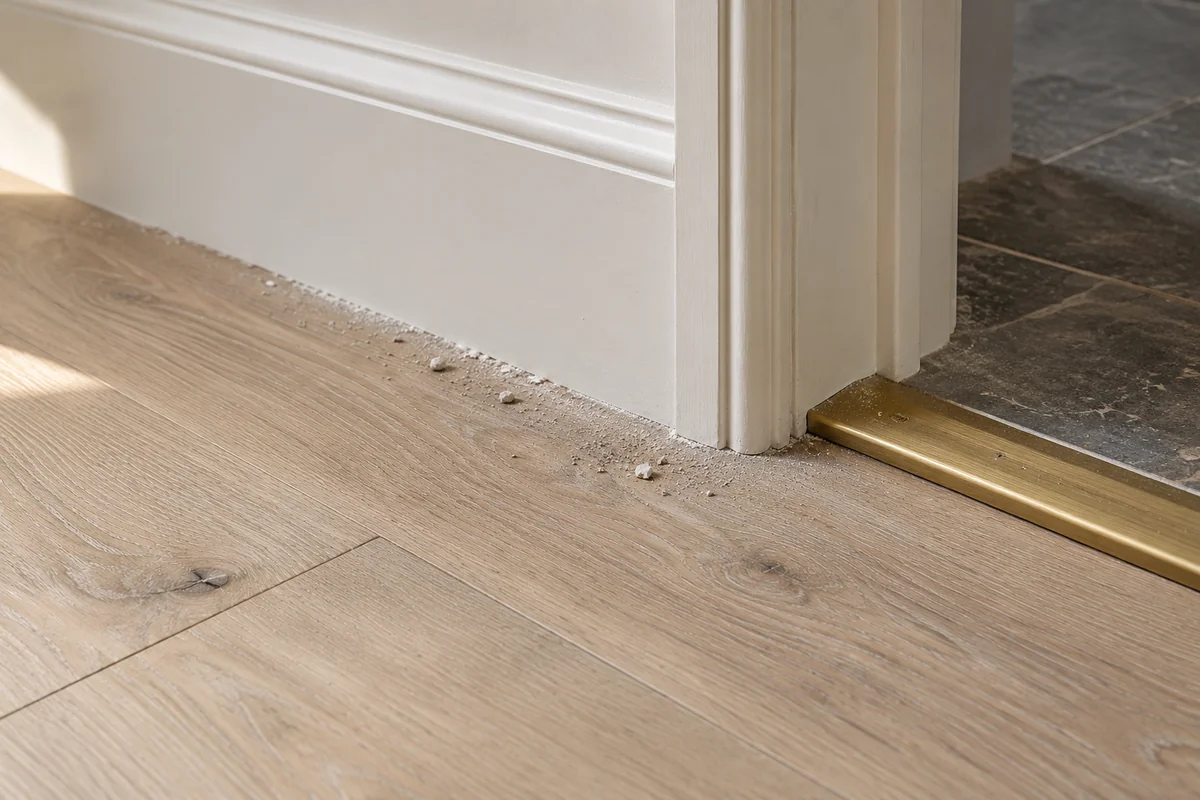
Treat timber and laminate as specified systems
For timber, identify whether the finish is factory applied or completed on site and obtain its care guidance. A cleaner suitable for one sealed floor may not suit an oiled or unfinished surface. Pay particular attention to joints, perimeter gaps and any areas where liquid could collect.
Laminate also needs product-specific care. Do not assume that a water-resistance claim permits steam cleaning or standing water. Follow instructions for the complete product, including edges and installation conditions. A shiny-looking finish can be damaged by an abrasive pad even when the underlying board appears robust.
Use only a permitted method, with controlled moisture where allowed, and check the dry result. Clouding, swelling, tackiness or a change in sheen calls for a pause and advice. Repeated scrubbing can turn a local question into a larger altered area.
Distinguish resilient flooring from a general hard surface
Vinyl and other resilient floors vary in finish, texture and installation method. Obtain the manufacturer’s initial-clean and routine-care instructions rather than treating the surface as a generic waterproof sheet. Newly installed adhesive and joins may impose restrictions independent of the visible wearing layer.
Avoid choosing solvent, abrasive cream, steam or a stronger detergent purely to remove a stubborn spot quickly. The product can affect the finish or leave residue even if it does not visibly damage the floor at first glance. A test should follow an allowed method and be inspected after drying.
If an adhesive smear or protective label remains, ask the installer to identify it. The paint and adhesive assessment guide explains why the receiving material matters as much as the deposit. Installation adhesive should not be treated as an invitation to experiment with household solvents.
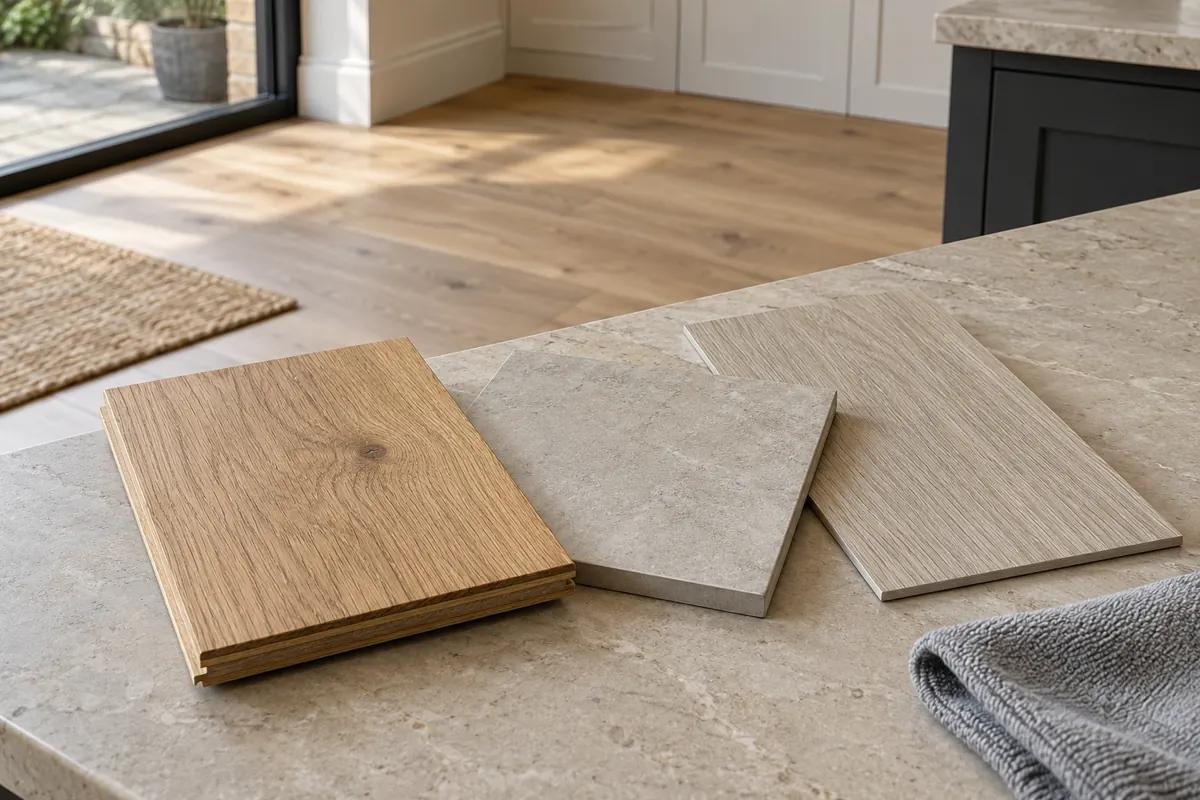
Separate tile, grout and natural stone decisions
A tiled floor contains more than tile faces. Grout, sealant, natural-stone components and neighbouring metal trims may each react differently to a cleaning product. Ask the tiler what remains on the surface and whether the system is ready for its first clean.
Do not apply vinegar or a general acidic cleaner to an unidentified mineral haze. Natural stone can be affected by acid, and grout or decorative finishes may also be unsuitable for that approach. A dedicated residue treatment still needs the manufacturer’s approval for the full assembly, not just the tile label.
For sealed stone, keep the sealer information with the handover. A dark patch after washing may reflect moisture, residue or a material issue; it is not automatically a stain requiring a stronger chemical. Allow the permitted process to finish and seek advice where the result remains uncertain.
| Part of the floor | Information to obtain | Cleaning decision |
|---|---|---|
| Tile face | Exact material and finish | Use only a compatible permitted method |
| Grout and joints | Product and installation stage | Follow readiness and first-clean instructions |
| Stone sealer | Product and care information | Avoid an assumed universal stain remover |
| Trims and adjacent finishes | Coating and compatibility | Control contact with cleaning products |

Inspect a dry floor before calling a mark dirt
Look across the surface from more than one angle in ordinary light. Record whether a mark is raised, recessed, sticky, dull or simply a different reflection. A scratch, an installation gap and a detergent film need different next steps, even though each can appear as a pale line in a photograph.
Do not try to make surrounding areas match a damaged patch by polishing or abrading them. Restoration is separate from ordinary cleaning and may be inappropriate for the product. Ask the installer or a suitable floor specialist before a corrective treatment is proposed.
Keep a record of any cleaner and method already used. That information can save later guesswork and helps distinguish the original condition from changes introduced during attempted removal. A fair handover focuses on the actual mark rather than assuming more cleaning must always improve it.
Plan the room’s return to use
Confirm when rugs, mats and furniture can return under the manufacturer’s guidance. Check furniture feet, castors and the route used to bring items back. Grit on a chair leg or trolley wheel can mark a floor immediately after an otherwise careful clean.
If other trades will cross the room again, agree suitable protection and its later removal. Cleaning early may serve a practical stage, but it should not be labelled the final finish if sanding or heavy deliveries remain. The property handover checklist helps place the floor within the broader room sequence.
When discussing cleaning after floor installation, share the specification, photographs and any restrictions. Agree ordinary dust removal, compatible cleaning and separate residue questions before the appointment.
Questions about this guide
Can I steam-clean a newly installed floor?
Only if the exact flooring and installation instructions allow it at that stage. A general claim that a material is hard-wearing does not establish steam compatibility.
Is a pH-neutral cleaner always safe?
No. Compatibility depends on the whole product, surface finish and use instructions, not pH alone.
Can cleaning remove scratches left by builders?
Ordinary cleaning removes dirt. Scratches and other finish damage need assessment as repair or restoration questions.