

Renovation journal
Planning a clean handover after an office fit-out
An office fit-out ends with several overlapping handovers. The contractor finishes the installation, facilities staff take responsibility for the space, IT reconnects equipment and employees expect a usable workplace. Cleaning sits between these stages, but it should not be asked to complete technical checks that belong elsewhere.
- Sequence fit-out, furniture, IT and cleaning handovers
- Define access to desks, storage and shared facilities
- Keep building sign-off separate from visible cleanliness
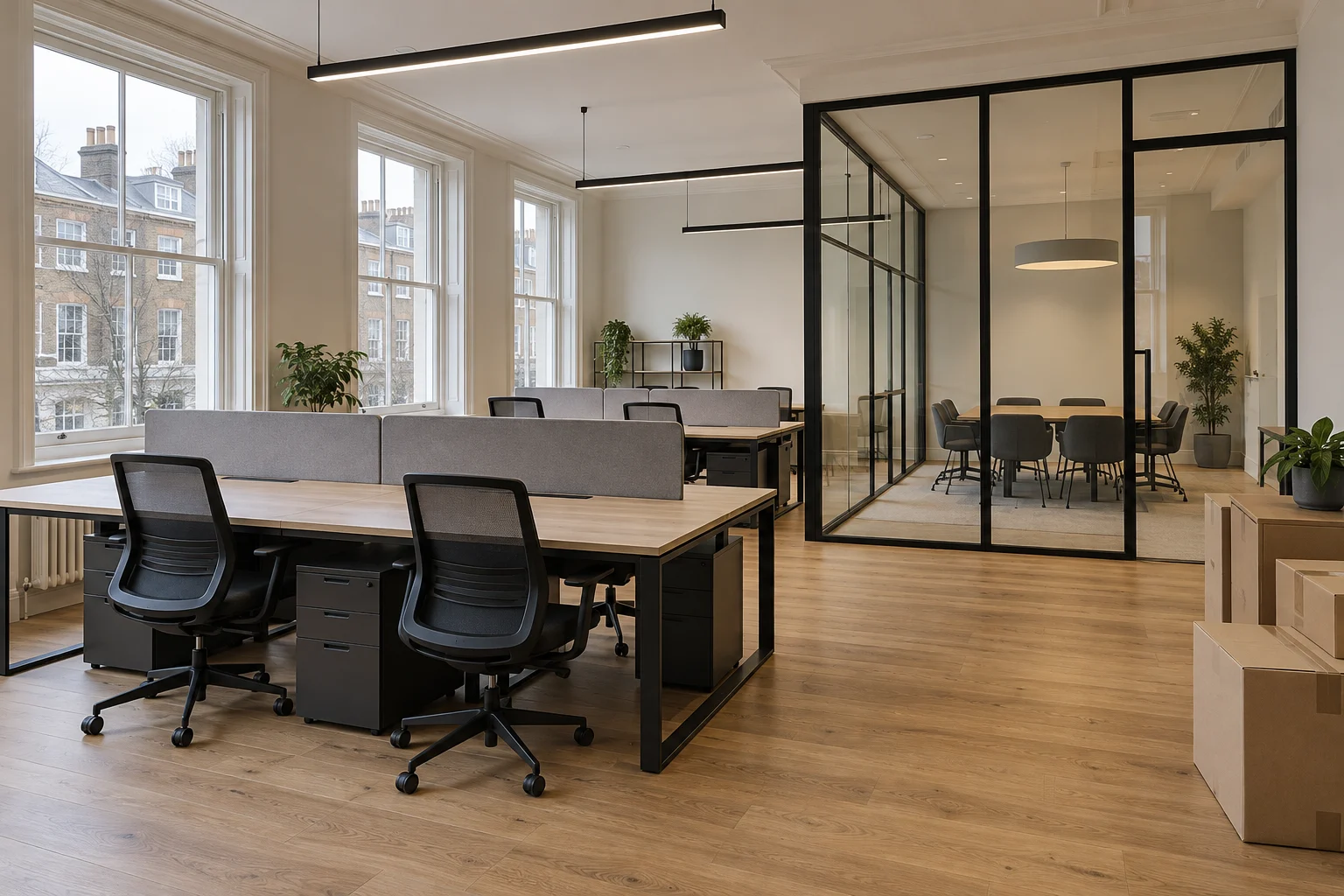
Plan the final clean around what the office will look like when people return. An empty floor can be cleaned efficiently, yet desks, deliveries and cable adjustments may introduce dust afterwards. A written sequence helps define what happens before furniture arrives, what needs a final detail pass and which areas remain outside the cleaning scope.
Choose a handover owner and a workable sequence
Identify one person who can confirm the office layout, access arrangements and outstanding contractor work. They do not need to perform every check, but they should know who can release each area. A cleaning team should not receive conflicting instructions from a site manager, office manager and furniture supplier on the same morning.
Map the remaining activities: drilling, partition adjustments, floor protection removal, desk assembly, IT installation and deliveries. Put dusty or disruptive work ahead of the final detail pass where possible. If the business must reopen in phases, define the rooms and routes covered by each phase instead of calling every visit the final clean.
Record changes as the programme develops. A late delivery can affect loading access and room availability even when it creates little dust. Clear sequencing is a practical control over time and expectations, not an administrative exercise added after the schedule is already fixed.
- Who releases each area for cleaning?
- Which deliveries occur after the main floor clean?
- When will IT install equipment and connect services?
- Who records the final condition before staff return?
Separate cleaning from technical acceptance
An office can look presentable while services remain uncommissioned or installation issues are unresolved. Cleaning does not establish electrical compliance, ventilation performance, fire-safety completion or the absence of hazardous contamination. Keep those sign-offs with the responsible competent people and obtain release of the relevant work areas before ordinary cleaning.
Use a short responsibility matrix so that a dirty grille, loose cover or unfinished cable route receives the right response. Specific ownership prevents a visible item from being passed repeatedly between teams without anyone addressing the underlying condition.
| Observed issue | Cleaning question | Other handover owner |
|---|---|---|
| Dust on an accessible desk | Compatible exterior cleaning in agreed scope | Facilities confirms desk is ready |
| Dust inside IT equipment | Do not dismantle as a room-cleaning task | IT or equipment maintenance provider |
| Loose electrical cover | Leave undisturbed and report | Responsible electrical contractor |
| Damaged floor finish | Record and distinguish from dirt | Floor installer or suitable specialist |
Book access around the building, not just the office
Confirm loading arrangements, service-lift bookings, entry credentials and the route from delivery point to the floor. Building management may restrict noisy activity, trolley use or contractor hours. Share these rules before estimating the appointment so that equipment movement is not discovered to be impossible at the planned start.
Identify the available water supply, electricity and storage for clean equipment. Agree where collected waste can be held and who removes it from the building. Do not leave bags in an escape route or assume that a shared building bin accepts every type of fit-out material.
If other tenants remain in occupation, explain the shared boundaries and access requirements. A route through a lobby may need its own cleaning and protection plan. The building’s rules should inform the method and timing rather than being treated as an obstacle to work around informally.
Inspect desks, storage and fitted joinery before contents return
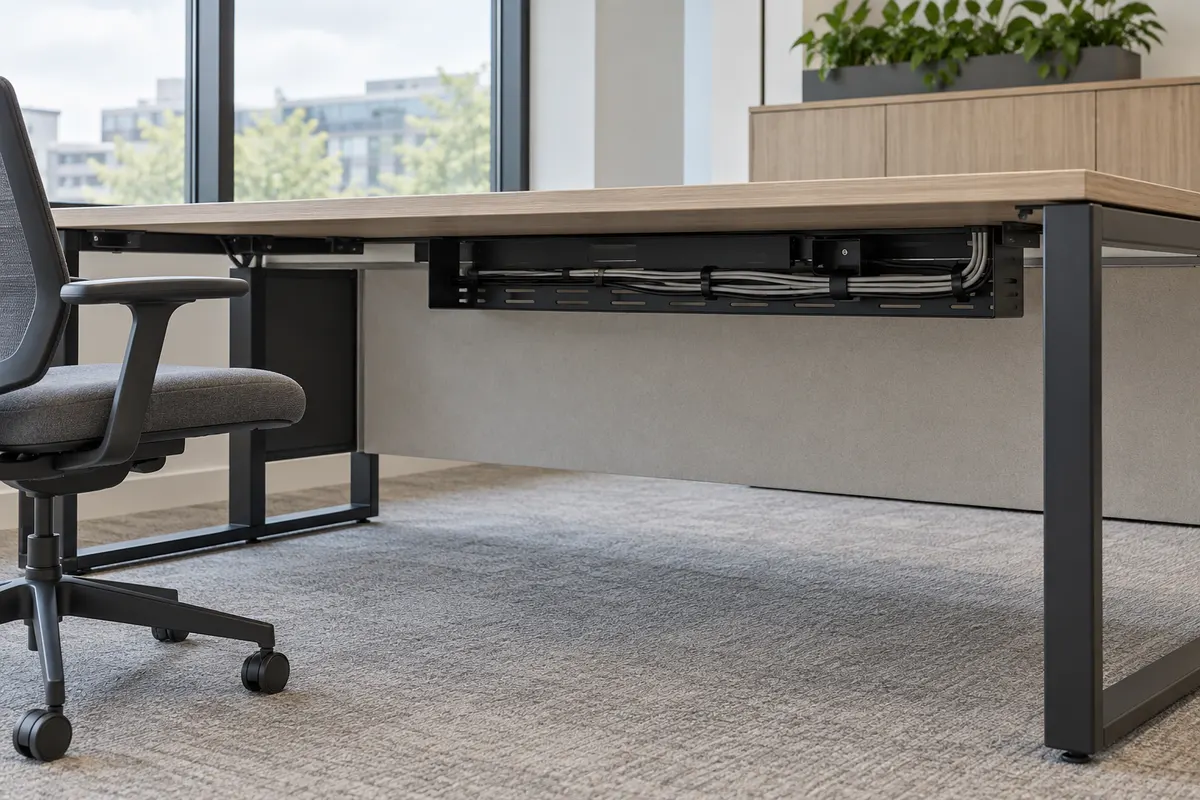
Empty desks and cupboards give access to edges, shelf bases and drawer interiors. Confirm which areas are included before stationery, files and personal belongings are unpacked. Handling office documents and employee possessions should not be assumed to form part of a general cleaning quotation.
Identify desk and joinery finishes, particularly decorative coatings and screen-like surfaces that can mark under abrasive treatment. Use the relevant care instructions and keep moisture away from joints or electrical fittings. A laminate worktop and a veneered boardroom table may require different treatment even when their colours match.
Keep known damage and adhesive marks on the fit-out record. For bonded residue, the material and residue assessment guide explains what to identify before a stronger product is proposed. Removing a label quickly is not worth altering a new desktop or stripping part of its coating.
Keep IT, cabling and ventilation boundaries clear
Ask IT to specify whether computers and peripherals will be installed before or after the main clean. Equipment delivered in dusty packaging can reintroduce residue; equipment installed too early may restrict access to desk surfaces. Agree any exterior wiping with the relevant instructions and avoid spraying into controls, ports or ventilation openings.
Do not unplug unfamiliar equipment, lift floor boxes or enter ceiling voids as an ordinary cleaning task. These areas can involve live services or installation requirements. A visible deposit should be reported to the responsible provider, with access and treatment agreed separately.
Accessible ventilation-grille exteriors are distinct from filters, ductwork and internal units. Ask the building or maintenance team about those components and commissioning requirements. General room cleaning should not be presented as a ventilation-system service or evidence that technical maintenance has been completed.
Plan glazing, partitions and meeting rooms together
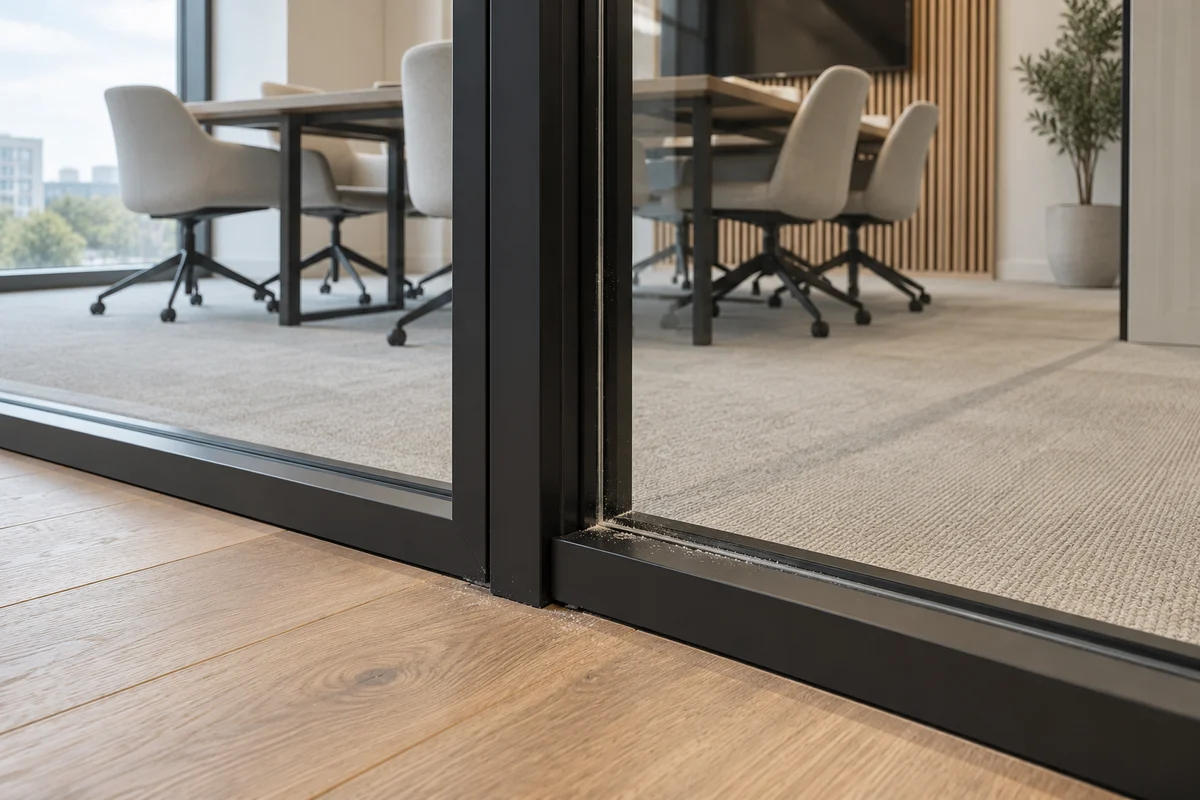
Glass partitions often show both construction residue and handling marks from installation. Identify coatings, films and applied graphics before treatment. A permanent manifestation or decorative film should not be mistaken for temporary protection, and a scraper is not a default tool for a new pane.
Inspect frame edges, door handles and accessible tracks as well as the central glass. Discuss high-level glazing and any areas above stairs separately, with appropriate access rather than an improvised reach. The guide to glazing after renovation helps define these questions before the visit.
Meeting-room furniture and upholstered seating may arrive at a different stage from the partitions. Check textile care labels and packaging condition before adding fabric cleaning to the scope. A general detail pass does not automatically include stain treatment, wet extraction or dismantling acoustic panels.
Leave new floors with a clear care record
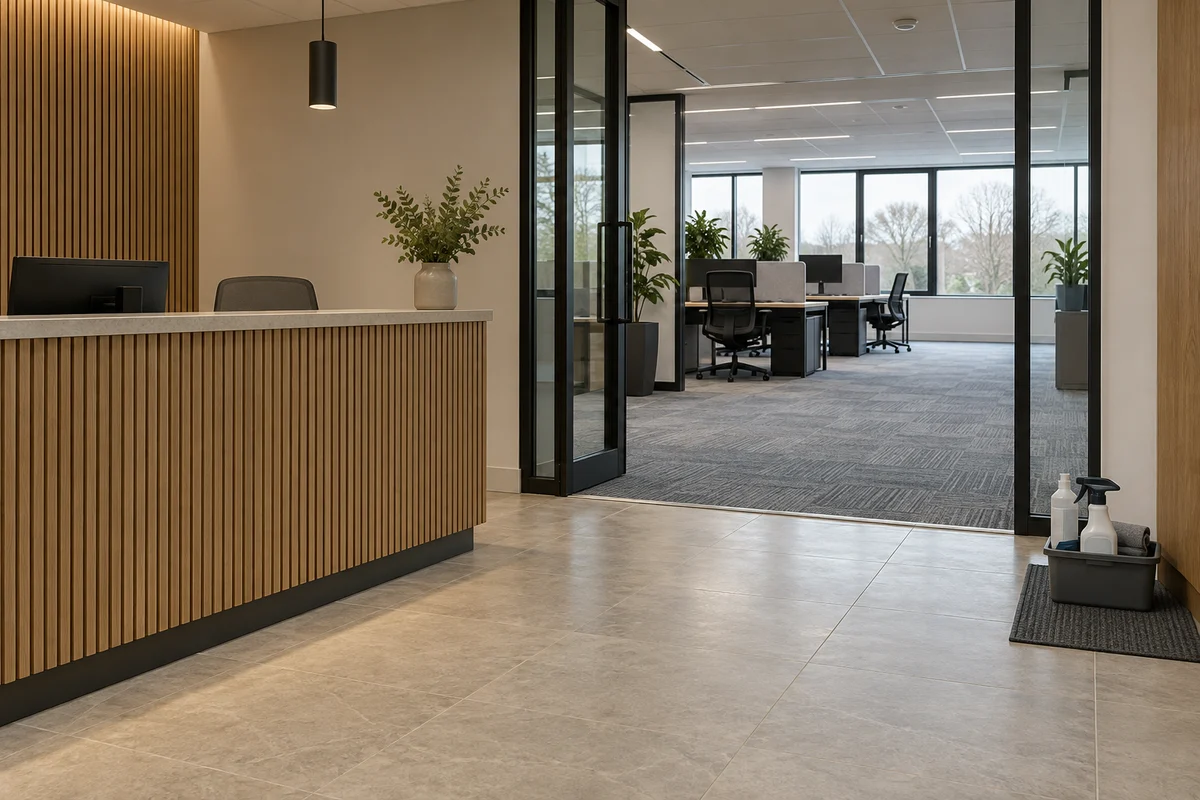
Get the floor specification and first-clean guidance from the installer. Offices can combine carpet tiles, resilient flooring, timber and hard entrance surfaces within one route. A single machine or product should not cross those boundaries without confirming compatibility and equipment condition.
Check the edges of protection, desk footprints and thresholds for grit before equipment moves over the floor. Any permitted damp stage should follow the installation and finish instructions. Do not assume a newly installed surface is ready for steam, polish or a restoration treatment because the office opening date is close.
The new-floor care guide separates ordinary dirt from finish damage. Record remaining marks when dry and pass repair questions to the installer. Chairs and desk castors should also be checked before they return, so that a careful clean is not followed immediately by tracked grit.
Close the fit-out clean before routine maintenance starts
Walk the agreed areas with a representative who knows the scope. Note inaccessible rooms, later contractor work and any marks left for assessment. A clear record lets the business reopen with understood next steps instead of assuming that every outstanding fit-out item belongs to the cleaner.
For the building-residue stage, discuss the post-fit-out cleaning service with the programme, photographs and material details. For the ongoing workplace routine, review regular office cleaning separately. Their purposes overlap in some surfaces but differ in preparation, residue and scheduling.
Retain care instructions for the team taking over maintenance. The first routine visit should know which products and methods are permitted, what installation work remains and where specialist advice was requested. That handover turns a one-off clean into a usable starting point for the occupied office.
Questions about this guide
Can cleaning begin before IT is installed?
It may be useful to clean empty desks and floors first, followed by an agreed detail pass after installation. Coordinate this with IT and the fit-out programme.
Does the clean include inside floor boxes or equipment?
Not as an assumed room-cleaning task. Access to services and equipment needs the responsible technical provider’s instructions and an explicit scope.
Is regular office cleaning the same service?
No. The fit-out clean addresses agreed building residue and handover conditions; routine office cleaning maintains a space already in normal use.