

Renovation journal
Cleaning a newly fitted kitchen after building work
A newly fitted kitchen brings several materials together within a small space. A cabinet front, stone worktop, coated tap and appliance screen may sit centimetres apart yet require different care. Construction dust also finds its way inside units, beneath drawer edges and around fittings that are difficult to inspect once belongings return.
- Empty units before their interiors are cleaned
- Match the method to each finish and fitting
- Keep installation and appliance checks with the relevant trade
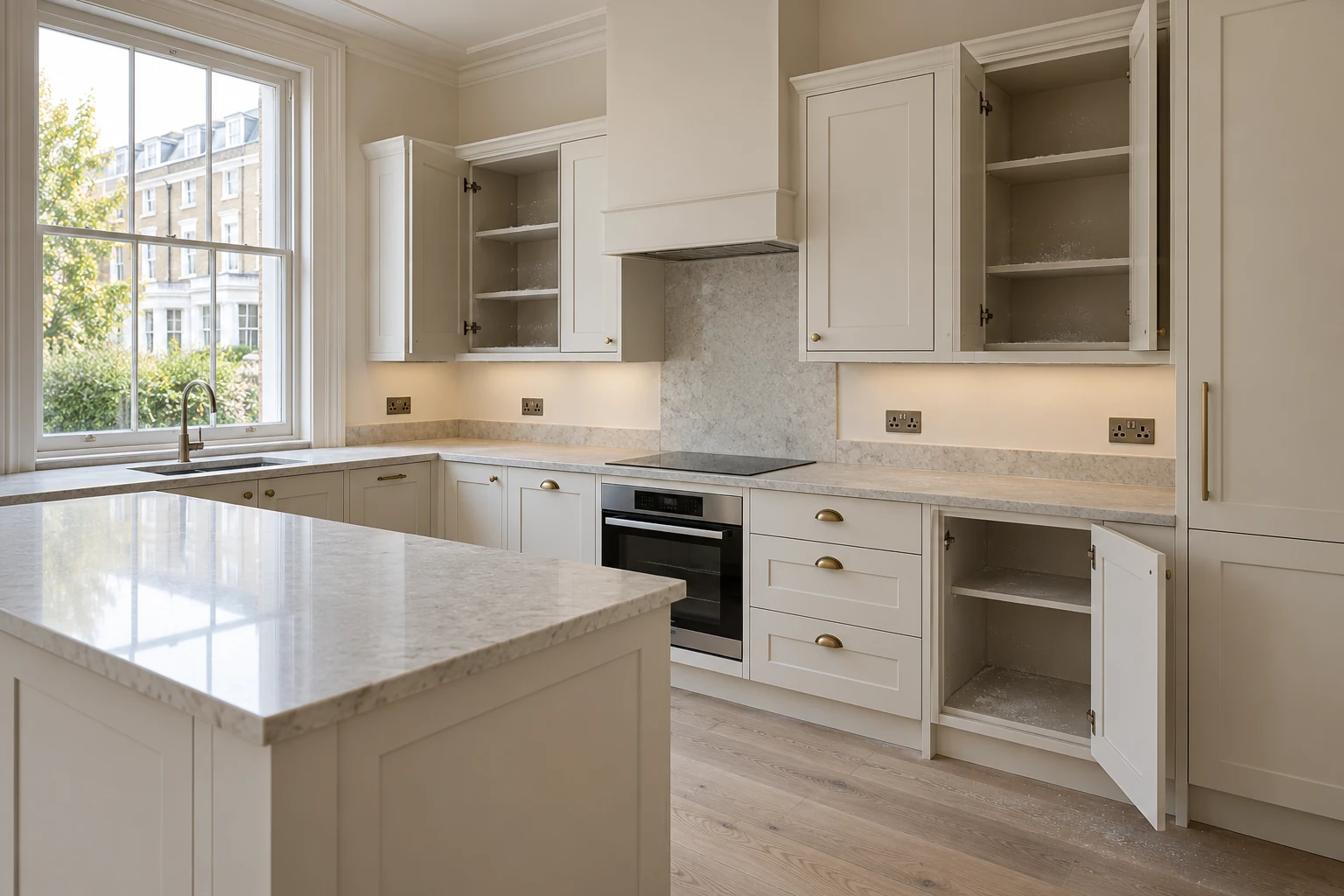
Treat the first clean as part of a careful installation handover. Confirm that the relevant work is finished, gather product instructions and decide which interiors are included. This guide covers ordinary accessible cleaning; it does not replace appliance commissioning, installation checks, electrical work or specialist removal of every bonded deposit.
Ask for the kitchen’s material and completion record
Collect the cabinet, worktop, flooring and appliance care instructions before the cleaning appointment. Keep product details for sealants and any site-applied finish. A photograph of the kitchen shows the layout, but it rarely identifies the coating on a tap or the exact surface of a cabinet door.
Ask the installer which protection is temporary, which labels should remain and whether any work is outstanding. Fresh joins, adjustments and finishing coats may limit what can be cleaned. Do not treat the absence of tools as confirmation that every surface can be wetted or every panel removed.
Record chips, scratches and unfinished edges with the installer. Cleaning can reveal these conditions beneath dust, but it cannot correct them. A written note helps distinguish removable material from an installation issue before a stronger product is considered.
- Cabinet fronts and interior finish.
- Worktop, splashback and any sealer.
- Tap, sink and decorative metal finish.
- Fitted appliance instructions and installation status.
Prepare the room before the detailed work begins
Remove loose tools, packaging and building waste through an agreed route. Keep appliance manuals, spare fittings and matching offcuts separate from rubbish. Protective sheets should be removed with the installer’s agreement so that trapped grit is not dragged across a new floor.
Empty the cupboards and drawers included in the quote. Cleaning around crockery and groceries introduces extra handling and leaves concealed surfaces inaccessible. If the kitchen must remain partly in use, identify the available units and agree the order in which their contents will move.
Use the pre-visit preparation guide for keys, water, electricity and access. An unfinished supply or exposed connection needs the relevant trade, while ordinary cleaning should proceed only in the areas released for it. Keep the working boundary clear when the property is still occupied.
Inspect cupboard interiors and drawer edges
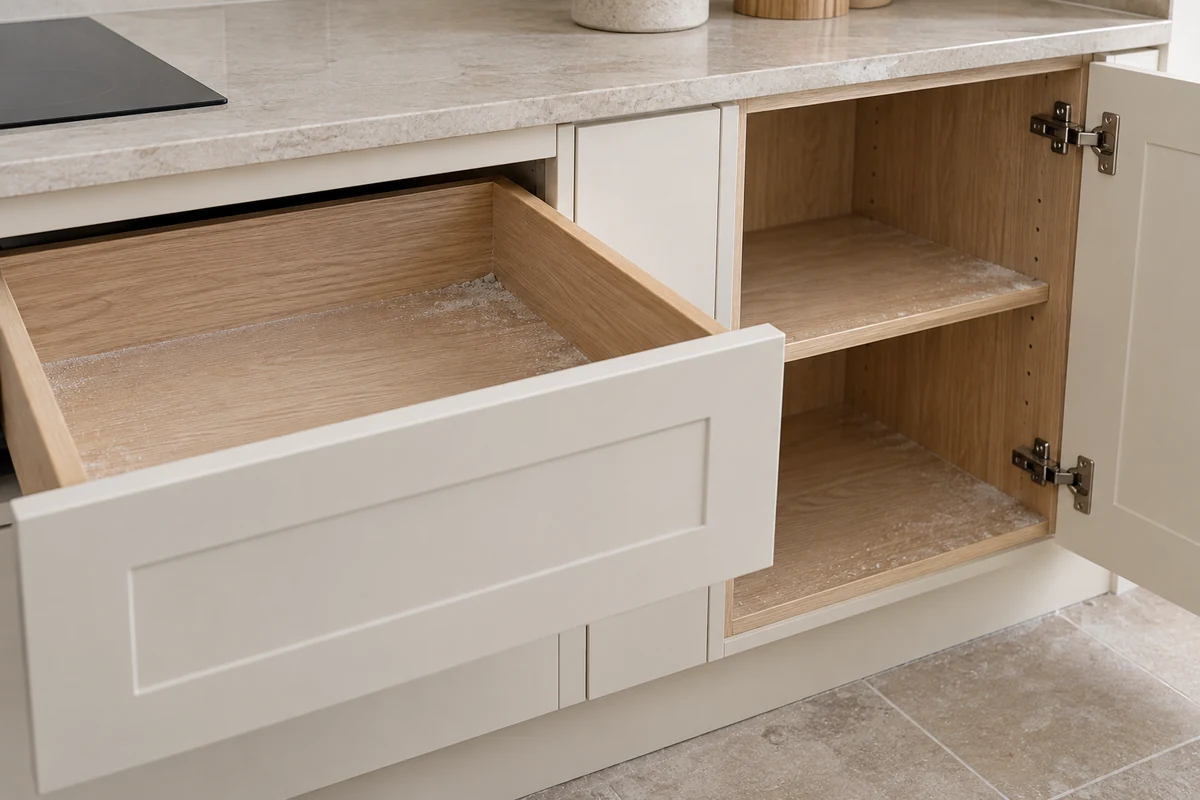
Fine particles can collect along shelf supports, internal corners and drawer bases. Use a suitable controlled collection method and an attachment that will not mark the surface. Change loaded cloth faces and avoid transferring gritty residue from a floor-level edge into an otherwise clean unit.
Follow the cabinet manufacturer’s guidance for damp wiping and drying. Limit moisture around joints, unfinished edges and fixings. A decorative laminate or painted interior should not be assumed compatible with an abrasive sponge simply because it is inside a cupboard rather than on show.
Do not dismantle drawer mechanisms or remove fitted panels without agreement. Some components are adjustable or carry installation-specific requirements. If a unit cannot be accessed for the agreed clean, record the limitation and discuss the next step rather than forcing it open or treating a hardware issue as dirt.
Give cabinet fronts their own method
Identify painted, veneered, laminated or other coated fronts and use the permitted care method. Handleless recesses and the underside of pulls can hold dust that is missed in a straight-on view. Clean carefully around these edges without flooding joints or allowing product to run behind a panel.
Protective films and stickers require particular care. Confirm that they are temporary and ask about removal. A residue left by tape does not justify a general solvent, citrus cleaner or heat treatment on an unfamiliar finish. Even a plastic tool can mark a soft coating.
The residue assessment guide explains how to document the mark and surface before treatment. Stop if colour transfers, the panel becomes tacky or the sheen changes. Continuing until the mark disappears may remove part of the finish with it.
Treat worktops and splashbacks by their specification
Natural stone, engineered surfaces, solid timber, laminate, glass and metal are not interchangeable. Obtain the exact care information, including any sealer or coating, and check the initial-clean guidance. Avoid acids, abrasives or general stain-removal recipes unless the instructions explicitly support that use.
Inspect joins, sink cut-outs and the edges around fittings. These are places where installation residue and uncured material can remain. Ask the installer to identify a bonded mark rather than assuming it is ordinary kitchen grease. A clean should not pull at sealant or disturb a joint to improve its appearance.
Where food preparation surfaces need a suitable cleaning or disinfection stage, use compatible labelled products as directed. More product is not automatically more useful, and incompatible chemicals should not be mixed. Keep the treatment within the surface manufacturer’s instructions, including any required rinsing.
Separate fitted appliances from ordinary room surfaces
Agree whether appliance interiors are included. New appliances can contain packaging, transit protection and installation labels, but removing every item is not a cleaner’s commissioning task. The installer and manufacturer should specify what must be removed before operation and what should remain for identification.
Clean accessible exteriors only by the relevant instructions, paying attention to screens, controls, seals and ventilation openings. Do not spray liquid into components, pull out connected equipment or assume an extractor can be dismantled like a loose shelf. Filters and internal parts may require maintenance instructions and a different scope.
If dust appears behind fitted equipment, ask the installer about access. Moving a newly connected oven, dishwasher or refrigerator can affect services and cabinetry. Record the location and agree responsibility rather than turning a cleaning visit into an unplanned installation intervention.

Finish sinks, taps, glazing and the floor in sequence
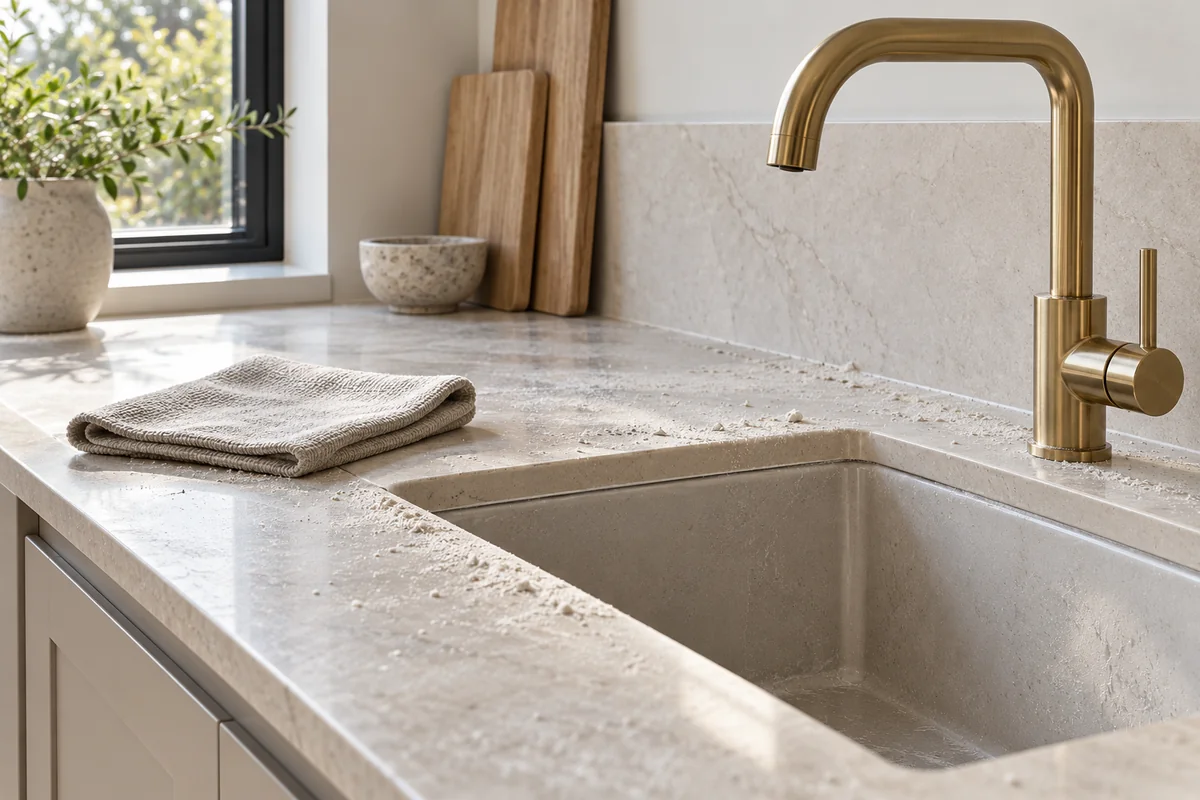
Sinks and taps can have sensitive decorative finishes. Check the instructions before using an abrasive pad or descaler, even where a mark looks like ordinary mineral residue. Construction deposits should be identified separately from routine water marks, and fresh sealant around the sink should remain undisturbed until ready.
Inspect nearby glass, frame edges and window tracks. Paint or adhesive on a coated pane needs a different decision from loose dust on a sill. For those limits, see the window-cleaning guide after renovation. Do not introduce a blade merely because a squeegee leaves a spot behind.
Leave floor cleaning until the accessible details above have been addressed. Collect grit with suitable equipment, then follow the flooring instructions for any permitted wash. Check thresholds and the area where protection ended before bringing stools or boxed kitchen contents back into the room.
Review the kitchen before filling it
Inspect dry surfaces in normal working light. Open the units included in the quote and check their accessible corners, then review the worktop, fronts and fittings. Note areas that were blocked, unfinished or left pending specialist advice. A remaining installation mark needs a defined next step rather than an assumption of unlimited repeat cleaning.
Return clean belongings gradually and keep dusty packaging outside the completed storage area. Read the care instructions before using the kitchen’s first household cleaning product; the routine should follow the installed materials rather than a generic spray used throughout the home.
For a defined clean after kitchen fitting, share photographs, material details and the planned completion date. Confirm cupboard interiors, appliance boundaries and separate residue work. This makes the appointment about a usable kitchen handover, with realistic expectations for what ordinary cleaning can achieve.
Questions about this guide
Are appliance interiors always included?
No. Confirm the scope and distinguish cleaning from unpacking, commissioning or dismantling fitted equipment.
Can I use one spray on every kitchen surface?
Only where the instructions for each material allow it. Cabinet coatings, stone, metal finishes and screens can require different methods.
Should cupboards be empty before cleaning?
Yes, if their interiors are included. Empty units give access and avoid unnecessary handling of food, crockery and personal belongings.