

A practical specification for your finished project
After Builders Cleaning: Scope, Surfaces & Preparation
A successful final clean starts with a precise brief. After plastering, decorating, a kitchen installation or a wider refurbishment, agree which surfaces need attention, which finishes need caution and what the builder should complete first.
- Agree rooms, reachable surfaces and cupboard interiors
- Share new-material care instructions before cleaning
- Separate waste, restoration and difficult glazing from the cleaning scope

ABC Cleaning London cleans residential and commercial interiors after building work. Use the room and surface details below to prepare your brief, then enquire about the final clean with your postcode and completion date.
Start with the work completed
Describe the renovation before listing the rooms.
Two properties with the same floor area can need very different visits. Replacing a bathroom introduces different residue from sanding a staircase. Plastering often affects adjoining rooms, while a newly fitted kitchen may need detailed attention inside empty units. Tell us which trades have worked, how extensively the property was protected and whether occupants remained at home.
A useful specification records each room, accessible surfaces, the types of residue and any priorities. Note areas outside the main works that collected dust. Also identify rooms that must remain closed, surfaces awaiting repair and fittings that must not be touched. This is more useful than a general instruction to clean everything.
Loose particles first
Work through the dust without spreading it again.
Dust on a high shelf can fall onto an already cleaned floor. The cleaning sequence therefore matters: accessible upper ledges and fittings, joinery and furniture surfaces, then the floor. Loose particles should be collected with equipment suitable for the material before damp finishing where appropriate. Ordinary domestic vacuum equipment should not be assumed suitable for every construction dust.
Keep sanding and cutting separate from the final visit. A cleaner cannot provide lasting presentation while another trade generates fresh particles nearby. HSE notes that construction dust can present serious health risks; suspected hazardous dust needs an appropriate assessment, not a cosmetic clean. Share any relevant site information before work is agreed.
For a closer explanation of particle collection and returning dust, read the fine construction-dust guide.
If plastering was part of the project, the guide to cleaning after plastering separates loose dust from fresh wall surfaces and bonded splashes.

The finish determines the method
New materials deserve a little restraint.
Collect the supplier’s care information for stone, timber, metal and specialist coatings. A product that suits glazed tiles may mark an unsealed natural stone surface. A floor that looks dry may still be subject to a curing period. The installer should confirm readiness; a cleaning appointment cannot replace that advice.
Small test areas can help assess compatibility, but they are not a promise that every deposit can be removed. Abrasion, strong chemicals and scraping can change a finish permanently. Tell us about protective coatings, waxes, oils or treatments already applied. Existing scratches, chips and patchy paint should be recorded before cleaning begins.
| Surface | Information needed | Boundary |
|---|---|---|
| Timber and laminate | Finish type and manufacturer care notes | No sanding or scratch repair |
| Stone and specialist tiles | Sealer, installation and care details | No assumed acid treatment |
| Glass and coated panels | Coating details and type of residue | No routine aggressive scraping |
| Fresh paint and sealants | Installer-confirmed curing period | No cleaning before readiness |
Inside the installation
Specify the kitchen beyond the worktop.
An empty new kitchen can collect dust behind drawer fronts, along shelf edges and around hinges. Agree which accessible cupboard interiors and drawers are included. Leave units empty and make sure the fitter has removed fixings, offcuts and loose packaging. Do not expect cleaners to dismantle cabinetry or pull out fitted appliances.
Sinks, taps, splashbacks and worktops can be included in the finishing scope, using material-appropriate methods. Appliance interiors, ventilation systems, protective-film removal and adhesive deposits should be listed separately. If a worktop requires sealing or a tap leaks, ask the installer to address that before the final clean. Cleaning does not correct an unfinished installation.

Wet rooms, newly finished
Distinguish building residue from a fitting defect.
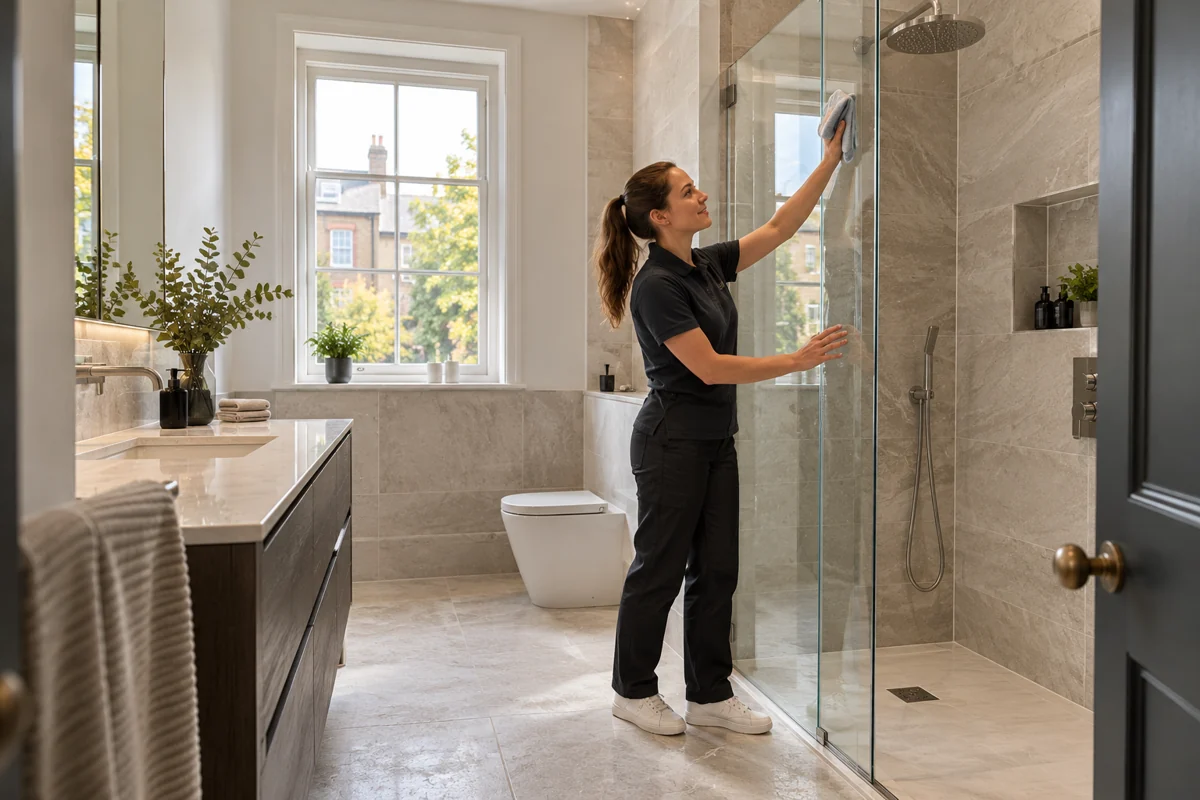
Baths, basins, screens and accessible tile surfaces often need a final removal of dust and loose residue. Grout haze, cement deposits and silicone smears are different problems and should be described individually. Do not group them under ordinary soap or limescale cleaning: the surface and installation conditions affect the safe options.
Leave spare tile details and product instructions available. The builder should finish grouting, silicone work and plumbing tests before cleaning. Exposed wiring, loose fittings and water leaks must be resolved first. Marks beneath a coating, damaged enamel or discoloured grout may remain because they are defects rather than removable dirt.
Frames, tracks and panes
Windows need their own access decision.
Internal glass, accessible frames, sills and tracks can be discussed as part of the project. Tell us about paint specks, tape and protective film rather than assuming a normal glass clean will remove them. Metal debris or cement particles can scratch a pane if dragged across it, so the condition deserves attention before polishing.
External panes, high-level glazing, rooflights and conservatory roofs require separate access planning. A room being on the cleaning checklist does not mean every window can be reached safely. Our window cleaning page explains the information needed to quote for glazing as a distinct task.

Before the appointment
Give the final clean a finished site to work with.
Ask the builder to remove tools, offcuts and bulky waste, finish dusty snagging and leave the property safely accessible. Water and electricity arrangements should be confirmed. Clear surfaces intended for cleaning and decide where furniture and belongings will remain. If several households share an entrance, arrange access without blocking the communal route.
Photograph difficult residue close up and show the wider room as well. Include stairs, narrow passages and parking conditions in the brief. Those practical details help plan the visit. For larger waste loads, arrange waste removal before the finishing clean rather than leaving cleaners to work around rubble.
The pre-visit preparation guide helps assign access, clearance and material-care responsibilities before the appointment.
Hours follow condition
What changes the time and price?
The published starting rate is £29 per hour. The total depends on the agreed work, property condition, access and any separately priced tasks. Confirm how hours are counted, the minimum booking, what equipment is included and any additional charges before accepting an estimate. See the price information for the current starting point.
Heavy plaster dust, furnished rooms, many small panes and detailed cupboard interiors can take longer than a mostly empty space with light residue. A deadline should be discussed alongside a realistic scope. Urgent or same-day availability must be checked directly before relying on an appointment. If builders return, a second visit is a separate arrangement.

A clean is not a repair
Keep the boundaries visible at handover.
Ordinary after-build cleaning does not include asbestos work, hazardous-material remediation, structural repairs, redecoration or restoration of damaged finishes. Carpet and upholstery treatment, machinery cleaning, difficult access and specialist deposits need individual agreement. Avoid asking for a mark to be removed at any cost when the safer answer may be to involve the installer.
Review the agreed rooms and surfaces after the visit. Record outstanding marks with their likely next step: further cleaning assessment, a separate service or a builder’s repair. London and M25 projects can be discussed by postcode. Call 020 3404 5120 with the completion date and photographs to establish a workable specification.
Questions about the visit
Should the snagging list be finished first?
Complete tasks that create dust or disturb the cleaned surfaces first. Minor quiet checks may be compatible with a visit, but explain them in advance. If trades continue working, agree which rooms can be released for cleaning and whether a return will be needed.
Can a newly painted wall be washed?
Do not assume it can. Paint type, condition and curing instructions matter. Ask the decorator or manufacturer when and how the surface may be cleaned, and share that information before wall cleaning is included.
Are cupboard interiors automatic?
No. List them in the specification and leave them empty. Accessible interiors differ from dismantling drawers, removing fitted appliances or cleaning behind fixed cabinetry; those activities should never be assumed.
What if I find more dust after the builders return?
Fresh work can introduce fresh dust. Explain the planned sequence when booking and discuss any return visit separately. A final clean is best scheduled after dusty activity has stopped.
Can I use this checklist for an office fit-out?
Yes, as a starting brief. Add occupied areas, equipment restrictions, security access and any contractor handover requirements. Ongoing workplace cleaning has a different scope from cleaning after refurbishment.
Sources and further guidance
Plan the clean around a finished site.
Have the completion date, room list and photographs of any difficult residue ready. Explain unfinished snagging and new-surface care instructions before agreeing the cleaning scope.