

A clearer view, carefully planned
Window Cleaning London
Window cleaning is more than a count of panes. A first-floor sash, a glazed extension and a shopfront have different access, framing and residue. Tell us what you want cleaned and how it can be reached, so the quote reflects the actual glazing.
- Specify internal panes, external panes and accessible frames
- Flag paint, cement, adhesive and specialist coatings
- Confirm height, access and the number of separate windows
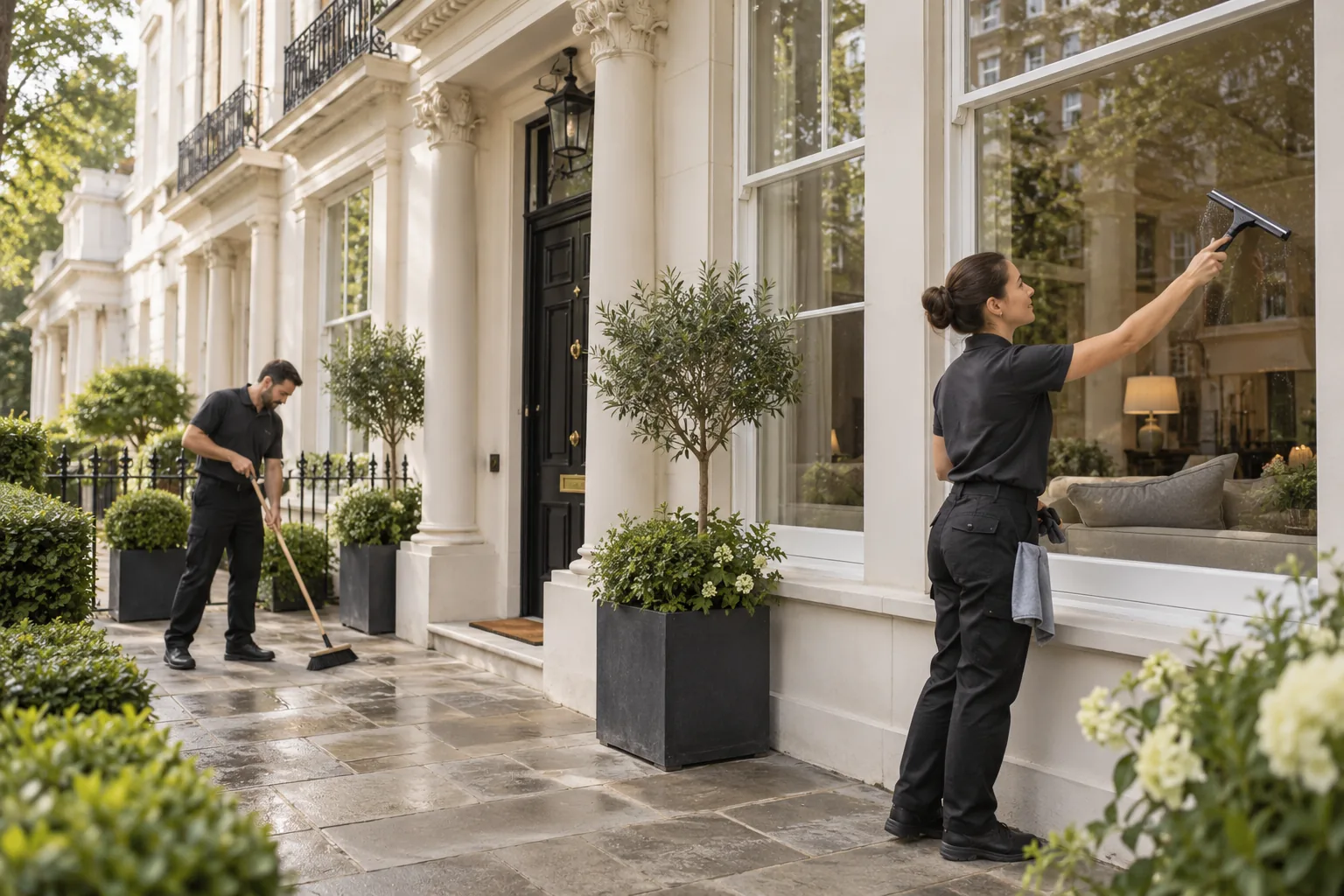
ABC Cleaning London provides window cleaning for residential and commercial properties across London and the M25 area. Internal and external work can be discussed together, with frames and sills identified clearly in the scope. High or difficult-access windows require confirmation before an appointment can be agreed.
Start with what you can see
A useful window brief includes both sides.
List the windows by room or elevation, noting the panes you want cleaned inside, outside or both. Include small glazed doors and side panels rather than assuming they count as part of a nearby window. Large panes, divided sashes and secondary glazing take different amounts of work, even when the overall opening looks similar.
Photographs from inside and outside help establish the layout. Show any narrow side return, basement well, balcony or extension that affects access. If external glazing cannot be reached from the available position, it needs another agreed solution. A booking should follow an access decision, not rely on finding a way once the cleaner arrives.
Everyday deposits
Road film and fingerprints are a different brief from builders’ residue.
Routine window cleaning deals with surface dirt such as dust, fingerprints and ordinary weathering deposits. A suitable glass-cleaning method can lift these without treating the pane as a construction surface. Sills and accessible frames often need separate wiping, especially around handles and opening edges where dirt gathers.
Some apparent dirt is not on the exposed face. Marks between sealed glazing units, etched glass and scratches cannot be removed by cleaning the outside. Tell us where the mark appears and when it becomes visible. Reflections and changing light can reveal defects that were not obvious before the window was washed.
The edges belong in the quote
Frames and tracks need a specific allowance.
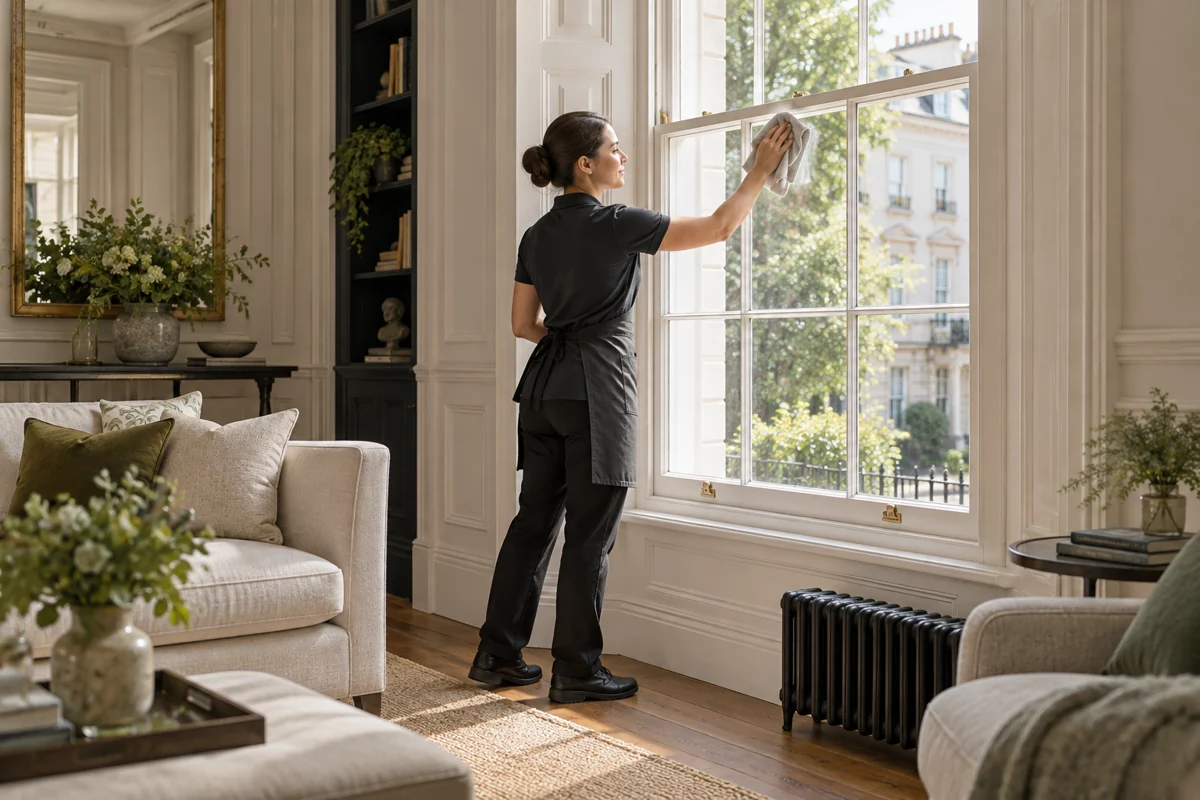
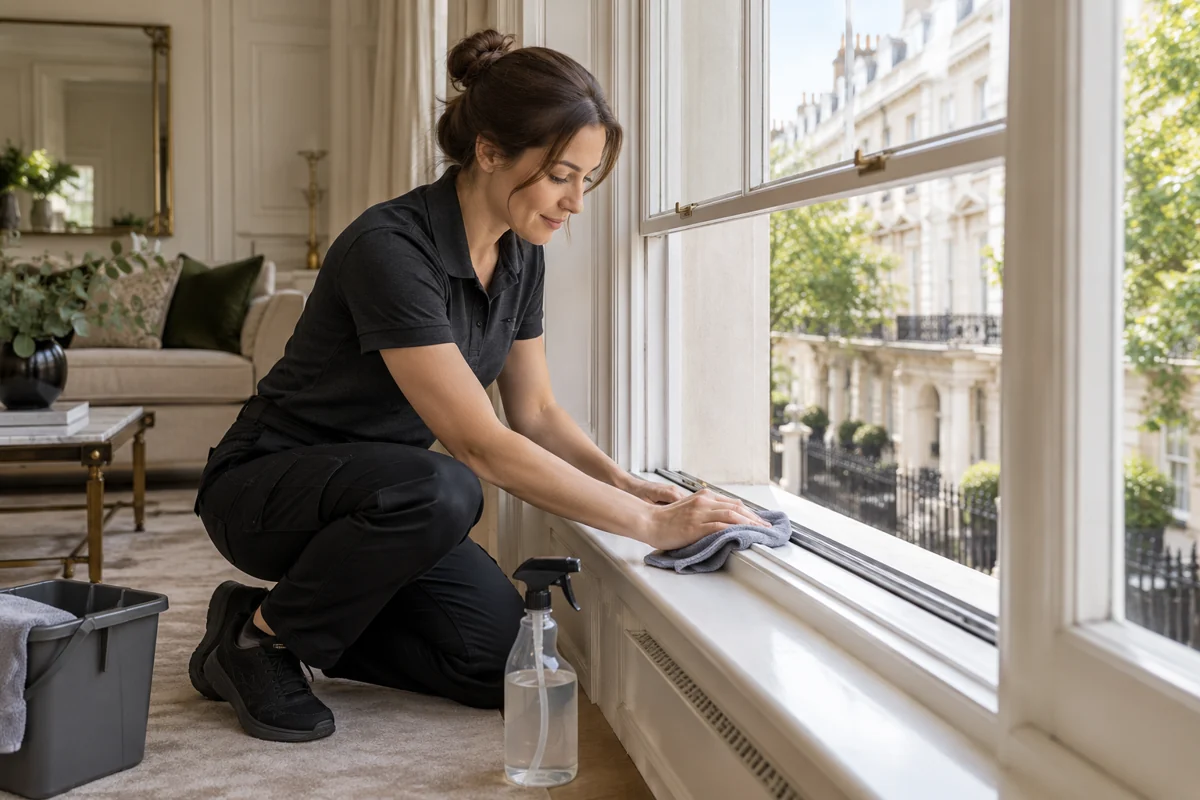
A pane can be clean while its lower track still contains dust. Agree whether accessible sills, frame faces, handles and opening tracks are included. These areas can take longer than the glass, particularly after decorating. Windows must be safe to open, and broken catches or difficult hinges should be reported before the visit.
Painted timber, aluminium and uPVC do not all tolerate the same products. Share care instructions for new frames and coated hardware. Cleaning does not include repainting timber, replacing seals, adjusting hinges or repairing drainage channels. Persistent water ingress should be referred to a window installer or suitable building professional.
- Remove ornaments from sills before the appointment.
- Point out damaged seals and catches without attempting a repair.
- Keep newly finished frame care notes available.
After installation or decorating
A construction clean calls for a closer assessment.
Paint specks, render, grout, tape and protective film should be identified in advance. Their removal is not equivalent to a normal wash. The type of deposit, how long it has been present and any glass coating affect the options. Aggressive scraping can scratch glass or damage a film, so it must not be treated as a standard shortcut.
Ask the builder or glazing supplier for installation and coating details. Film that belongs to a finished product may look like temporary protection, so do not authorise removal without checking. For a wider refurbishment, our detailed builders cleaning scope helps separate glazing tasks from the rest of the interior.
For a component-by-component inspection before booking, see glass, frames and tracks after renovation.
Method follows the window
Choose the approach after confirming the surface and reach.
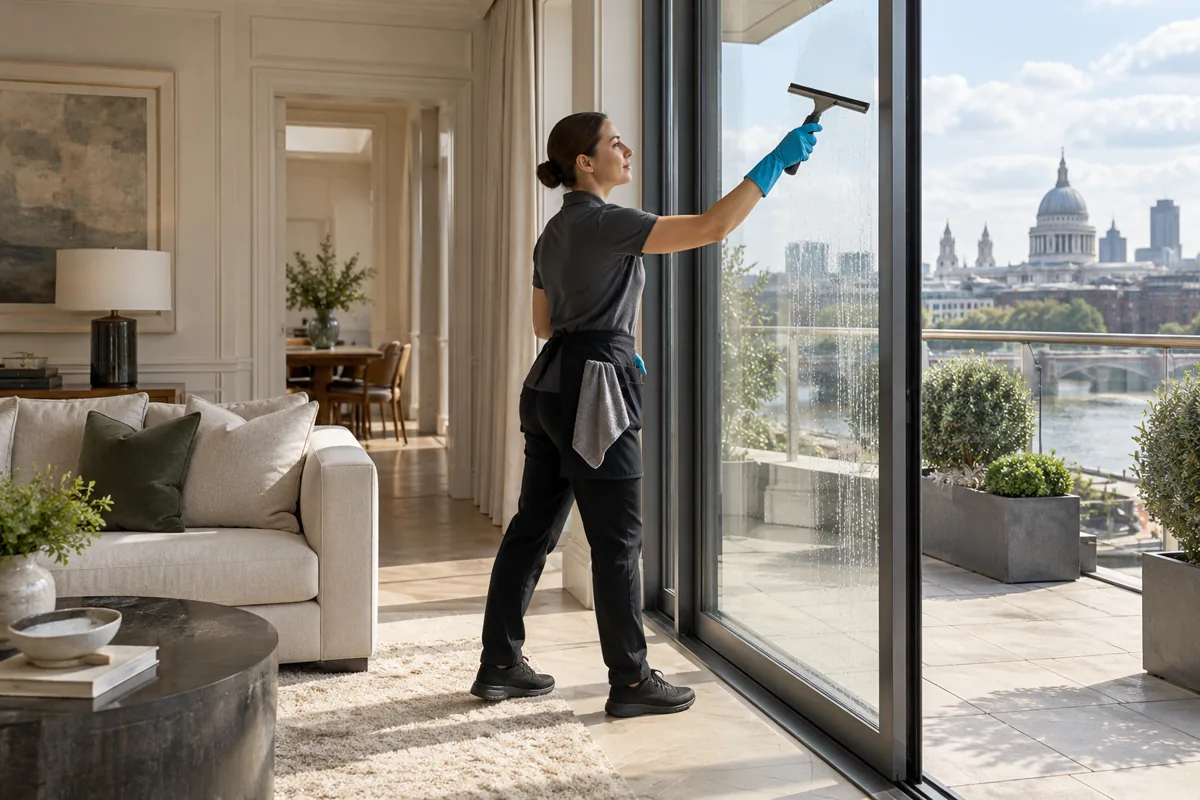
The pane, frame and access determine the suitable method. Show coated glass, secondary glazing, rooflights and obstructions in your photographs so the equipment and access requirements can be confirmed before booking.
Water marks that remain after a normal clean may be mineral deposits, damaged coating or surface deterioration. Additional treatment needs its own assessment and quote. A cleaner should not promise complete stain removal without knowing the cause. Tell us about previous treatments and products used, particularly on glass with a warranty or specialist finish.
A practical access plan
Height is only one part of reaching a pane.
A low window above a conservatory roof can be more difficult than a higher pane with clear ground access. Basement wells, fragile roofs, parked vehicles and narrow passages can all restrict the working position. Send a wide photograph so these obstacles are visible, and explain any permission required from a neighbour or building manager.
HSE advises avoiding work at height where reasonably practicable, including considering methods that allow work from ground level. Confirm the suitable access method and the equipment the provider can supply. High-rise, rope-access and platform work need specific capability checks before booking. Discuss specialist requirements before arranging access or paying for an appointment.
Homes, shops and workplaces
Organise the visit around the people using the space.
At home, clear sill displays and move lightweight furniture away from internal windows where practical. Explain if shutters, blinds or secondary glazing restrict access. Do not dismantle heavy fittings or climb to prepare a window. Keep children and pets clear of the working area while equipment and water are in use.
For a shop or office, agree an access contact, opening hours and any restrictions around customers, displays or electrical equipment. Interior desks should be clear of confidential papers before window access is required. If the workplace also needs its regular cleaning routine reviewed, see office cleaning; glazing frequency can be planned separately.
Frequency without a fixed rule
Let the condition set the interval.
There is no single useful schedule for every London property. Traffic exposure, nearby building work, trees, how the rooms are used and presentation needs all affect how quickly glass looks dirty. A street-facing display may need attention sooner than a sheltered rear bedroom window. Discuss a repeat arrangement only after the first scope is clear.
A one-off visit is useful after decorating or before a property handover, but schedule it after external dusty work where possible. Weather and access conditions can affect the practical timing of external work. Confirm any arrival window directly and avoid assuming an appointment is guaranteed in all conditions.
Quote the glazing, not the bedrooms
The price depends on panes, detail and access.
Provide the number and approximate size of windows, the sides to clean and photographs of difficult areas. Small divided panes, track detailing, first-clean deposits and specialist residue can change the estimate. The number of bedrooms alone is an incomplete guide. Internal glass partitions and glazed doors should be listed separately.
Window cleaning is quoted individually. Confirm the panes, sides, frames and tracks included, along with any minimum or access charges. See the quote information before accepting the total.
| Quote detail | Why it matters |
|---|---|
| Inside, outside or both | Defines the actual area of glass |
| Frames, sills and tracks | Adds detailed work beyond panes |
| Height and obstacles | Determines a feasible access method |
| Paint, cement or tape | Requires residue assessment |
| Condition and frequency | Distinguishes a first clean from maintenance |
Before you call
Show us the view and the route to it.
Call 020 3404 5120 with your postcode, photographs and preferred timing. Include building entry instructions and whether internal access will be available. London and M25 coverage is confirmed for the address and work requested, rather than assumed from a broad service area.
If cleaning follows a larger renovation, first arrange bulky waste collection and finish any sanding or render work nearby. Clear access supports a more useful window-cleaning visit and reduces the chance of the glass being covered again immediately afterwards.
Questions about the visit
Can you clean glass on both sides in one visit?
Both sides can be discussed, but feasibility depends on access. Include the external view and any obstacles when requesting a quote. The confirmed scope should state which panes and sides are covered.
Does window cleaning remove condensation inside double glazing?
No. Moisture or marks within a sealed unit are inaccessible to routine surface cleaning. Ask a glazing professional to assess the unit rather than booking repeated cleans for the same internal defect.
Will you remove paint from my new windows?
Flag it before booking and provide the coating details if available. Removal depends on the glass and residue; it is not an automatic inclusion or a guaranteed result.
Must I be present?
Internal work requires an agreed way to enter and access the windows. External-only work may have different arrangements. Confirm keys, gates, entry permissions and the handover contact in advance.
Can you quote for rooflights and upper floors?
Send photographs showing their position and the ground below. Specialist access must be confirmed directly; high-level work should not be assumed available simply because the service covers window cleaning.
Sources and further guidance
Start with the glazing and the access.
Describe the panes, frames, height and deposits, and show obstacles from the ground. Confirm which internal and external areas can be included before arranging the visit.