

Outdoor cleaning with the surface in mind
Pressure Washing London
A patio can collect algae, soil and weathering deposits long before it needs replacing. Cleaning may reveal the original surface, but the right approach depends on its material, joints and condition. Maximum pressure is not a useful specification on its own.
- Discuss stone, paving, decking and existing surface damage
- Plan water supply, drainage and pedestrian access
- Separate cleaning from re-sanding, sealing and repair
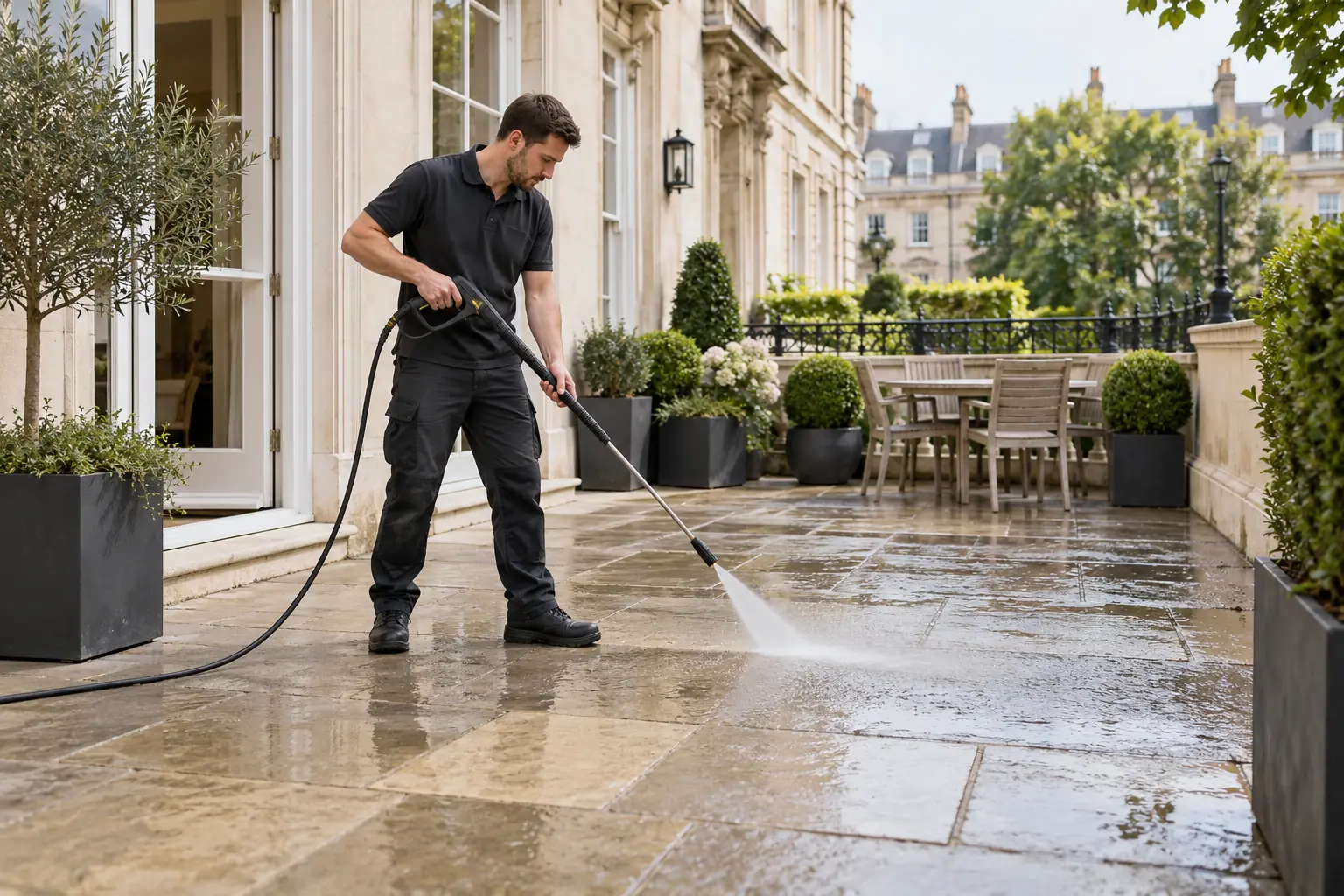
ABC Cleaning London offers pressure washing for outdoor areas in London and the M25. Driveways, patios and suitable exterior surfaces can be discussed individually. Share photographs and material details before booking so the method, drainage arrangements and limits can be considered together.
Look below the dirt
Identify the paving before choosing the clean.
Natural stone, concrete slabs, block paving and timber respond differently to water and mechanical force. Older pointing, flaking coatings or unstable slabs can change what is sensible. A photograph of the whole area and a close view of joints help explain the condition, but an on-site check may still be needed before a method is agreed.
Tell us the material if you know it, when it was laid and whether a sealer has been applied. Keep any supplier instructions available. A high-pressure jet can dislodge weak jointing or mark a softer surface. The objective is an appropriate clean, not removing every visible mark regardless of the effect on the material.
The surface-suitability guide explains the questions to settle before a test area or wider wash.
Different marks, different expectations
Algae, traffic dirt and stains are not interchangeable.
Loose soil and general weathering deposits may respond differently from oil, rust, deep staining or organic growth. Describe the problem rather than asking only for a pressure wash. Oil can penetrate a porous driveway; a rust mark may be associated with metal furniture; dark patches may remain after superficial dirt has lifted.
Stain treatment may need a separate assessment and quote. Colour variation, repaired slabs and previous wear can become more visible after cleaning, so an older surface may remain uneven in appearance.
Rooms outside the house
Patios and paths need usable routes around them.
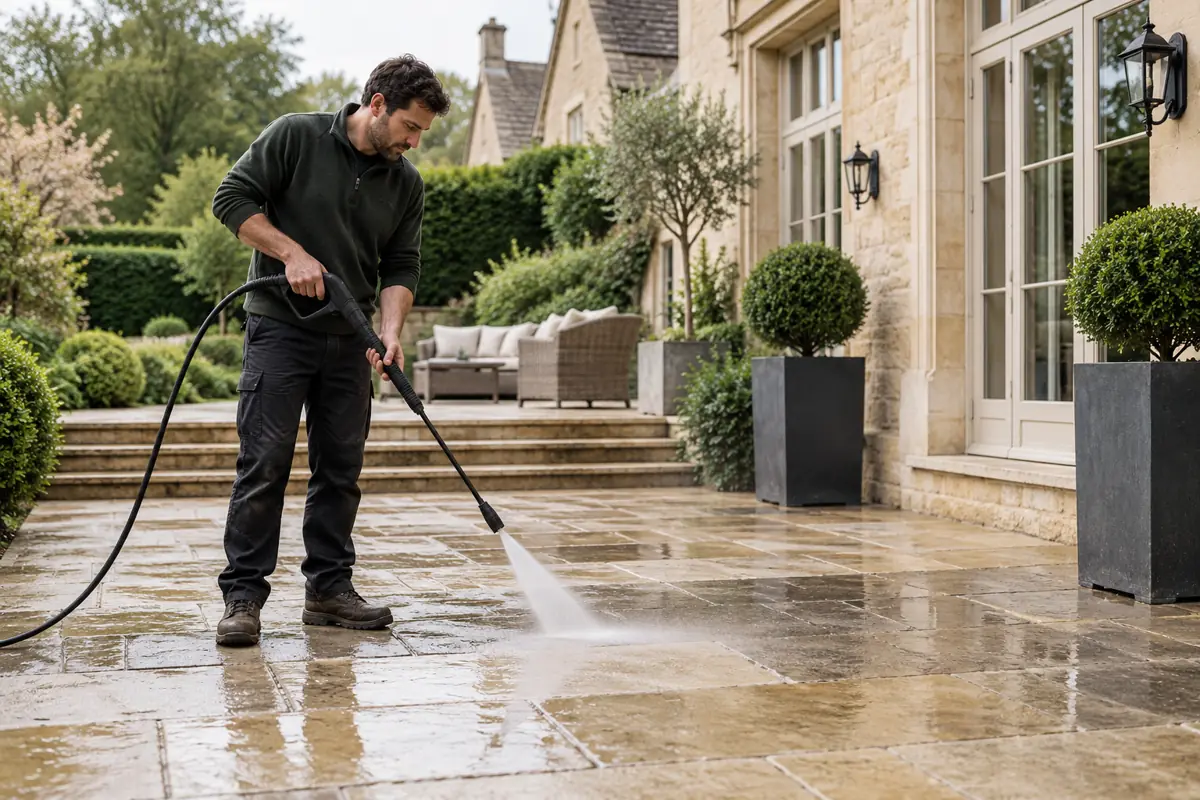
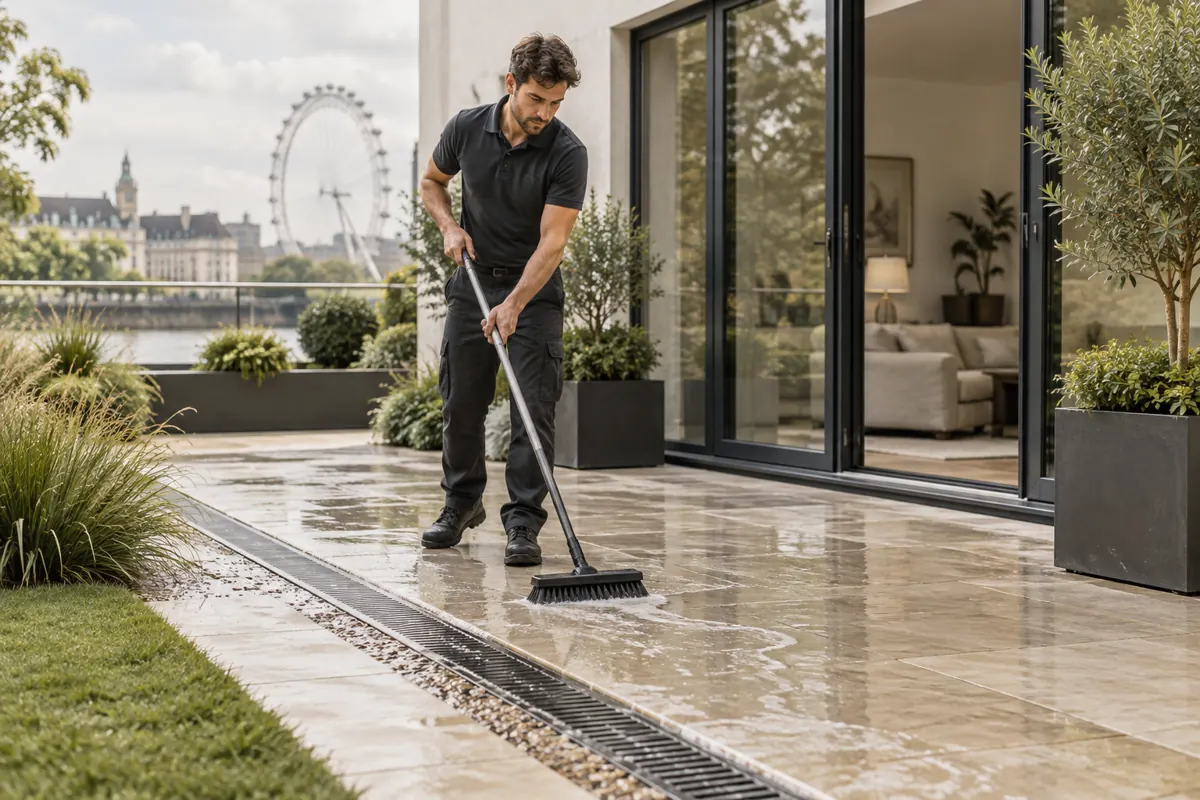
Patio cleaning often involves furniture, pots, planters and doors opening directly onto the working area. Agree who will move the items and where they can stand while the surface is cleaned. Heavy containers and fixed furniture should be identified in advance. Cleaning underneath them is not automatic if they cannot be moved safely.
Paths and steps may be needed for access during the visit. Explain other entrances and the needs of residents using the route. Water, hoses and loosened dirt can make the area temporarily unsuitable for pedestrians. Keep children and pets away from the work and allow the agreed access arrangement to remain in place until the area can be used again.
Vehicle access and joints
A driveway clean is not a resurfacing job.
Move cars from the working area before the appointment and explain whether the driveway is shared. Photograph drainage channels, edging and changes in level. Cleaning can expose existing defects, but it does not stabilise a sinking section, repair cracks or resolve poor drainage. Those issues need the relevant contractor.
Block paving may require attention to jointing after cleaning, depending on the paving and method. Re-sanding, re-pointing and sealing must be discussed separately, including drying conditions and suitable materials. Do not assume that a wash includes all of those tasks or that a cleaner can restore the original structural condition of a neglected driveway.
| Task | Ordinary cleaning scope | Separate agreement |
|---|---|---|
| Surface dirt | Agreed washing of a suitable surface | Deep oil, rust and specialist stain work |
| Paving joints | Condition checked before method selection | Re-sanding and re-pointing |
| Coatings | Existing finish considered | Sealing or coating removal |
| Damage | Reported as a limitation | Crack repair or resurfacing |
Decking and delicate exteriors
Some surfaces call for less force, or another specialist.
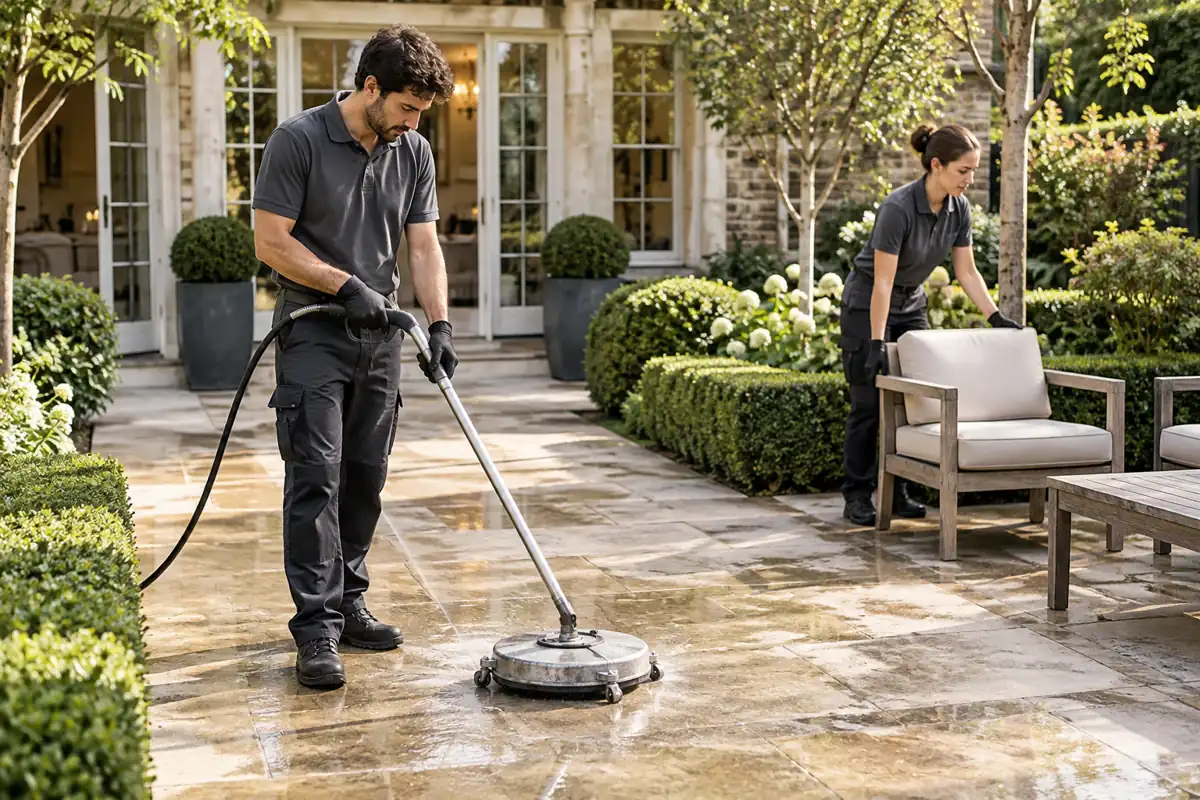
Timber decking can weather, splinter or lose a finish. Composite boards have their own care requirements. Explain the product, coating and condition before asking for washing, and provide the manufacturer’s cleaning guidance. A method suitable for concrete paving should not be transferred automatically to a deck.
Historic stone, rendered walls, painted façades, roofs and fragile finishes require particular caution. Their inclusion is subject to assessment and confirmed capability, not a blanket exterior-cleaning promise. Roof access, façade restoration and suspected asbestos-containing materials require the appropriate specialist assessment and confirmed capability. Where the surface is unsuitable, a different contractor may be the better next step.
Where the water goes matters
Plan drainage before washing begins.
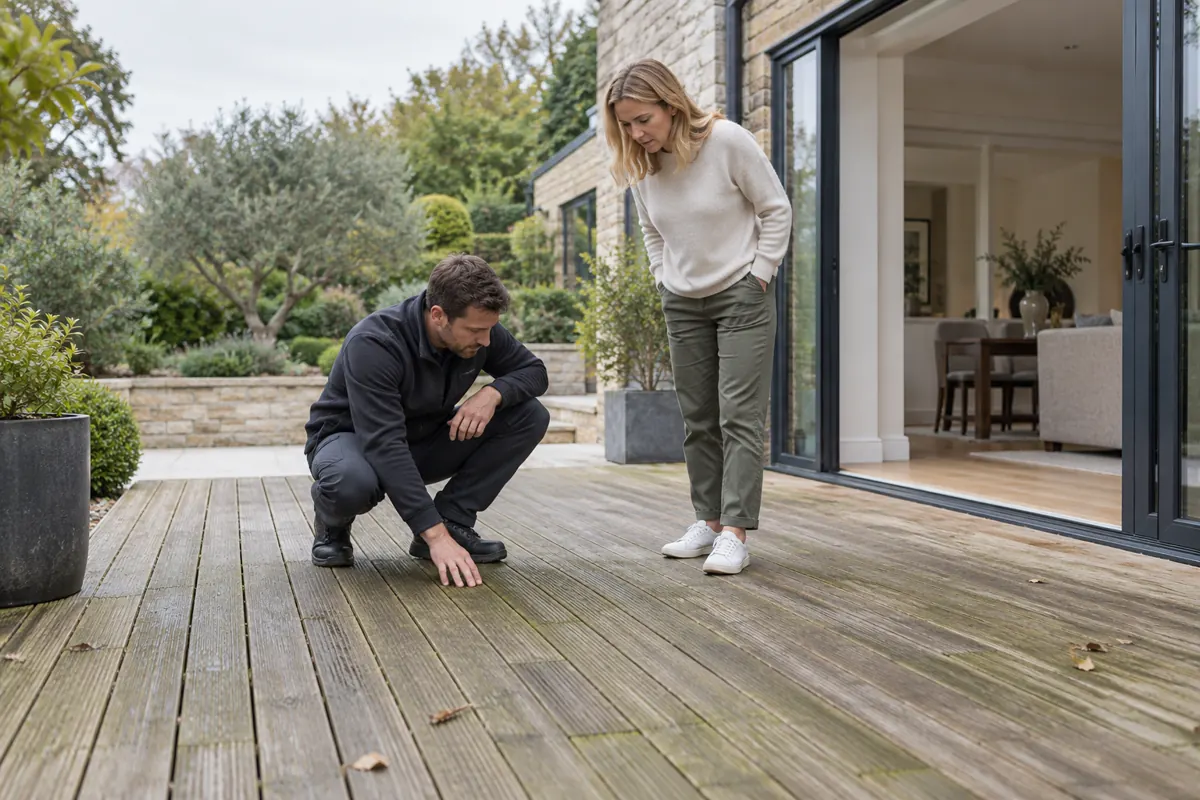
Washing moves dirt as well as water. Share the location of drains and any history of standing water, especially in basement courtyards. The route of the wash water and the nature of the contamination need consideration before a method is agreed. A nearby drain should not be assumed suitable for any cleaning discharge.
Environment Agency guidance identifies detergents and contaminated wash water as potential pollution sources. Practical arrangements depend on the site, the material being removed and the drainage system. Cleaning should not simply send chemicals, oil or dirty sediment towards the nearest surface-water drain. Any necessary collection or disposal arrangements belong in the agreed plan.
A measured approach
Assessment, preparation, cleaning and a final check.
Begin with the surface description and photographs. Confirm the accessible area, the intended result and any marks that need assessment. Before work, identify damaged joints, loose slabs, nearby electrical fittings and surfaces that need protection. The method should reflect those findings rather than a fixed pressure setting chosen in advance.
Cleaning then follows the agreed area and access arrangement, with attention to water movement and neighbouring finishes. At the end, review the surface and any remaining staining. Wet paving can look darker than dry paving, so allow for that difference when discussing the finish. Further treatment, sealing or repair should be a separate decision rather than an improvised addition.
Make the area ready
A short preparation list saves disruption.
Remove small loose objects, cushions and movable decorations from the area. Discuss larger furniture beforehand. Close windows and doors near the work, point out vulnerable plants and explain any neighbour or managing-agent restrictions. Do not cover or alter drainage without agreement, and leave access to the water supply available if it is part of the plan.
After building work, collect screws, nails, sharp offcuts and bulky rubble first. A wash is not a substitute for waste removal. If work also affected the interior, arrange the post-build clean in a sequence that avoids carrying outdoor residue back through newly finished rooms.
For the surrounding project, follow the outdoor handover sequence to separate retained materials, clearance, washing and repairs.
- Measure the approximate length and width of the area.
- Show tap positions and the route from the street.
- Mention a shared entrance or courtyard before booking.
A site-specific estimate
Price follows area, condition and practical access.
Pressure washing is quoted separately. Area, surface type, contamination, preparation, access and water-management arrangements can all affect the estimate. A small enclosed courtyard may need a different allowance from a large open driveway. Photographs help reveal those differences, particularly when they show the whole route and not only the dirtiest slab.
Confirm the quoted area, intended treatment, water-management arrangements and any additional work. Our pricing information explains what to check before accepting a quote. Discuss deadlines because weather can affect scheduling and drying.

Tell us about the surface
A better brief starts with a photograph.
Call 020 3404 5120 with the postcode, approximate area and material details. Include the marks you want addressed and any fragile or damaged sections. London and M25 availability can then be checked for the work requested.
Glass beside the cleaned area may need its own finishing visit. If that is part of the project, ask about window cleaning after the exterior work is complete. The aim is a sensible sequence, with each task clearly defined and priced.
Questions about the visit
Will washing remove all black marks?
Not necessarily. Deposits, deep staining and changes in the surface can look similar. Send photographs and identify the material. Additional treatment and its likely limits should be discussed before work is authorised.
Is sealing included?
No automatic sealing is included in this description. Sealing, re-sanding and repairs require separate agreement, suitable materials and appropriate conditions after cleaning.
Can you wash a shared courtyard?
Discuss permission, drainage and residents’ access first. The person arranging the work should identify who controls the area and whether building-management rules affect the visit.
Can I book using only the square metre measurement?
It is a useful start, but material, condition, staining and access also matter. Include wide and close photographs so the estimate reflects more than the area alone.
Does this include roofs or fragile façades?
Describe the structure and access requirements before booking, and ask whether the proposed work can be undertaken. A specialist assessment or different contractor may be required.
Sources and further guidance
Describe the surface before arranging the wash.
Send the surface type, its condition and photographs of drainage and access. Discuss the proposed method and its limits before agreeing any exterior cleaning work.