

Renovation journal
Planning waste collection after a kitchen refit
A kitchen refit leaves a mixed pile that can be misleading. Empty packaging, a removed cabinet, spare tiles, appliance manuals and an unused fitting may sit together, but they do not have the same destination. Before arranging collection, the owner and contractor need to identify what is waste, what belongs to a trade and what must stay for the new kitchen. This prevents a useful component from leaving the property and helps the collection match the actual materials and access route.

Make a room-by-room inventory
Start with photographs of the kitchen and any storage area used during the refit. List bulky items, small offcuts, packaging, old fixtures and sealed containers separately. Do not rely on one estimate such as “a few bags”. A pile behind a door may contain heavy worktop pieces or sharp metal that affects how it can be handled.
Ask the project manager which materials belong to the contractor and which the homeowner has agreed to dispose of. Keep the decision in writing. A cleaner arriving for the finished room should not have to guess whether a box of spare hinges, a matching tile pack or a sink template is rubbish.
Separate the new kitchen’s useful items
Retain care manuals, warranties, product codes, spare keys, touch-up materials and matching offcuts where the installer says they may be needed. Label a clean, dry place for them. Packaging sometimes carries the only clear model number for an appliance or fitting, so photograph it before discarding the box. Confirm with the owner which items they want to keep.
Do not remove protective film from a new cabinet or appliance simply because the surrounding packaging is being cleared. The installer should say when it comes off and who is responsible. A cardboard sheet beneath a new unit may still protect a floor while final adjustments continue. Document temporary protection separately from waste.
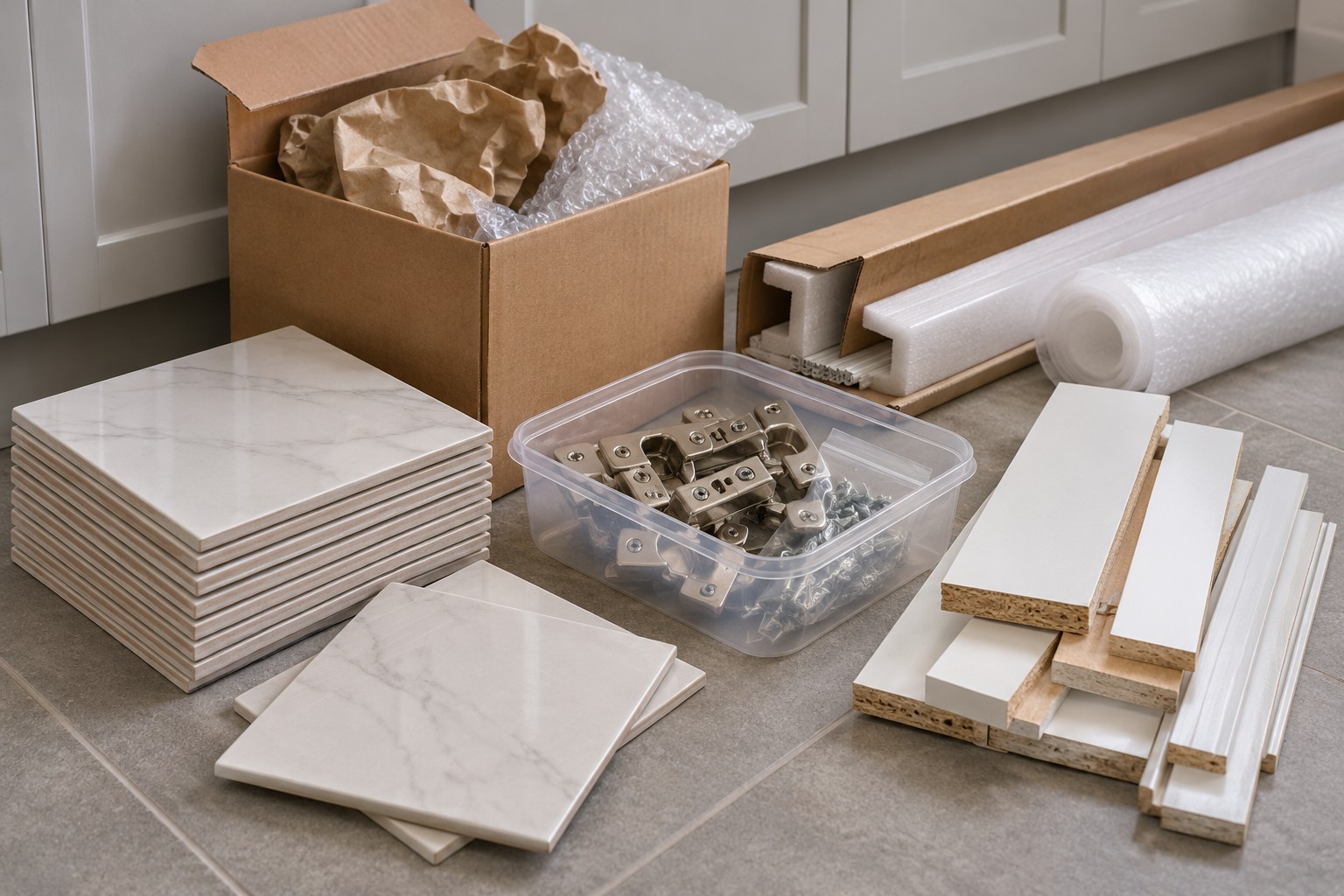
Identify items needing a specific route
Old appliances, electrical parts, paint, solvents and other products should not be treated as ordinary mixed rubbish without checking the appropriate collection rules and the carrier’s acceptance. Ask the contractor what each container holds; do not open an unlabelled tin to identify it by smell. Keep suspect materials secure and away from the cleaning team until their responsible owner arranges the correct route.
Broken tile, glass and sharp metal need safe containment and clear labelling. Heavy stone or worktop sections may require more than a routine bag collection. Measure large pieces and photograph them against a familiar object so the provider can plan equipment and labour. Do not hide difficult items beneath light packaging in a photograph.
Consider whether the refit uncovered older materials that have not been identified. A suspicious board, insulation fragment or unknown dust should be left for the responsible contractor to assess; a cleaner or waste carrier should not make a diagnosis from colour alone. Keep the area undisturbed until the appropriate information is available. Ordinary collection plans can continue for the clearly identified, separate materials, but uncertainty about one pile should be recorded rather than folded into a general quote.
Check ownership of the removed fittings
The old kitchen may include cabinets, a sink, taps and appliances with different ownership or reuse plans. Ask whether anything is being sold, donated, stored or returned to a supplier. Keep those items apart from the disposal pile. A cleaner should not disconnect a remaining appliance or pull a cabinet from the wall just to make the room look clear.
Where a contractor has agreed to take its own debris, confirm the date and what that promise covers. Trade waste left behind can block a detailed clean, but that does not automatically transfer responsibility to the cleaning team. Record the boundary and arrange a collection before the final wipe where possible.
Plan the route through the property
Trace the path from the kitchen to the collection point. Note narrow doors, stairs, lifts, parking restrictions and newly finished floors. Protect surfaces using a method approved for their finish; strong tape and sliding cardboard can create new marks. Check whether a lift may be used and whether the building has rules for loading or collection times.
Keep the route clear of residents and cleaning equipment while bulky pieces move. If a container or vehicle must wait outside, confirm where it may stand with the relevant provider and property manager. Do not promise a collection time or price until the provider has the actual inventory and access details.
In a flat, check the building’s approach to communal corridors and lifts. Some spaces cannot be used to hold bags while a team makes repeated journeys. A narrow communal doorway may also change how an old worktop must be carried. Inform the provider of these constraints before the visit. Keep fire exits and shared routes clear throughout the work, and agree who will clean any dust deposited outside the kitchen after the removal.

Coordinate waste and detailed cleaning
Collection should usually precede the final kitchen clean. Moving old units and bags can release dust into cupboards, corners and thresholds. After the area is clear, inspect for sharp fragments and loose grit before wiping new surfaces. Confirm that the installer has finished adjustments and released the fitted kitchen for its first clean.
Our waste removal service can be discussed using photographs, material details and access information. A separate after builders cleaning visit can then address the released room and affected route. Agree each scope explicitly; removing an item and cleaning the surface it covered are related tasks but need separate confirmation.
Close the handover with a clear record
Before the collection leaves, compare the remaining items with the retain list. Photograph any material left because its ownership or disposal route is unresolved. Keep collection paperwork supplied by the provider with the project records. The homeowner should know what was removed and what still needs a decision.
Ask the homeowner to approve the retain list before collection so materials do not leave by mistake.
After the kitchen is clear, check behind former storage positions and along the route for dust and damage. Note cleaning still required, installation snags and waste waiting for another provider. The useful outcome is a room ready for the agreed clean, with manuals and spares preserved and no uncertainty about why a particular item remains.