

Renovation journal
Inspecting a new bathroom screen after building work
A new shower or bath screen can appear dirty even when the cause is not ordinary residue. Haze may sit on temporary film, a coating, the glass itself or a seal. Cleaning before identifying the layer can turn a useful installation record into an argument about who made the mark. Inspect the screen with the installer’s information nearby, then separate accessible surface cleaning from glazing or fitting defects.
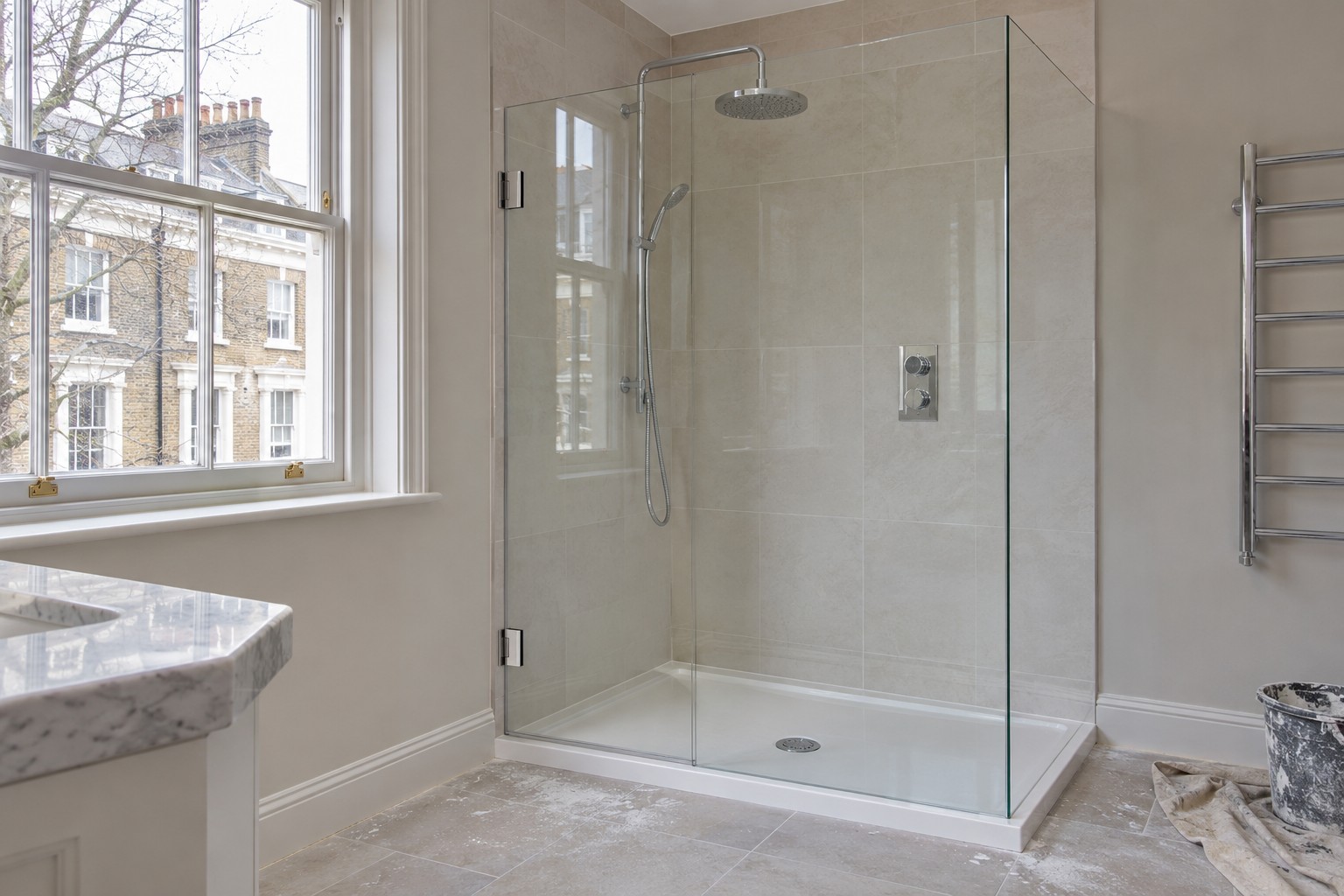
Record the screen before its first clean
Photograph the entire screen and the corners where glass meets frame, tray or bath. Take closer images of scratches, cloudy patches, adhesive, silicone and labels. View each mark from more than one angle and note whether it appears to move against the background. This helps distinguish a surface deposit from something within a laminated or sealed component, although the supplier must make the final assessment.
Keep the model and care instructions with the bathroom handover documents. Some screens have easy-clean coatings, decorative finishes or applied film with specific restrictions. Confirm which face is treated. A clear pane does not reveal its coating by appearance alone, and a cleaner should not assume that a familiar household glass method is suitable.
Ask what protection should remain
Transport film, stickers and installation labels may be removed at different stages. Ask the fitter which are temporary, who will remove them and whether any code must be retained for warranty purposes. If a film edge disappears beneath a seal, do not tug it free. The installer should decide whether the joint needs attention before the screen is cleaned.
A label can leave adhesive, but the correct response depends on the glass and frame finish. Photograph it before removal. Avoid an untested solvent, blade or heat source. Even a plastic scraper can affect a coating or fresh sealant. Where the fitter has provided an approved method, apply it to a small permitted area and stop if the finish changes.
Check the installation, not just the glass
Open and close the screen using the normal handle while the installer is present. Note rubbing, misalignment, a loose hinge or a seal that catches. Do not force a door because it will not reach a preferred cleaning position. Ask whether the fittings have been adjusted and whether any movement is intentional. These are installation questions rather than cleaning tasks.
Check the manufacturer’s guidance on how the screen should be left between uses. A folding panel may have a defined resting position; a sliding door may need clearance at its stops. Cleaning around a moving part is easier when its normal range is known. If the movement feels stiff, record the point at which it occurs rather than trying to lubricate or adjust hardware during the clean.
Inspect the bottom rail, seals and channels for packaging, loose grit and unfinished silicone. The accessible exterior may be cleaned after handover, but removing seals or dismantling rollers is not part of ordinary surface work. Keep water away from a newly applied joint until the fitter confirms the cure and first-clean instructions. Never use cleaning as a test of waterproofing.
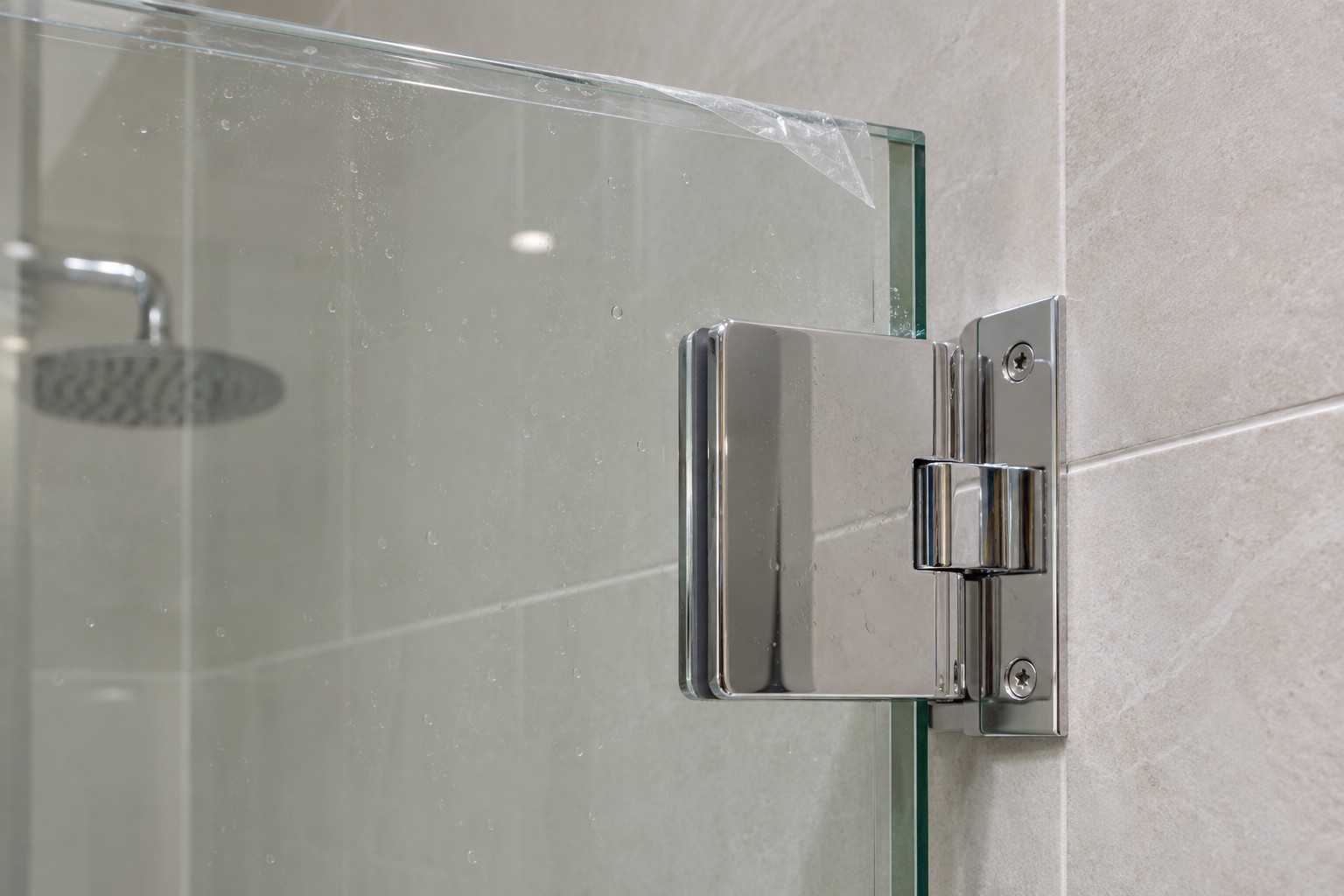
Distinguish dust, water marks and construction deposits
Loose dust should be identified before a cloth is drawn across the pane. A gritty particle can score a coated surface. Use the supplier’s permitted collection and wiping method with clean equipment. If there are water marks from installation testing, ask whether the coating has a stated first-clean process. A general descaler is not automatically safe for glass coatings, metal trim or nearby stone.
Paint specks, grout residue and adhesive should be assessed separately. Find out what the material is and which surface it sits on. A mark on glass beside a fresh tile joint may need a different tool from a smear on chrome. Do not repeat pressure or switch products because a first gentle pass failed. Record the remaining spot and ask the relevant contractor for a decision.
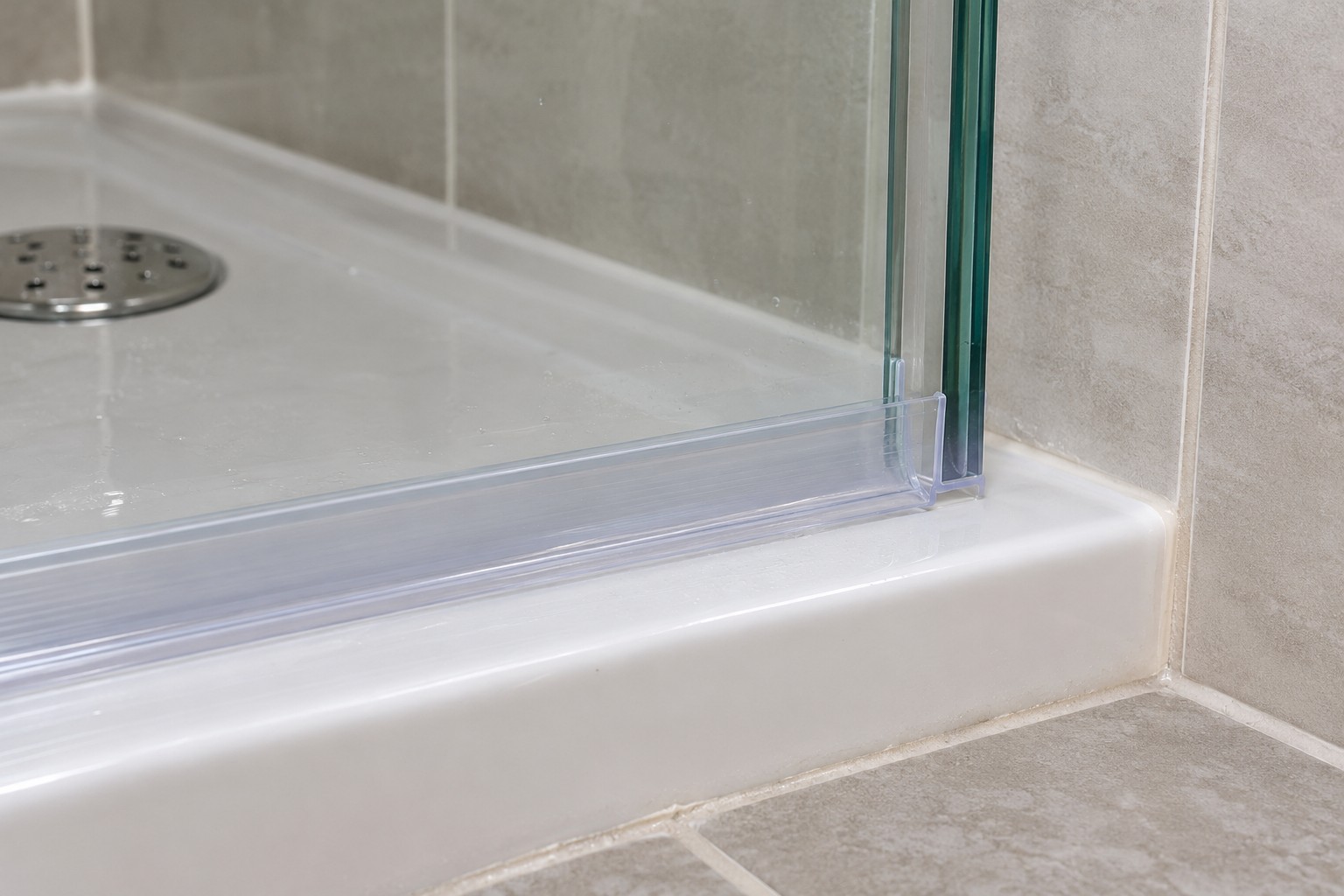
Protect adjacent tile and fittings
Glass sits beside grout, sealant, taps and often a new shower tray. Their care instructions may conflict with a product suggested for the screen. Prevent runoff onto a sensitive tile or freshly sealed edge. Use a clean cloth that has not collected grit from the floor. Check the shower head and controls are secure, but leave plumbing and commissioning to the fitter.
If the room has several unfinished details, list them before arranging an after builders cleaning visit. A cleaner can focus on released, accessible surfaces while the trades retain responsibility for joints, adjustments and defects. This makes the scope clear and avoids a second clean being blamed for work that was never complete.
Inspect the glass in changing light
Look through the screen toward a contrasting wall, then across it toward daylight. A smear may show only from one direction. Let any permitted cleaning moisture dry before deciding whether a mark remains. Check the edge where the door closes and the area around the handle, which are easy to miss when the pane looks clear from the entrance.
Note whether a cloudy patch is on the reachable face, the opposite face or apparently within the glass. The last case belongs with the glazing supplier. Do not promise that a surface clean can correct every visual defect. A useful record identifies the pane, side, position and lighting conditions so the installer can reproduce what the owner sees.
Avoid relying on a single close photograph. Show the whole screen and the mark together. This gives the supplier enough context to locate it without guessing which panel or face is involved. Keep the images unedited for the condition record.
Handover the result with clear ownership
At the end, separate three lists: cleaning completed, marks left for a supplier decision and fitting work still outstanding. Keep the original photographs alongside the after-clean views. If the screen remains protected because another trade will work nearby, record the reason and the agreed date for removal. Do not call it an omission without that context.
The same inspection approach applies when new bathroom glazing needs a separate window cleaning service scope, particularly where access or coatings differ. A clean screen should let the installer and owner see the finish. It should not hide a scratch beneath polish, disturb a seal or make the cleaner responsible for a door that was never adjusted.