

Renovation journal
Dealing with construction grit in thresholds
A threshold can look clean from standing height while grit remains in its channel, beneath a door edge or at the join between two new floors. As soon as people walk through, the particles reappear and may scratch a finish. Repeatedly wiping the same strip is rarely enough. Identify where the debris is coming from, check the threshold’s construction and clean only the accessible areas released by the installer.

Find the direction of travel
Observe the route people and trades use between rooms. Is grit arriving from an unfinished extension, a dusty hallway or outside paving? Photograph the threshold before and after normal traffic. A trail on one side can point to its source, although airflow and footwear may move particles in less obvious ways. Keep the timing of any remaining cutting or drilling work in the record.
Check adjacent rooms before treating the threshold as an isolated defect. A clean doorway cannot stay that way if a floor protection sheet is shedding grit nearby. Agree whether both sides of the doorway are included in the same cleaning scope. If one side remains a work area, create a clear boundary and plan a later final pass.
Identify the installed materials
A doorway may join timber to tile, carpet to vinyl or a new floor to an older one. The threshold strip could be metal, timber, stone or coated plastic. Ask the installer for the product and first-clean guidance for each surface. One cloth and product used across the joint may be unsuitable for the more sensitive side.
Photograph chips, gaps, a lifting strip or a sharp edge before cleaning. A threshold that moves underfoot needs the fitter. Do not press it down with a tool or add adhesive as part of a clean. The goal is to remove accessible debris without changing the installation or hiding a snag.
Collect loose particles before moisture
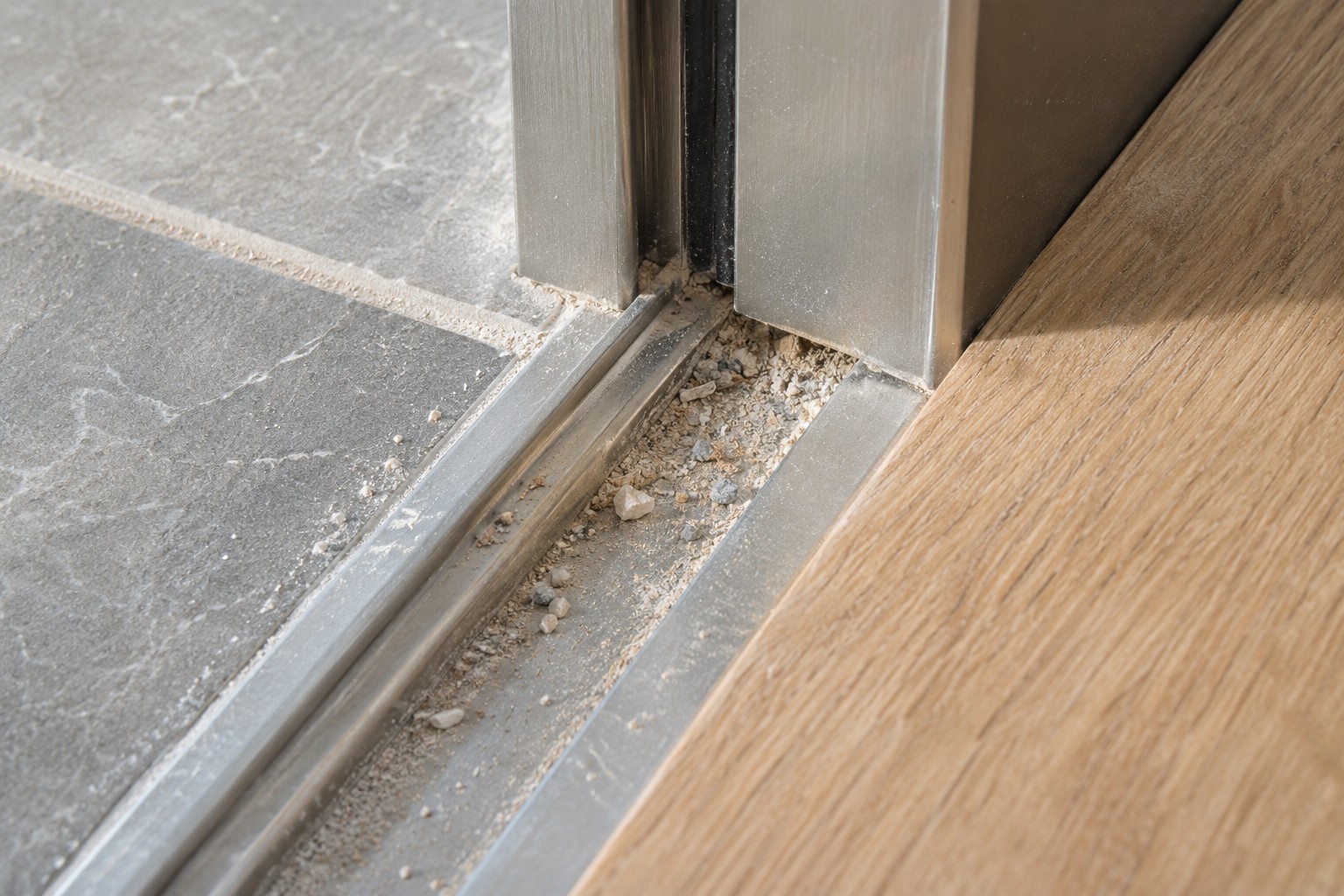
Use a suitable controlled collection method for dry grit on each side of the threshold. Keep tool heads and cloths free of trapped particles. Work along the channel rather than pushing debris under the strip. A damp cloth used too early can turn plaster powder into a paste in the narrowest part of the join.
If the floor has been newly sealed, obtain permission before any wet stage. Moisture can reach an unfinished edge or an adhesive that is still subject to first-clean restrictions. Do not flood a channel and rely on it draining away. What looks like an opening for water may be a joint that should remain dry.
Pay attention to the tool used in a narrow track. A hard nozzle or metal edge can mark a soft threshold faster than a cloth does. Ask the fitter whether the profile has a removable cover designed for maintenance; do not pry it open merely because grit is visible through a slot. If the cover can be lifted by the owner, record the instruction and the person who will do it. Cleaning behind fixed trim requires another plan.
Check door and frame clearances
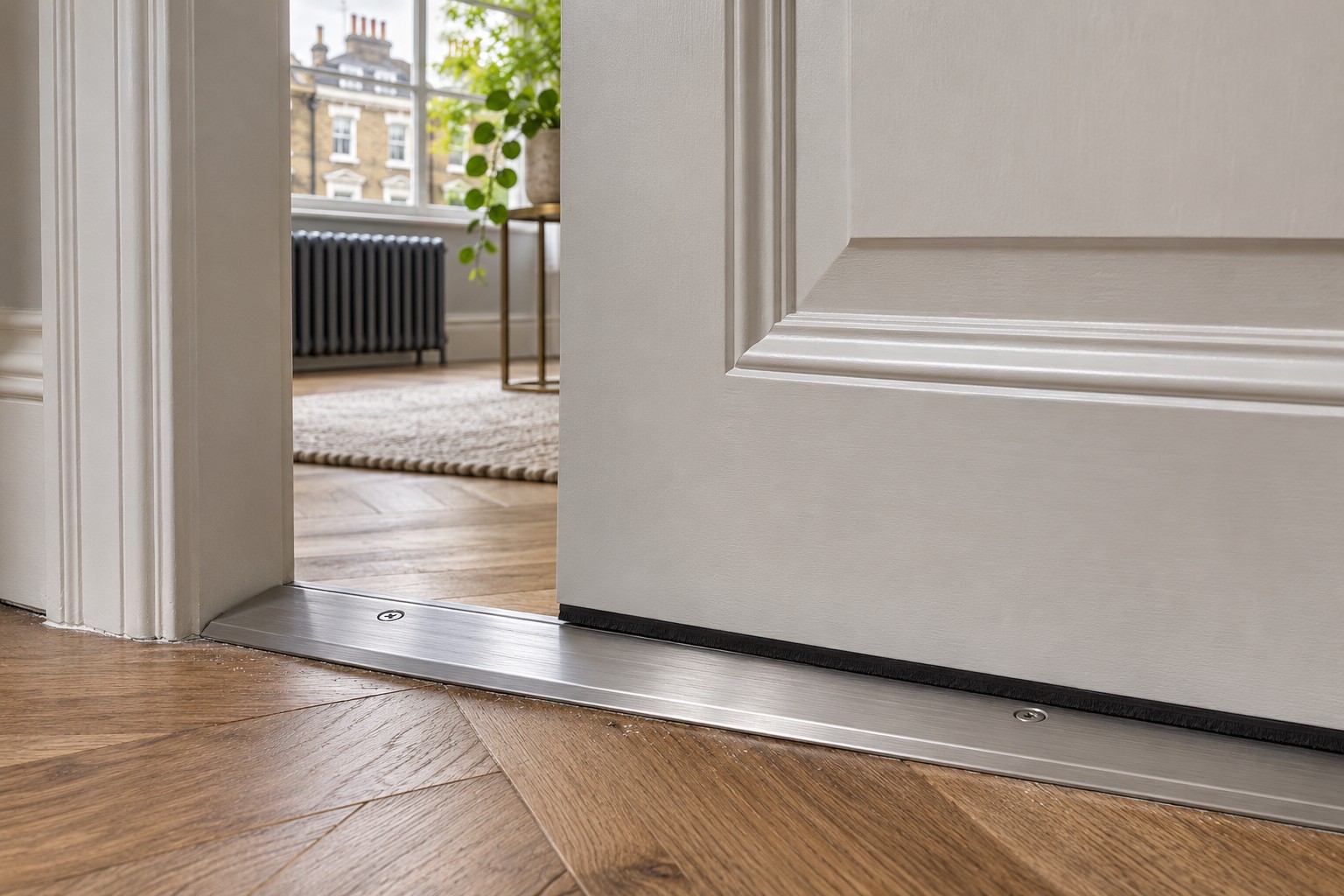
Open and close the door normally after loose grit is collected. If particles fall from the bottom edge or a seal brushes the threshold, note the contact point. A door that scrapes the strip can keep producing debris and needs the joiner or installer. Do not trim a seal or adjust a hinge to make the cleaning result last.
Inspect the bottom of the frame and the corners where skirting meets the threshold. Dust can collect behind a stop or under a temporary protective tab. Ask which protection may be removed. Pulling tape from new flooring or a painted frame may leave adhesive or lift finish. Record any edge that requires the installer to release it.
Separate residue from construction damage
Raised grout, paint, adhesive and mortar may sit near a threshold, but they are not the same as loose grit. Identify the material and the surface underneath before trying to remove it. A blade can scratch metal; a solvent can change a coated strip or floor finish. If a mark resists an approved gentle method, stop and ask the relevant trade for a decision.
Take a close photograph of a persistent mark with enough surrounding floor visible to locate it. A scratch can resemble a line of dust under one light and become clear under another. Cleaning cannot repair a damaged profile or chipped tile. Keeping defects separate from removable residue makes the handover fair to the owner, fitter and cleaner.
Plan the final route through the building
Thresholds are best checked after higher surfaces and neighbouring rooms have been cleaned. Otherwise dust falls or is carried back into the channel. Work from the furthest completed room toward the exit and avoid dragging a full bag across a finished strip. If the route is still needed by trades, schedule the final threshold check after their last movement.
Protect clean thresholds from later deliveries using material approved for the floor and doorway. Loose cardboard can slide underfoot; strong tape can leave adhesive or damage a coating. Ask the project manager which protection is appropriate and who removes it at handover. If a cleaner returns for a final pass, the protection should be lifted first so the actual joint can be inspected. A covered threshold cannot be signed off as clean.
For a whole refurbishment, an after builders cleaning visit can include the doorway transitions and the rooms feeding them. Share a simple map of finished and unfinished spaces. The cleaner can then distinguish normal recontamination from a strip that needs adjustment or a source that remains open.
Inspect after ordinary foot traffic
Once the permitted cleaning stages have dried, cross the doorway a few times with clean footwear and look for returning particles. Check both sides. If grit appears again, record the amount, location and likely source rather than repeating the same wipe indefinitely. The floor installer may need to inspect an open edge or loose profile.
Give the owner a short note on the threshold material, cleaning method and any unresolved snag. If the doorway leads outside, include the entrance mat and adjacent paving in the discussion without assuming they form part of the same service. A lasting result comes from removing accessible debris and closing the route that keeps bringing more through.