

Renovation journal
Cleaning behind radiators after renovation
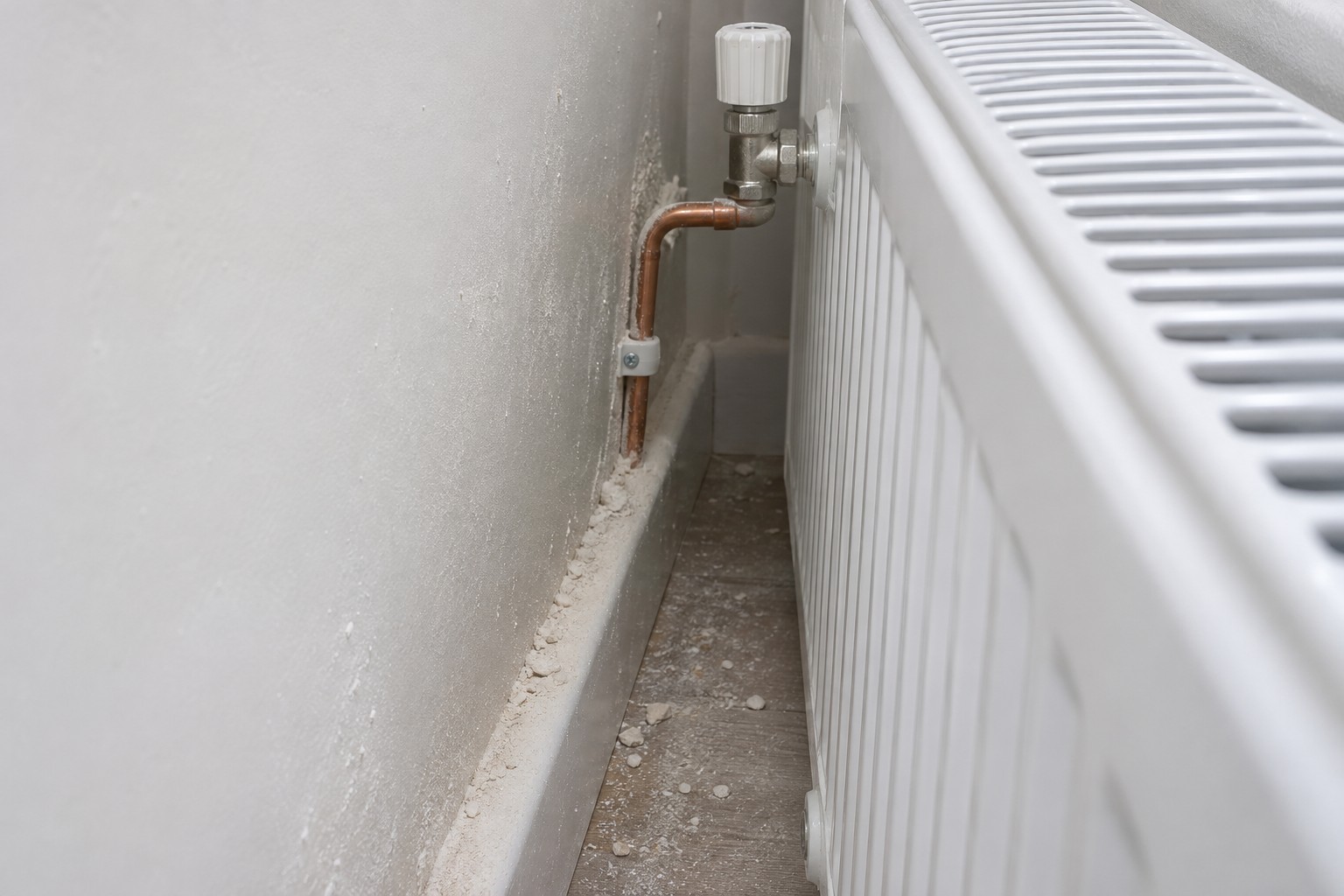
A newly decorated wall can look finished until daylight reaches the narrow space behind a radiator. Plaster dust, paint flakes and packaging often settle there while the heating is isolated or a unit is being fitted. The gap may also contain pipework, brackets and fresh sealant that a cleaner should not disturb. Decide what is accessible with the radiator in its normal position, then ask the installer about anything hidden or unfinished.

Confirm the heating work is complete
Ask the heating engineer or project manager whether the radiator has been mounted, connected, tested and handed over. A unit waiting for a final valve adjustment or wall repair is not ready for a full cosmetic clean. Record leaks, loose brackets, damaged paint and unusual movement without touching connections. A cleaner cannot judge a heating installation by the absence of visible water.
Check whether the wall finish behind the unit is complete. Sometimes a radiator is fitted before final decorating, leaving an unpainted patch that can resemble dirt in a photograph. Put such work on the snagging list. If another trade will return, schedule the final clean after its visit where possible, or agree a clearly limited interim pass.
Define the reachable surfaces
Look from above and from each side without leaning on the radiator. Note which parts of the back, wall, skirting and floor are visible and reachable with appropriate tools. A narrow gap does not automatically justify removing the unit. Disconnecting valves, lifting a radiator from brackets or reaching behind hot pipework belongs with competent trades.
Some radiator designs have removable grilles or covers. Ask for the manufacturer’s instructions and the agreed scope before taking anything apart. If a panel is intended for maintenance access, the installer or owner can confirm who may remove it and how to refit it. Ordinary room cleaning should remain on accessible external surfaces unless that permission is explicit.
Measure expectations against the gap. A slim tool may reach a wall-mounted panel but not the centre of a deep cast-iron unit. Photograph a blocked section. If the owner wants an inaccessible area cleaned, arrange a separate decision with the installer about safe access rather than promising a result that cannot be inspected.
Identify the debris before collecting it
Loose dust and grit can be collected with an attachment suitable for the wall and radiator finish. Choose equipment that fits without scraping a painted edge. Work slowly so particles do not fall into a freshly cleaned room. A cloth pushed blindly through a gap may move debris to the floor while leaving the back of the unit untouched.
Look for screws, offcuts and small fittings before discarding anything. A loose part might belong to the installation. Set it aside for the engineer rather than treating every object as rubbish. Paint or plaster bonded to the radiator needs a separate assessment. Do not scrape a coating or apply a general solvent because a pale mark resembles dust.
Match the radiator finish and temperature
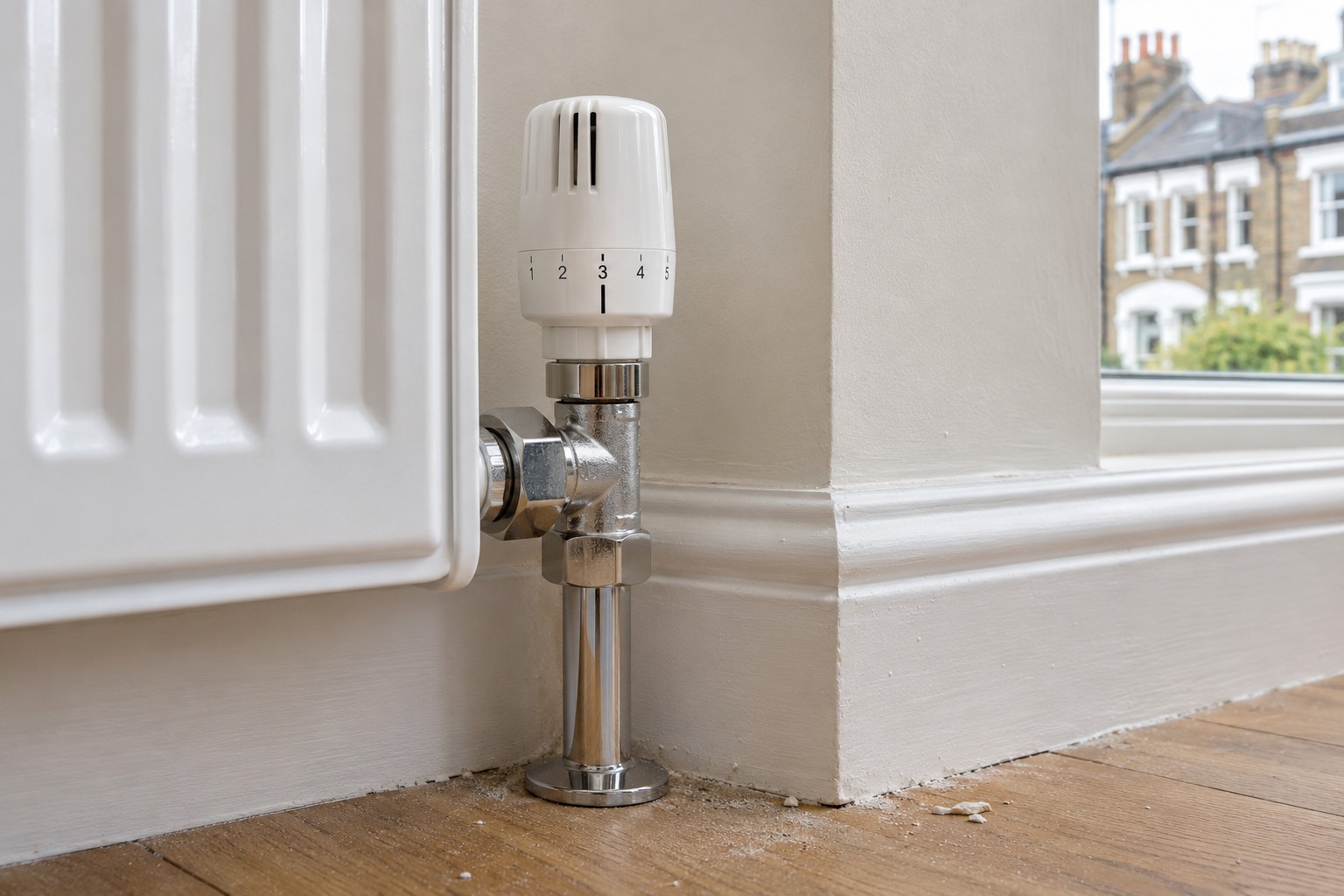
Check that the radiator is cool and safe to approach. Follow the manufacturer’s care information for painted steel, aluminium, cast iron or a decorative finish. A new coating may have first-clean restrictions, and an abrasive tool can leave a visible line. Keep products away from valves and electrical controls. Do not spray liquid into gaps or across pipe connections.
Where a permitted damp method is used on an accessible face, control the amount and dry as directed. Water trapped against the wall, floor edge or bracket can affect adjacent finishes. A towel radiator in a bathroom may stand beside tile, grout and sealant with different instructions. Treat those as separate surfaces rather than one washable zone.
Examine the wall and skirting behind it
Dust may settle on a new plaster wall or painted skirting below the radiator. Ask whether the paint is ready for wiping. Fresh filler and caulk can lift if rubbed before handover. Clean only the released, reachable areas by their own finish instructions. If a brush catches on an unfinished edge, stop and tell the decorator.
Check the floor beneath the unit. Grit around pipe penetrations and behind a skirting return can move out when heating starts or people walk past. Collect the accessible debris, then note any opening that appears unfinished. Filling a gap or sealing around a pipe is not a cleaning task. The contractor should decide whether it needs repair or is part of the intended installation.
Plan around the rest of the room
Clean higher shelves, window ledges and the radiator top before the floor so falling dust is captured later. Move freestanding furniture only as agreed, protecting a new floor from scratches. Avoid placing a tool against a decorative radiator while working elsewhere. If many radiators were replaced during the renovation, map the rooms and note differences in finish or access.
Consider curtains and blinds near the unit. Newly fitted fabric can collect construction dust and may need its own care method; it should not be dragged across a radiator while the wall is cleaned. Keep the window area clear enough to see whether dust is falling from a reveal rather than from the heating equipment. This helps the contractor locate the source of repeated residue.
An after builders cleaning visit can include accessible radiator exteriors and nearby surfaces when the heating installation is released. Share a list of units awaiting an engineer and any inaccessible backs before the visit. A clear scope is more useful than a vague request to make every hidden space spotless.
Check again after the heating runs
Once the system has been operated by the responsible person, inspect the nearby ledge and floor for displaced dust. Heating can circulate particles left in a gap, but a recurring patch may also come from unfinished wall work. Photograph the location and compare it with the first condition record. Do not assume repeated wiping will solve an open construction edge.
The final handover should distinguish accessible cleaning completed, areas hidden by the installed unit and defects for the heating engineer or decorator. Give the owner the radiator care instructions and any access limits. A clean visible face matters, but so does knowing why a mark remains behind it. That record prevents a later maintenance visit from treating a deliberate boundary as an overlooked task.