

Renovation journal
Cleaning around new skirting boards
New skirting boards create a narrow line where flooring, paint and wall finishes meet. Building dust collects along it, but a pale mark may also be filler, caulk or paint that has not been finished. Scrubbing the edge without checking the materials can damage two surfaces at once. Before cleaning, establish which boards have been fixed and decorated, what the floor beneath them is and which joins are still waiting for a trade.
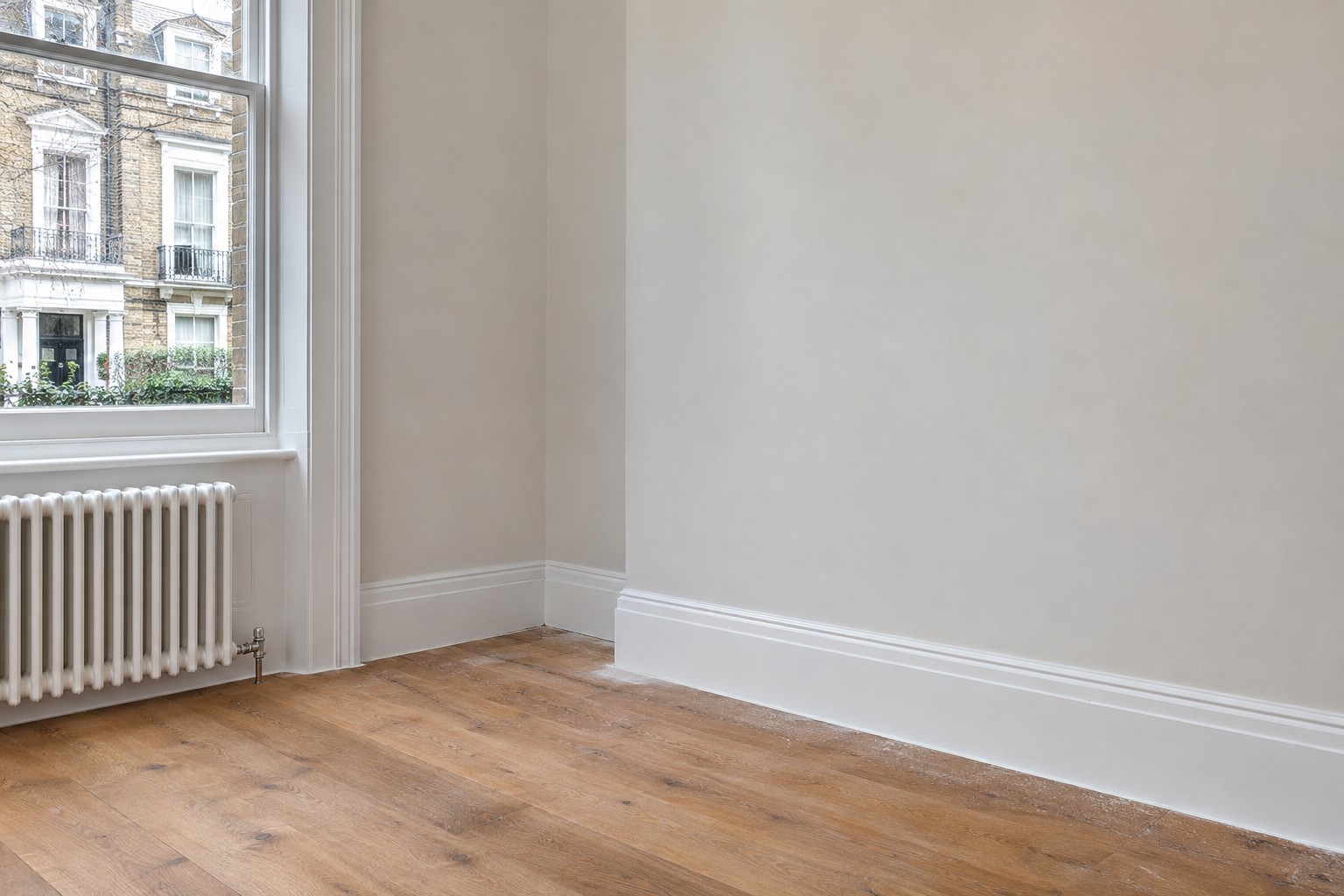
Follow the skirting around the whole room
Walk the perimeter before starting. Look behind doors, radiators and fitted furniture, and note any length concealed by temporary protection. Photograph gaps, raised caulk, chips and paint runs in context. A close image alone may not show which wall is affected. Record whether the board itself moves when lightly encountered during normal use; do not press on it as a test.
Ask the joiner and decorator whether fitting, filling and painting are complete. Dust produced by a final sanding pass can return immediately after the room clean. If work remains, either wait or agree an interim pass on released surfaces. Keep the contractor’s finishing list separate from ordinary cleaning tasks.
Identify the board and its coating
Skirting may be timber, MDF, plastic or another product, with a factory finish or site-applied paint. Ask for its care guidance, especially around cut ends and joints. A white surface is not necessarily washable. Fresh paint may still be vulnerable to moisture or friction even when it feels dry to a casual touch.
The floor below may be timber, carpet, tile, vinyl or stone. Its own first-clean instructions determine what can be used at the edge. Do not carry a product from the skirting onto the floor simply because they meet. A small amount of water trapped at an unfinished join can affect a new material before anyone notices.
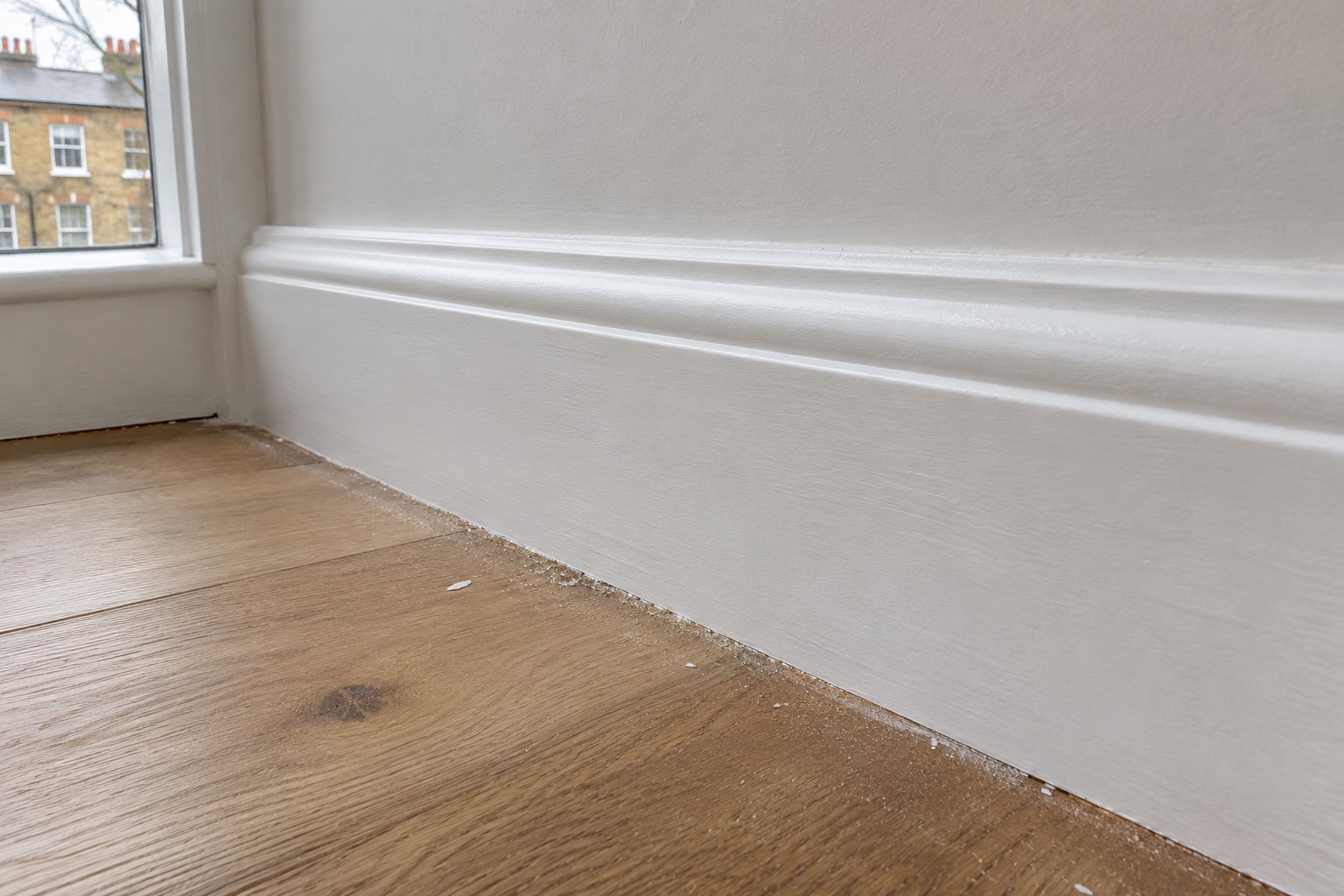
Collect loose grit before examining marks
Use a suitable attachment or cloth to collect loose dust from the top lip and the floor line. Work with care around delicate paint. Change cloth faces rather than dragging gritty residue along the full length. Check corners and the back of the board where accessible, but do not pry away trim to reach dust behind it.
If the floor is carpeted, ask whether the supplier recommends a particular first-clean method near the edge. A hard nozzle can mark paint or catch a loose fibre. On a hard floor, collect grit before any permitted damp wipe. Dust pushed into the expansion gap or beneath a strip may return under traffic and abrade the finish.
Be careful with a vacuum brush that has just been used on rough construction surfaces. Inspect the bristles for trapped grit before it touches a painted board. A soft brush can still transfer a mark if it carries dried plaster or adhesive. For a long corridor, clean in short sections and inspect each one before moving on. This keeps a problem local rather than drawing the same residue along several metres of new trim.
Separate paint flecks from unfinished work
A speck on a board may be ordinary paint from decorating, but the material beneath still matters. Ask which paint or filler was used. Avoid a blade, abrasive pad or solvent without explicit approval for the finish. Test any agreed method on a small area and inspect after drying. Stop if the sheen changes or the coating transfers.
An uneven bead of caulk is not a stain. Pulling at it can leave a gap between wall and skirting. Photograph the section and ask the decorator to finish it. Likewise, a nail hole or rough mitre needs filling or joinery correction, not a stronger cleaning product. A condition list prevents cosmetic defects from being mislabelled as dirt.
Keep the wall edge in view
The wall above the board may have new paint, wallpaper or a textured coating. Dust can sit along the boundary without either surface being ready for moisture. Use the wall’s own care instructions and avoid rubbing across the line. A fresh decorative finish can be damaged by a cloth intended for a painted board.
At door frames and thresholds, check whether a board ends cleanly or meets a piece of trim that still needs fitting. Do not fill a gap or cut away excess material during cleaning. If plaster powder appears from behind the board after a pass, record its source. Repeating the wipe may not solve an unfinished edge.
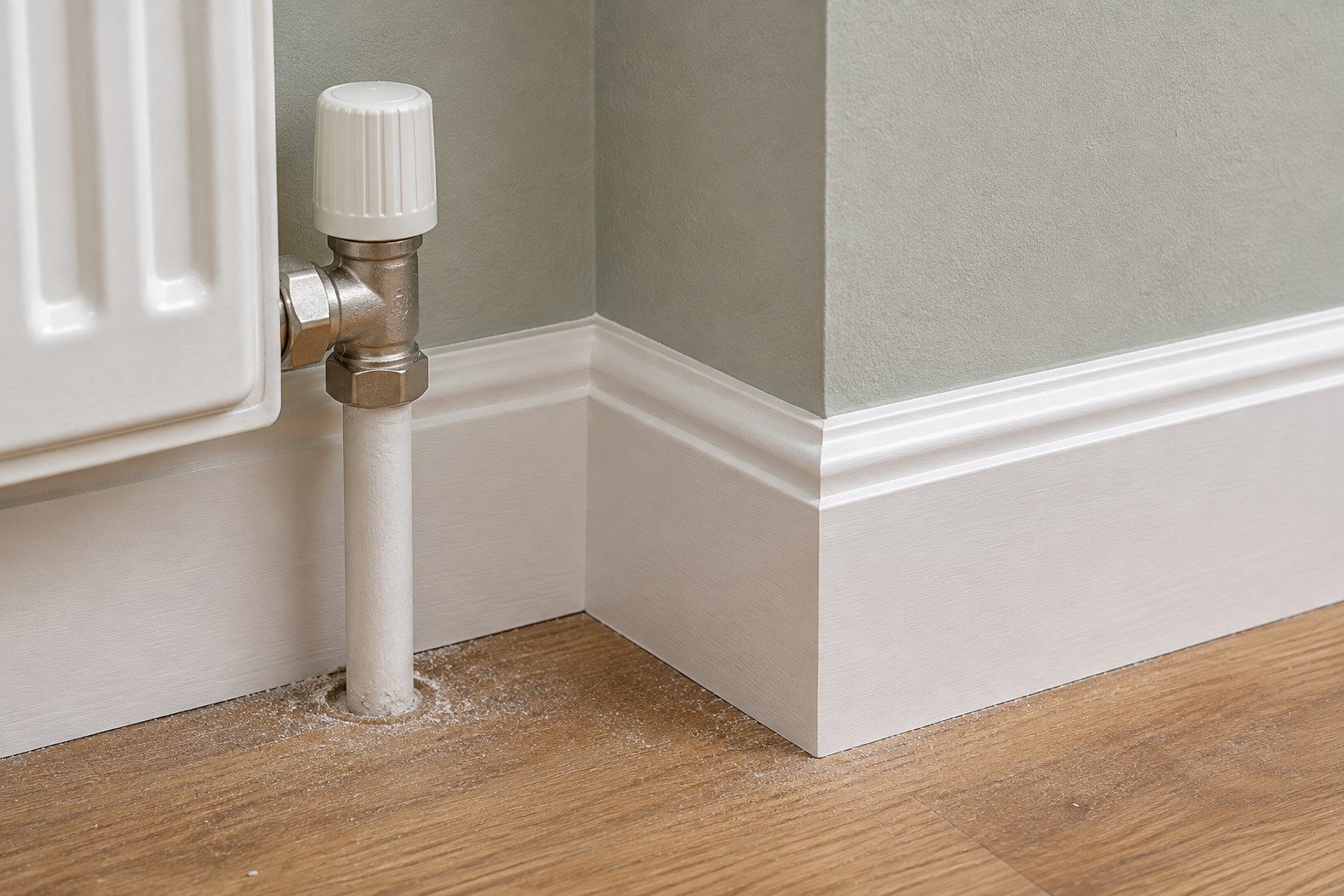
Where a radiator pipe passes through the floor near skirting, the surrounding trim may be a separate component. Check whether its cover is fixed or removable under the installer instructions. Avoid forcing a cloth beneath it or directing liquid toward the penetration. If a cover sits loose, report it instead of pressing it down. The clean can collect accessible dust around the pipe, while the installer remains responsible for the fitting and any open gap.
Plan the sequence with the floor clean
Clean higher ledges and the wall first so dust does not settle onto a finished skirting line. Address the top of the board, then the floor edge before the open floor area. Keep separate cloths for the two finishes. If furniture will be installed later, photograph the accessible perimeter now, because a fitted unit may conceal a remaining defect.
An after builders cleaning visit can include released skirting and floors as part of a room-by-room scope. Share the material information and list any sections still waiting for paint, caulk or joinery. This makes the final inspection about the actual completed surfaces.
Inspect the line after it dries
Look along the skirting from both directions in daylight. A smear on gloss paint or grit beside a dark floor may show only from one angle. Note accessible dust still within scope separately from a paint run, gap or damaged board. Review the list with the owner or project manager before the room is filled with furniture.
Keep a simple record of the cleaning method and the sections left untouched. When the trade finishes those areas, a final gentle pass can be agreed under the product instructions. A neat skirting line is useful, but protecting the wall and floor around it matters just as much at handover.
Ask the owner to keep the material and paint details with the handover papers for later maintenance.