

Renovation journal
Cleaning around new electrical sockets and switches
Freshly fitted sockets and switches often sit in the dustiest parts of a finished room. Plaster powder gathers along the plate edges, paint flecks appear near screws, and grit collects below the fitting. The temptation is to work a damp cloth into every join. A safer handover begins by separating ordinary dust on accessible surfaces from anything that needs an electrician. Confirm that installation and testing are complete before the room clean, then agree what the cleaner may touch.

Establish whether the fitting has been handed over
Ask the electrician or project manager whether each outlet, switch and faceplate is installed, secured and tested. A plate sitting proud of the wall, an exposed opening or a fitting awaiting a final connection should be recorded and left for the trade. A cleaner cannot verify electrical safety by looking at a tidy front. If a socket feels loose or a switch does not operate as expected, stop and report it rather than pressing it repeatedly.
Note any rooms where electrical work will resume. Second fix work can release fresh dust after an otherwise careful clean. Photograph unfinished areas and write a short boundary list for the cleaning team. In an occupied property, tell occupants which fittings are still out of use. The person responsible for the installation should confirm when normal use may begin.
Decide what is actually on the surface
Loose plaster dust, a raised paint fleck and a scratch in a decorative plate need different responses. Inspect the fitting in good light before wiping. A matt patch may be manufacturing texture or a mark in the finish, not removable residue. Take a close photograph with the surrounding wall visible so the installer can identify the position later.
Do not probe gaps to discover what is behind a plate. Dust inside a socket, staining around an opening or debris emerging when a switch is operated should go back to the electrician. Surface cleaning is limited to accessible external faces and the adjacent wall finish. Even apparently harmless plaster powder can be gritty enough to mark polished metal or dark plastic when rubbed dry.
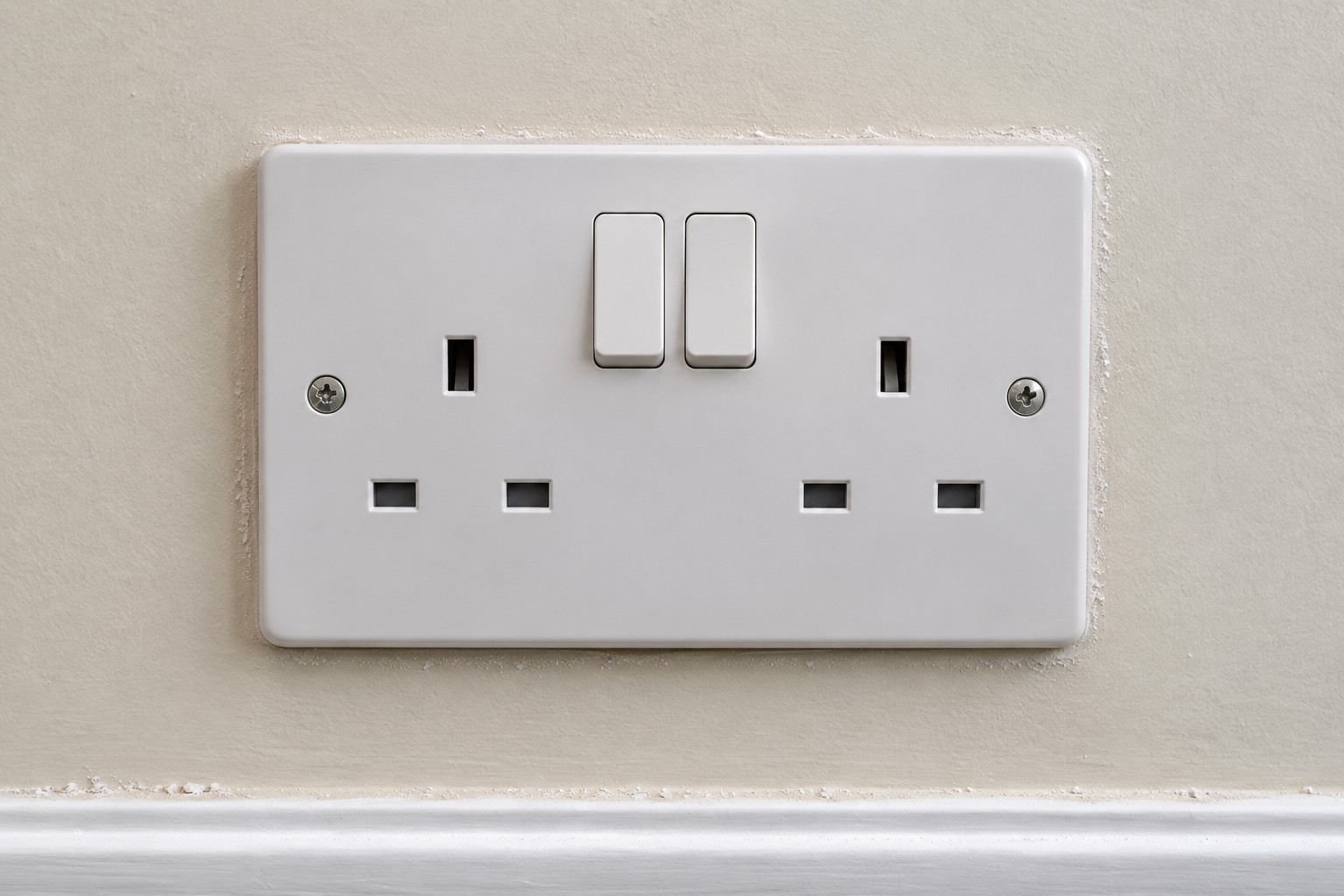
Keep liquids away from openings and mechanisms
Check the manufacturer’s care instructions for the particular plate. A plain white plastic fitting, painted metal plate and touch-sensitive control may require different handling. Use a suitable clean cloth for accessible exterior dust, keeping it free from grit picked up elsewhere. If the approved method involves any moisture, apply it to the cloth as directed, never into a fitting, and avoid the seams, screw recesses and operating parts.
The same boundary applies to nearby data, television and USB outlets. A charger port is not a spot to scrub with a wet corner. Do not spray product across a wall and hope the fitting stays dry. If a fresh paint finish needs cleaning, confirm its own readiness first; an attempt to remove a fleck from the plate can easily drag across a soft painted edge.
Handle paint and plaster marks without improvising
Before treating a bonded mark, identify whether it is sitting on the plate or attached to the wall. Ask the decorator what paint was used and whether the finish is fully ready for contact. A blade, abrasive pad or general solvent can remove a coating with the deposit. Do not use a fingernail or hard tool simply because the spot looks small.
If the installer approves a particular method, test it on an unobtrusive area of the same finish and stop at any change in colour or sheen. Some marks are better left for the trade that caused them, especially where a seal or paint line needs correcting. A note describing the mark is more useful than repeatedly trying stronger products without knowing the surface specification.
Clean the wall edge as a separate material
The narrow strip around a fitting can collect a halo of dust from drilling or chasing. The wall may be painted plaster, tile, wallpaper or a specialist finish. Follow its care instructions rather than treating the entire area as one plastic surface. Check for loose filler, unsealed grout or fresh caulk. If the edge crumbles when touched, that is a finishing issue for the contractor.
On tiled splashbacks, keep attention on the released tile face and grout instructions while avoiding the socket opening. In a kitchen, a newly installed unit may cover part of the wall, leaving dust in a difficult corner. Do not loosen a fitting or dismantle cabinetry to make that corner reachable. Record inaccessible areas and agree whether the installer will return.
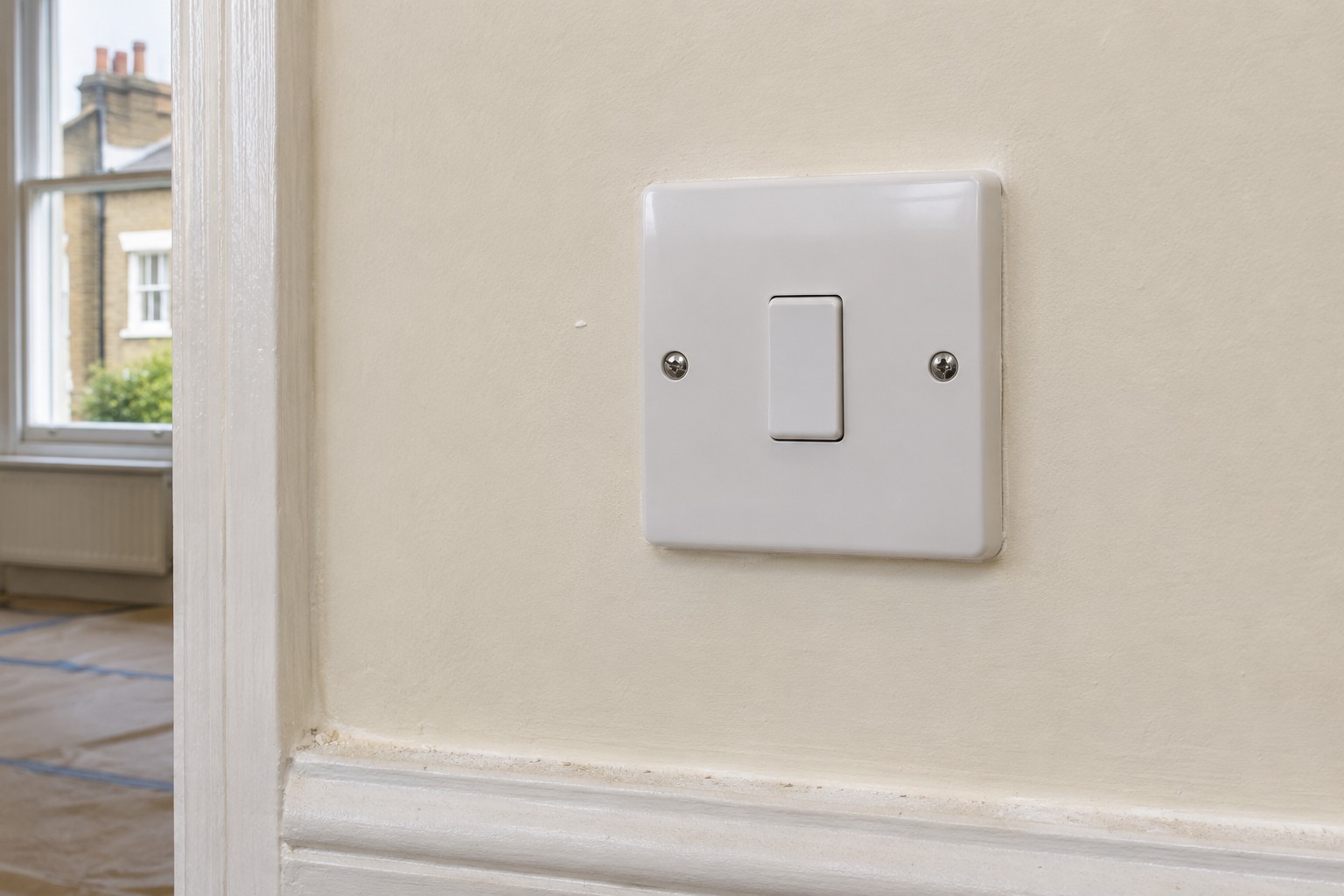
Work in a sensible room sequence
Collect loose dust from higher ledges and nearby trim before addressing a faceplate. This reduces the chance that fresh powder falls onto a cleaned fitting. Change cloth faces frequently; a cloth used on skirting or floor edges can carry grit to a smooth switch. Keep cleaning equipment clear of extension leads and temporary site power arrangements.
For a wider renovation, an after builders cleaning visit can follow the handover of completed rooms. Provide a list of finished electrical areas and any points still awaiting the electrician. Cleaning around a fitting is a small part of the visit, but clear boundaries prevent a minor cosmetic task from becoming an electrical intervention.
Inspect the result with the responsible person
Look across glossy plates for remaining smears, and inspect the wall immediately around them for a dust line. Make a separate list of marks left for the installer, surfaces not yet released for cleaning and accessible dust still within scope. This avoids calling a loose plate a cleaning failure or accepting a dirty edge as an installation defect.
Keep photographs taken before and after the work with the property handover record. The electrician should resolve loose, damaged or untested components; the decorator should answer for unfinished paint or filler. Once those tasks are complete, a gentle final pass may be possible under the relevant care instructions. The room is ready when the fittings have been handed over by the trade and the surrounding surfaces have been checked without disturbing the installation.
For several identical fittings, record one approved cleaning method and apply it consistently, while checking each location for exceptions. A bathroom fitting near a splash zone may have different installation and cleaning instructions from a hallway switch.