

Renovation journal
Cleaning a staircase after refurbishment
A refurbished staircase is both a finished surface and the route everyone uses while the rest of a property is being completed. Grit can arrive on new treads moments after they are cleaned; a fresh handrail can be touched before its coating is ready. A useful staircase clean therefore starts with the work programme and material information, not with a general floor product. Inspect the whole flight, agree which finishes have been released and decide how people will move through the house during the work.

Identify every surface on the flight
The tread, riser, nosing, string, handrail, spindle and landing may have different materials or coatings. A timber tread might be oiled while the rail is painted and the landing is carpeted. Ask the joiner or decorator for the exact finish and first-clean instructions for each. Record where protective film, tape or cardboard remains, and who is authorised to remove it.
Photograph chips, uneven paint, loose trim and gaps before cleaning. Look along the flight from the bottom and top; low light can conceal marks on a horizontal tread but show them on the return journey. A loose nosing or unstable baluster belongs with the installer. Cleaning should not become an informal test of whether the staircase is structurally sound.
Coordinate access through the property
Choose a period when trades will not carry materials upstairs. If the upper rooms are still being worked on, define a clean zone and a route for anyone who must pass. Temporary overshoes may not be suitable on every new finish, particularly a smooth stair, so ask the contractor about protection that is secure and does not leave adhesive. Never create a trip hazard for the sake of keeping dust off.
Plan how the cleaner will retreat without stepping back onto a wet or newly treated tread. A staircase cannot simply be closed like a spare room if people need the only route to a bedroom or exit. Tell occupants which sections will be unavailable and for how long according to the product instructions. Avoid promising instant access where a finish needs to dry.
Remove grit before any wiping stage
Construction grit collects at the back of treads, beside spindles and under the edge of a handrail. Use a collection method suited to the surface and an attachment that will not mark it. Work from higher areas down so dust does not fall onto a cleaned lower tread. Check the tool and cloth frequently; one trapped particle can draw a visible line through a new coating.
Do not sweep material aggressively into stair corners or beneath a carpet runner. It can return under foot traffic and abrade the finish. Bag collected debris away from the flight. If a patch is stuck rather than loose, identify it before trying pressure. Paint, plaster, filler and adhesive need different decisions, and some marks are better corrected by the trade responsible.
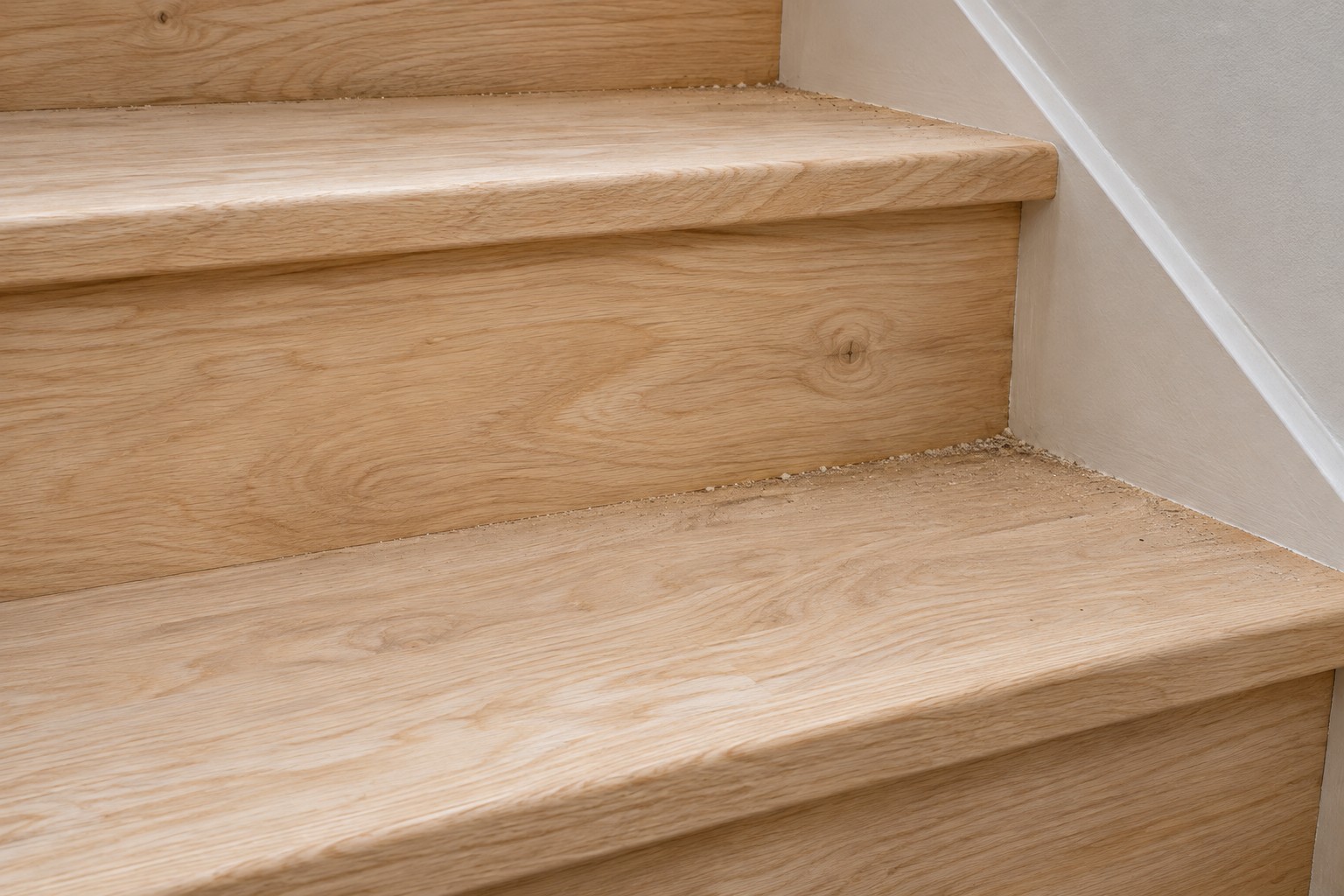
Follow the timber or coating instructions
New timber may be lacquered, oiled, waxed, stained or painted. These finishes are not interchangeable. Ask whether the coating has reached the stage at which cleaning is permitted, and use only the stated method. Excess moisture can reach joints and end grain. Abrasive pads can change the sheen on a small section that becomes obvious in daylight.
On a painted stair, the edge between tread and riser may be particularly vulnerable. A paint fleck on a contrasting surface does not justify scraping along the line. Mark persistent residue for review. If the stair has stone or tile, check the specific material, grout and any sealer before introducing a damp stage or a product intended for ordinary household floors.

Give handrails and balustrades their own pass
Hands transfer oils to rails, but a newly finished rail may still have application limits. Clean only when the decorator confirms it is ready. Wipe accessible faces with a method compatible with the coating, paying attention to the underside without leaning heavily on the rail. A loose fitting or movement should be documented and sent back to the installer.
Spindles and glass panels collect dust on both sides. A clean cloth should not carry grit from a tread onto a glossy panel. For glass, ask whether a protective coating or film is present before using a blade or solvent. If cleaning requires reaching beyond the secure side of the stairs, plan safe access rather than stretching across an open void.
Check carpet, runner and landing transitions
Where carpet meets hard flooring, inspect the threshold and fixing strip. Loose fibres from installation can be collected with the supplier’s approved method, while a lifting edge needs the fitter. Do not pull a runner aside to reach dust beneath it unless removal is part of the agreed scope and the installer has explained the fixing.
At landings, look for dust behind doors and in the corners where skirting meets the flight. These small areas often reveal whether other rooms are still depositing debris. If the entrance hall is also being refurbished, discuss an after builders cleaning visit that covers the circulation route as a whole. A single clean tread is not a useful endpoint when the next landing remains dusty.
Consider the lighting during the final inspection. A pendant over a stairwell can make one side look clean while daylight from an upper window shows dust on the other. Check both views without reaching past a safe working position. A narrow landing may require a different sequence from a broad one, especially when doors open across the route.
Inspect after normal movement resumes
Review the staircase when its permitted cleaning stages have dried. Walk the route carefully, looking for smears, gritty corners and marks near the nosings. Ask the owner or project manager to distinguish a remaining cleaning task from a coating defect or an unfinished joinery item. Record areas that could not be accessed because a trade was still working.
Give the household the care instructions for the new finish, including any temporary limits stated by the installer. Keep protective materials only where they are still required and approved. If dust returns after a later trade visit, locate its source before repeating the same pass. A successful handover leaves the staircase clean enough for use, with the finish protected and the route safe for everyone who still needs it.