

Renovation journal
Cleaning new internal doors and ironmongery
New internal doors attract construction dust on both faces, along their top edges and around the hardware. A clean that looks satisfactory with the door shut can miss grit in the hinge recess or a mark beneath the handle. The door leaf, paint or veneer, glass panel, latch and metal finish may each have different care instructions. Inspect the installation first, then clean only the accessible surfaces that the joiner and decorator have released.
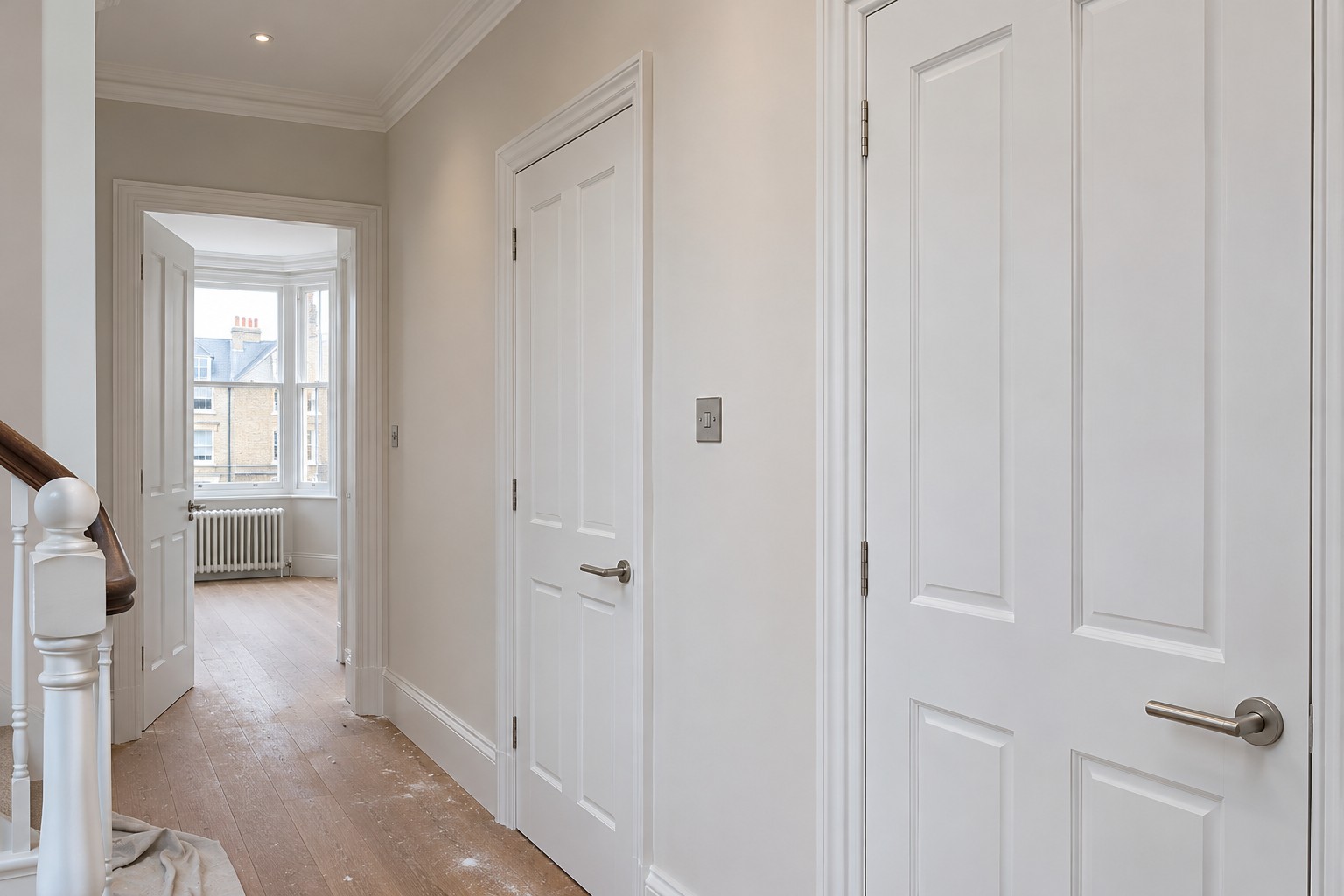
Identify the door and its finish
Ask whether the leaf is painted, veneered, laminated, solid timber or factory finished. Keep the product and coating information with the handover documents. A new painted door may need time before its first wipe, while a timber veneer may restrict moisture and abrasive products. Do not infer the material from colour or sheen alone.
Photograph each face and the edges before cleaning. Note chips, raised grain, scratches and uneven paint, particularly where a door has been trimmed on site. A mark caused by fitting is not necessarily removable dirt. Recording it early gives the joiner a chance to correct it without a cleaning attempt changing the evidence.
Check operation with the installer
Open and close the door normally. Observe whether it catches on the frame, rubs the floor, swings unexpectedly or fails to latch. Do not force it to reach a cleaning position. A loose hinge, misaligned strike plate or sticking lock belongs with the installer. Cleaning the hardware cannot correct the way the door has been hung.
Check the clearance around fitted flooring. A door that grazes carpet or a hard threshold can collect fibres and grit at its bottom edge. Wiping that edge repeatedly will not fix the clearance. Note the room, door swing and point of contact so the joiner can inspect it. Keep the door in the position advised by the installer until the adjustment is made.
If a fire door was installed, keep its certification and maintenance instructions. Do not alter seals, closer settings, gaps or labels to make cleaning easier. Ask the responsible installer which stickers and protective materials must stay. A cleaner should not remove information that explains the door’s intended function.
Collect loose dust before touching the finish
The top edge of a door can hold a surprising amount of plaster dust. Use a suitable collection method, keeping grit away from the face and hinges. Work from the top down and change cloth faces before moving to smooth panels. A particle dragged across a dark painted leaf can leave a line that becomes obvious in sidelight.
Check the panel profiles, glazing beads and bottom edge. Do not insert a hard tool into a join merely to reach hidden dust. If the bottom of a door is too close to the floor for safe access, record that limit and ask the joiner whether adjustment is needed. Remove loose packaging and offcuts separately from care labels or spare hardware.
Clean handles and hinges by their stated finish
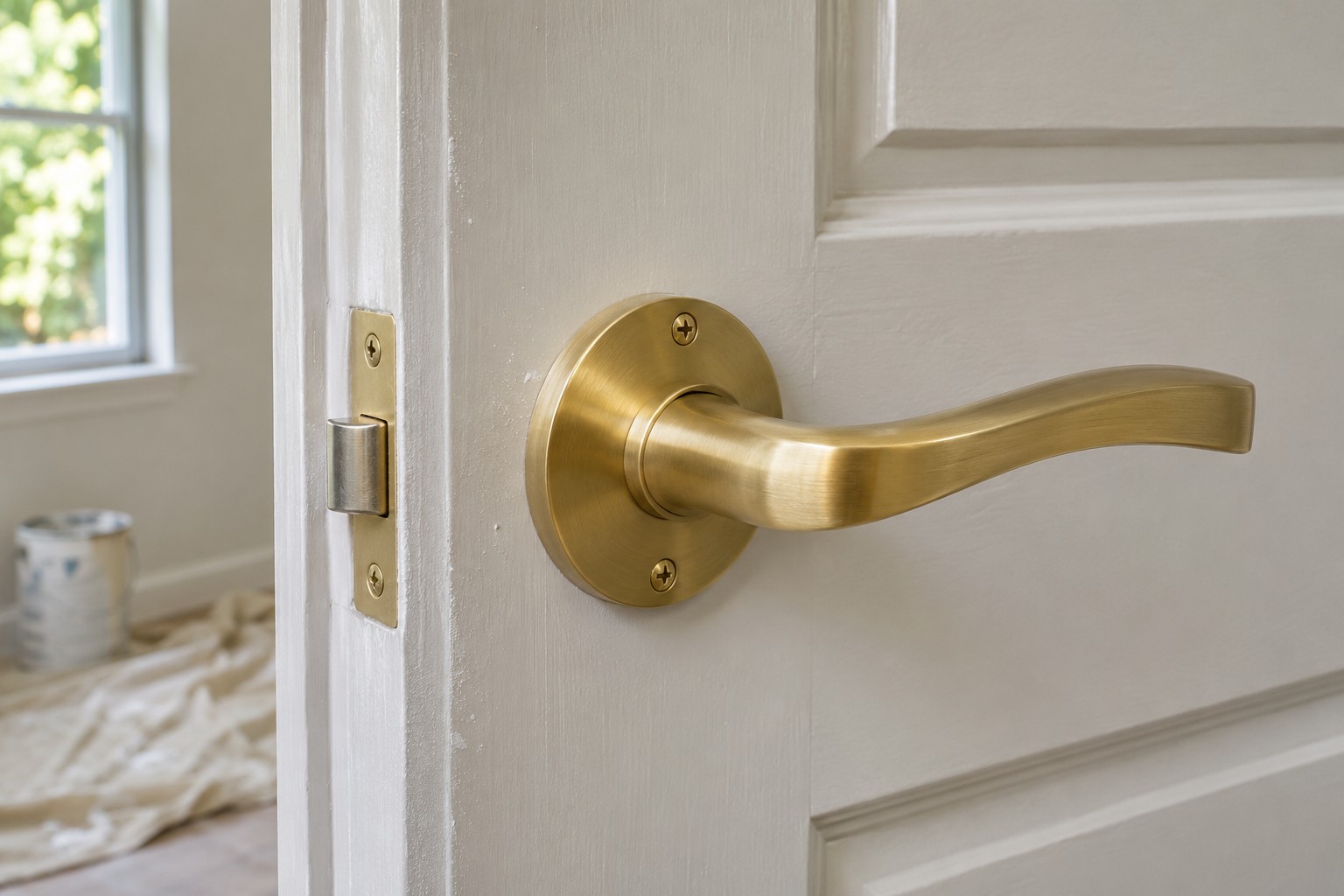
Brass, stainless steel, chrome, painted metal and dark decorative coatings are not one material. Ask for the ironmongery specification before choosing a product. A general polish may leave a different sheen or affect a protective coating. Use a compatible clean cloth on accessible external faces, taking care around the plate edge and adjacent paint.
Do not spray product into a latch, keyhole, hinge or closer. Mechanical parts need their own maintenance instructions, not a household cleaner. If a hinge creaks or a handle feels loose, record it for the installer. Resist the temptation to tighten screws during a cleaning visit; a stripped fixing or changed alignment creates a new problem.
Treat fingerprints, paint and adhesive separately
Fingerprints on a released finish may respond to its ordinary care method. A paint fleck, tape residue or hardened filler needs identification first. Ask which trade applied it and what the surface beneath can tolerate. A blade or solvent can remove finish along with residue. Test only an approved method on an unobtrusive matching area and stop if colour or sheen changes.
Protection on a door edge may be intended to remain until other trades finish. Confirm who will remove it and when. If a strip disappears beneath hardware, let the installer decide whether the fitting must be adjusted. Do not pull against a new seal or lift a trim piece to make the film come away in one sheet.
Include frames and glazing in the plan
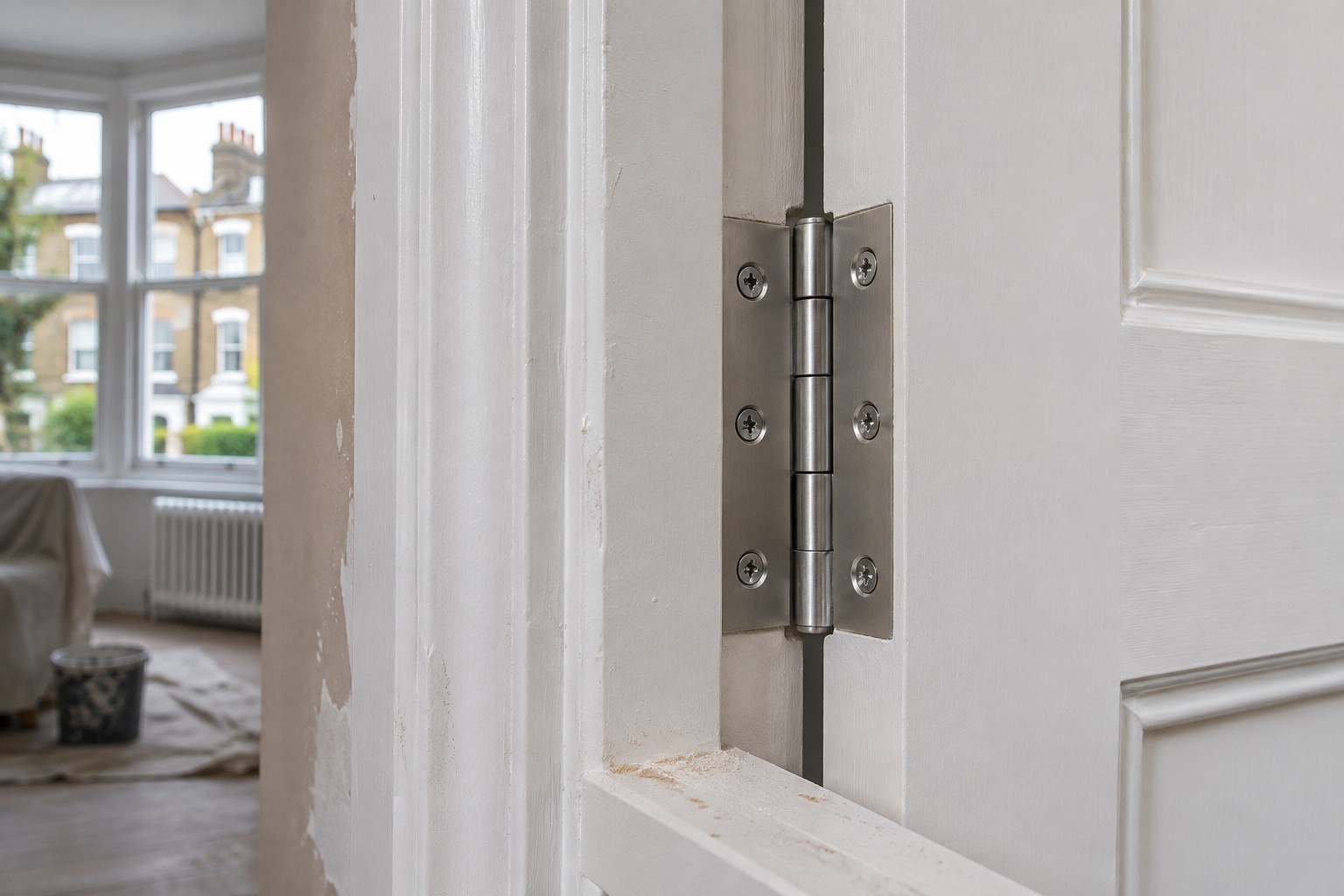
The architrave, stop and frame can be newer or more vulnerable than the leaf. Fresh caulk at the wall edge and recently applied paint may limit wiping. Follow their own instructions. Dust in the hinge-side reveal can fall back when the door moves, so inspect after operation. A gap or cracked filler should be reported to the decorator.
Where a frame meets wallpaper or a textured wall, avoid dragging a cloth from the smooth door onto the more delicate finish. Treat each side of the boundary separately. A little dust can sit in a corner without requiring a sharp tool. If the wall finish is unfinished, photograph it and leave the final edge clean until the decorator has completed the work. This prevents dust from being embedded in fresh paint.
For glazed doors, ask whether the pane has a coating or temporary film. Use the supplier’s approved method for accessible glass and keep moisture away from vulnerable timber edges. Our window cleaning service can be discussed for wider glazing work, while a small internal door pane may remain within an agreed room clean if its care requirements are clear.
Check the door in both positions
Inspect the leaf shut, then open it to see the edges and the wall behind. Look for dust on the top, around the latch and at the floor line. Note what remains because another trade is due to return. If a whole property has new doors, use a room list to track each one rather than assuming a single finish and condition throughout.
An after builders cleaning visit can include released doors and surrounding rooms once the installation work is complete. Share the material list and outstanding snags before agreeing the scope. A useful handover leaves the doors clean in normal light, operating as the installer intended and accompanied by a record of defects that cleaning could not repair.