

Renovation journal
Planning a clean after a basement conversion
A basement conversion changes the cleaning plan because the route is constrained and the new space depends on systems that may still be under test. Dust can gather on stairs and in light wells, while fresh waterproofing, flooring and ventilation need specific handover instructions. A surface that looks ready may still be protected for a contractor’s return. Begin with the build programme and the basement’s moisture and access information before deciding what an ordinary final clean can cover.
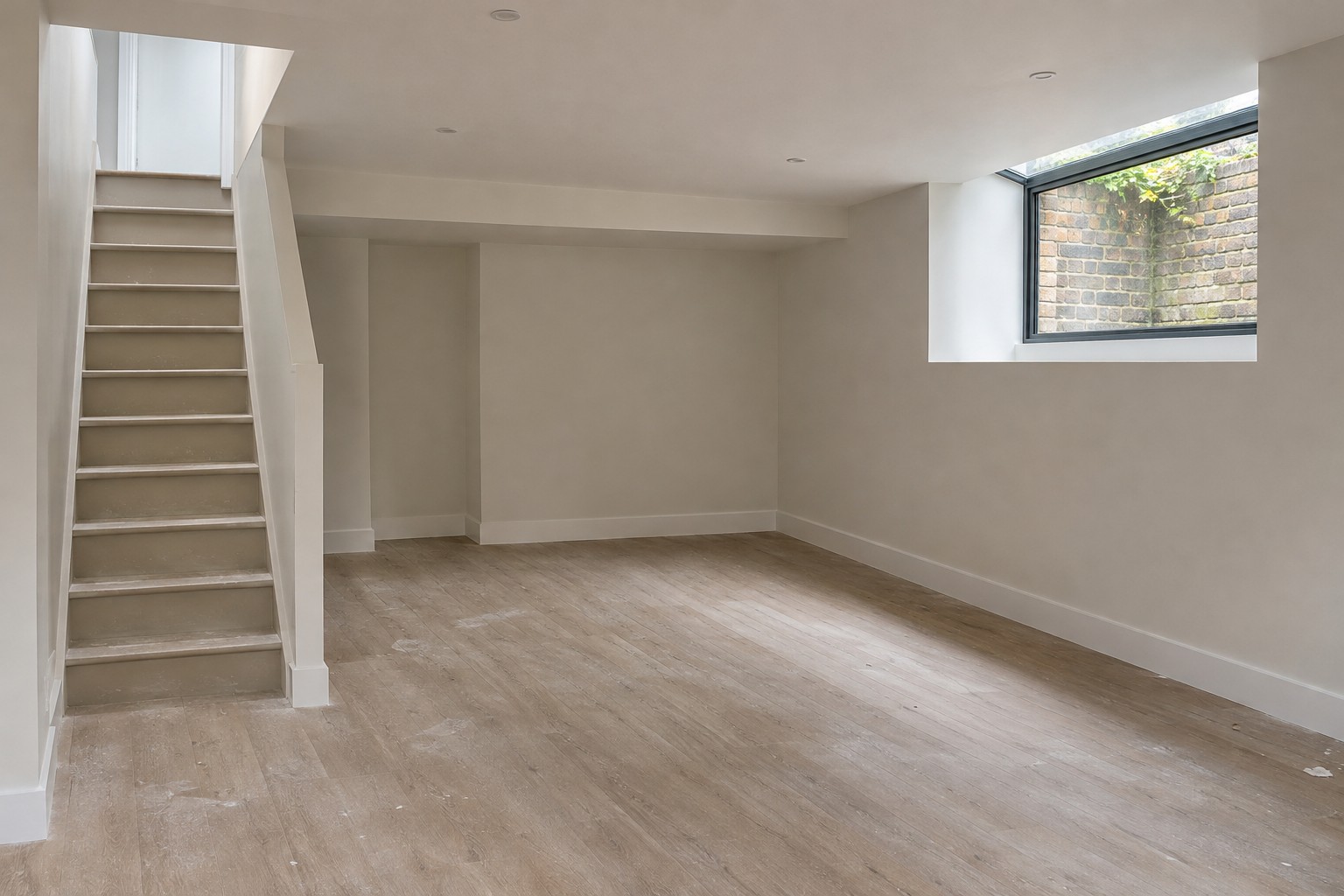
Confirm the space has been released
Ask the project manager which areas are complete, which trades will return and whether any surfaces have temporary protection. Keep a room plan showing the entrance stairs, main room, cupboards, bathroom, plant area and light well. If a trade will cut or drill again, identify the likely dust route and schedule a final pass after that work. Do not call an interim clean the finished handover.
Photograph chips, damp-looking patches, staining and unfinished joins before cleaning. The contractor should explain what belongs to the installed system and what is a snag. A cleaner must not use a strong product to make a moisture mark disappear before its cause is assessed. Keep the photographs with the handover record so the condition of the new work remains clear.
Understand the moisture control boundaries
Many basement conversions use membranes, drainage channels, pumps or specialist coatings. Ask for their operating and care information. Do not lift a cover, block a channel or treat an accessible opening as a place for rubbish collection. An alarm or unusual sound from a pump belongs with the installer. Surface cleaning does not test whether the waterproofing works.
Check whether dehumidification or drying is still part of the construction process. The contractor should say when wall and floor finishes may be wiped or washed. A musty smell or new discolouration should be recorded, not disguised with fragrance. If the room remains damp or mould appears, the cause needs assessment before routine cleaning proceeds in that area.
Map the route for people and equipment
The basement stair may be steep or narrow, with a tight turn at the bottom. Measure whether cleaning equipment can travel safely without striking new paint or railings. Decide where bags and tools will be placed so the only exit remains clear. Identify a water source and a suitable place to handle collected waste; neither should be assumed from the presence of a new bathroom.
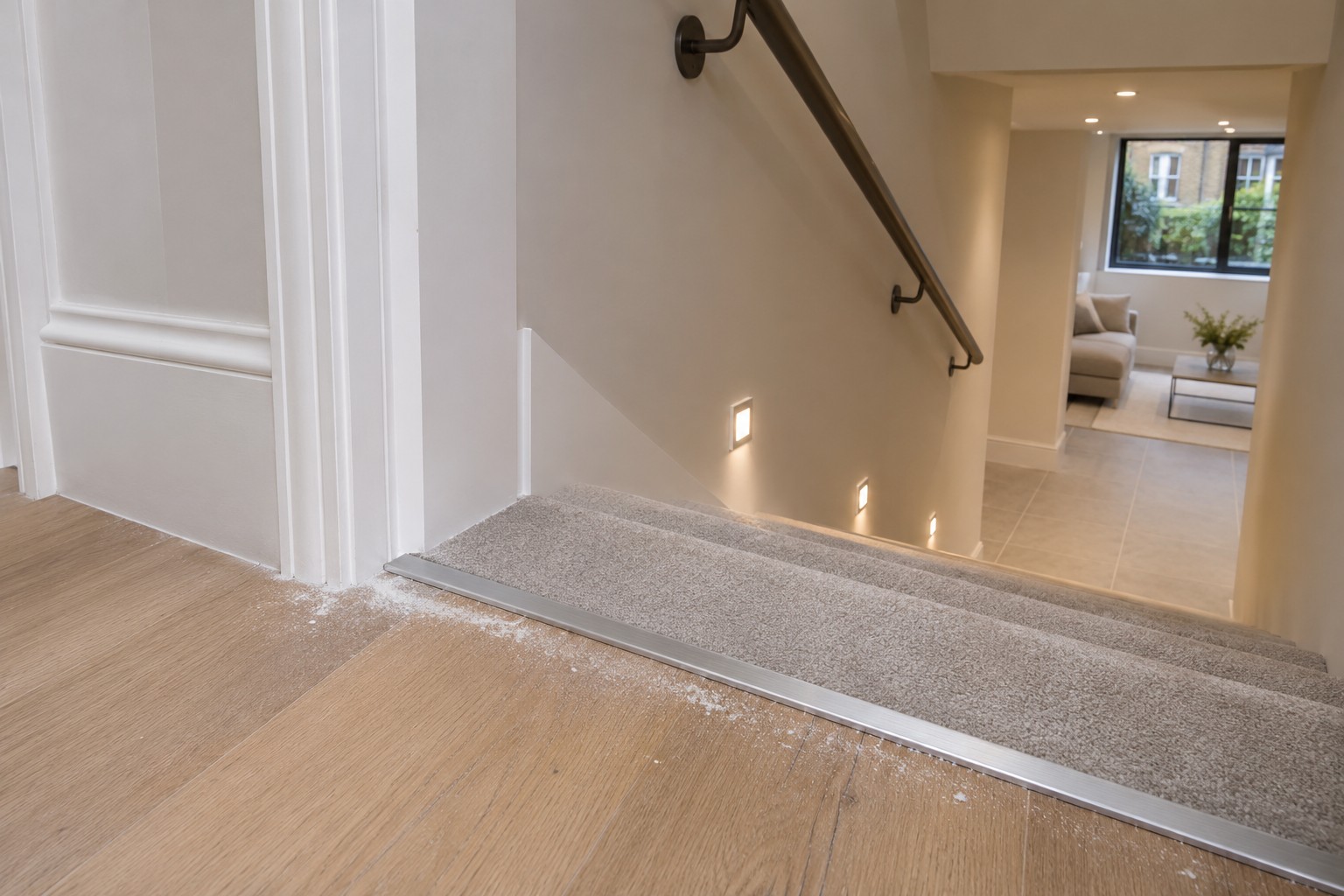
Protect the stair finish according to its installer instructions. Loose grit from the main room can be carried upward, while dust from the ground floor can settle back below. Work from high surfaces down and plan the last pass along the exit route. If other trades still use the stairs, agree a time when the route can stay clear long enough for inspection.
Agree where construction waste ends and cleaning debris begins. Leftover boards, fixings, paint tins and product packaging may contain information or materials the contractor still needs. Set them aside for a decision instead of assuming they belong in household bins. If bulky items must be removed, identify the lifting route and collection point beforehand. Our waste removal service may suit an agreed scope once both parties have identified what can leave the property.
Treat light wells and glazing separately
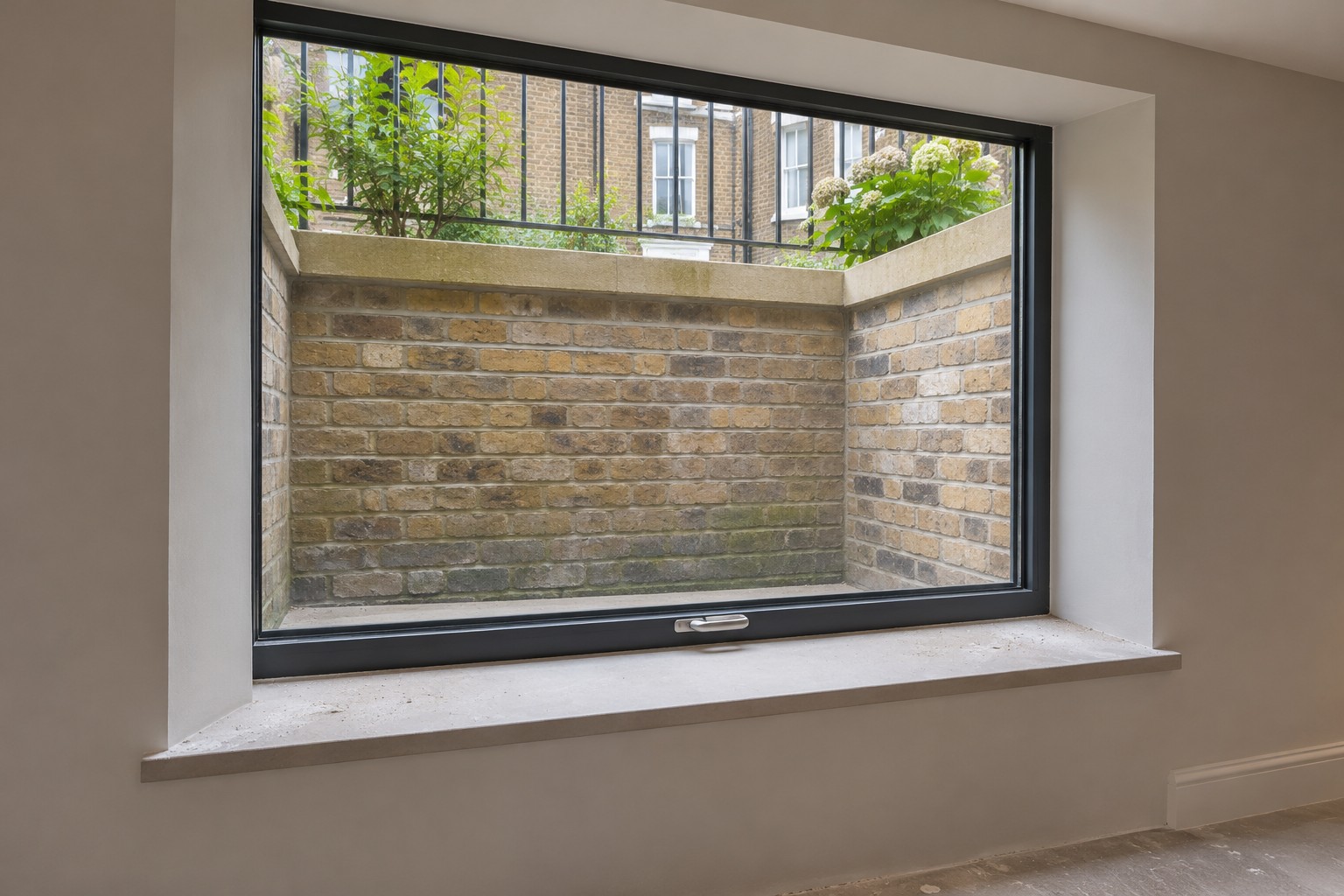
A light well can hold leaves, mortar crumbs and construction offcuts that are different from indoor dust. Check who is responsible for external drainage and access before collecting anything. Do not enter a confined or awkward outside area without an agreed safe method. A clogged drain, broken cover or poorly fitted grille is an installation matter, not a stain to scrub away.
The inside of basement glazing may be accessible while the outside face needs another plan. Confirm any coating or temporary film before cleaning. Our window cleaning service can be discussed when the glazing and light well require a separate access scope. Record scratches or marks between panes for the supplier rather than treating them repeatedly.
Check ventilation and concealed storage
Ask whether the ventilation system has been commissioned and who changes its filters. The accessible outside of a grille may be cleaned as directed, but opening ducts or equipment is not an ordinary room task. If dust appears from a vent after operation, note the location and send it to the installer. Avoid pushing debris farther into a system to make the opening look tidy.
Empty fitted cupboards that are included in the cleaning scope. Check shelves, corners and the back panel for loose dust, packaging and moisture marks. A panel that opens to services should be identified and left to the authorised person. Do not force a drawer or reach behind electrical equipment to find a cleaner sightline. In a basement, that boundary is especially important because systems may be close to storage.
Match finishes to their first-clean instructions
Basement floors may be tile, vinyl, timber or carpet over a specified subfloor. Ask for the exact material and the first-clean directions, including any restrictions around adhesives or sealers. Remove loose grit before a permitted damp stage. Do not flood a floor to chase dust into an edge or drainage point. A new threshold can trap grit and needs its own inspection.
Walls may have paint, plaster, panelling or a specialist moisture-resistant finish. A mark on a coating should be identified before wiping. Keep cleaning products away from unfinished sealant and exposed edges. If the finish changes colour or transfers to a cloth, stop and ask the contractor. The aim is to reveal the completed condition without altering it.
Complete a practical handover check
Inspect the room after surfaces dry and the ventilation has run under normal conditions. Look at the stair, low corners, light well window and storage areas. Separate cleaning remaining from defects, damp questions and areas not yet released. Give the owner a short list with photographs so each issue has a responsible trade or next step.
For a larger project, an after builders cleaning visit can include the basement and the routes affected by its construction once those spaces are ready. Share the room plan, material instructions and system boundaries before agreeing the work. A basement is ready for everyday use when its installed systems have been handed over and the accessible finishes have been checked without disturbing them.