

Renovation journal
Preparing a loft conversion for its first clean
A completed loft conversion can still be a difficult room to clean well. Dust settles on the new staircase, gathers along sloping ceilings and returns when an unfinished access panel is opened. The room may also contain fresh paint, new flooring, roof windows and ventilation that have different handover instructions. Before booking a first clean, walk the route from the entrance to the loft and decide which areas are actually released by the trades.
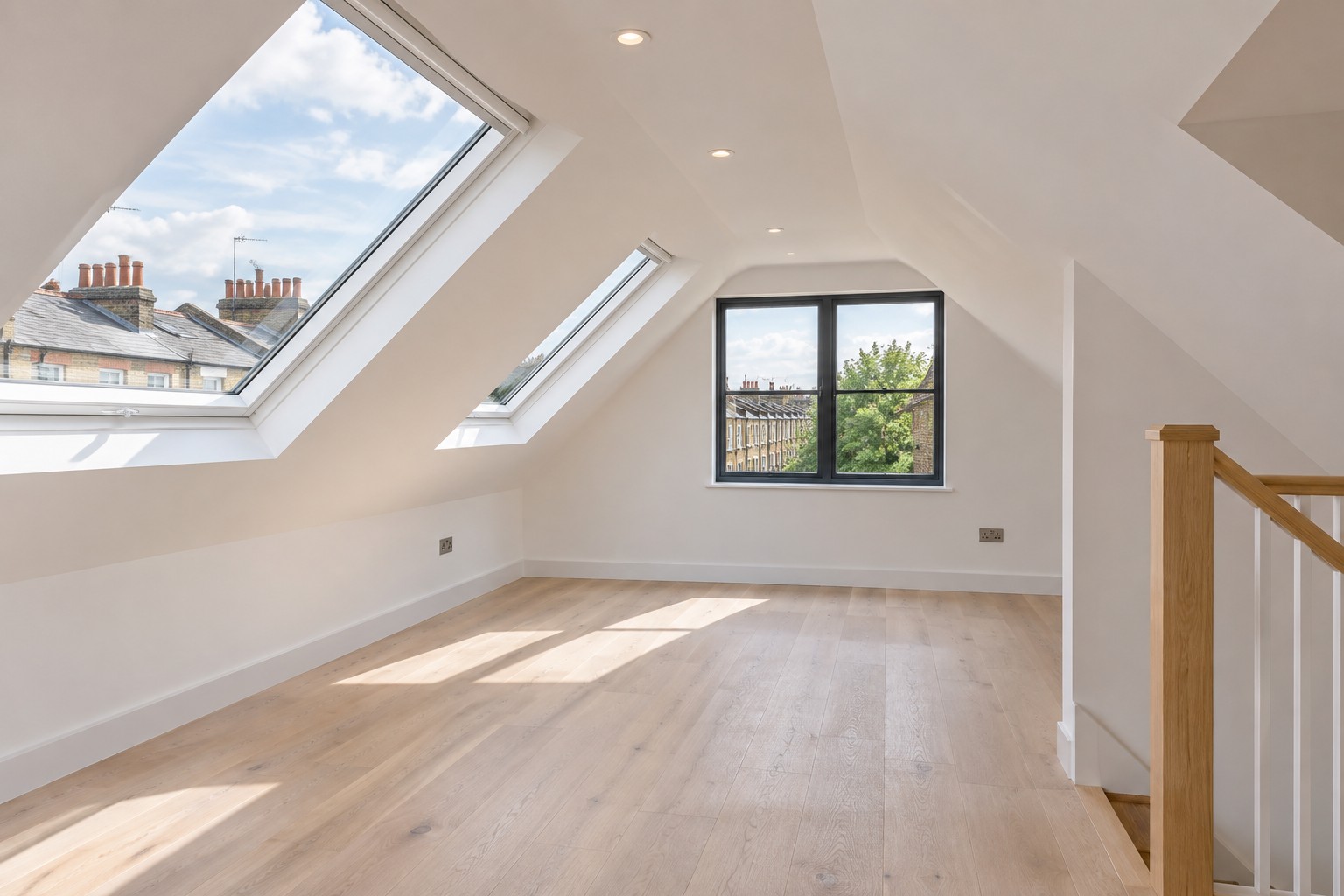
Confirm the conversion is ready for cleaning
Ask the builder for a practical completion list covering the loft room, stairs and any bathroom or storage space created with it. Check whether sanding, cutting, decorating and electrical second fix have ended. If a trade will return, identify the work area and the dust it may produce. A polished loft floor will not stay clean if a joiner still needs to trim a hatch nearby.
Keep product information for flooring, paint, roof glazing, fitted joinery and any wall covering. New finishes can look dry while their first-clean instructions still restrict moisture or products. The contractor should identify sealants, coatings and protected surfaces. Photograph chips, gaps and marks before cleaning so a later condition discussion does not depend on memory.
Follow the access route before the room itself
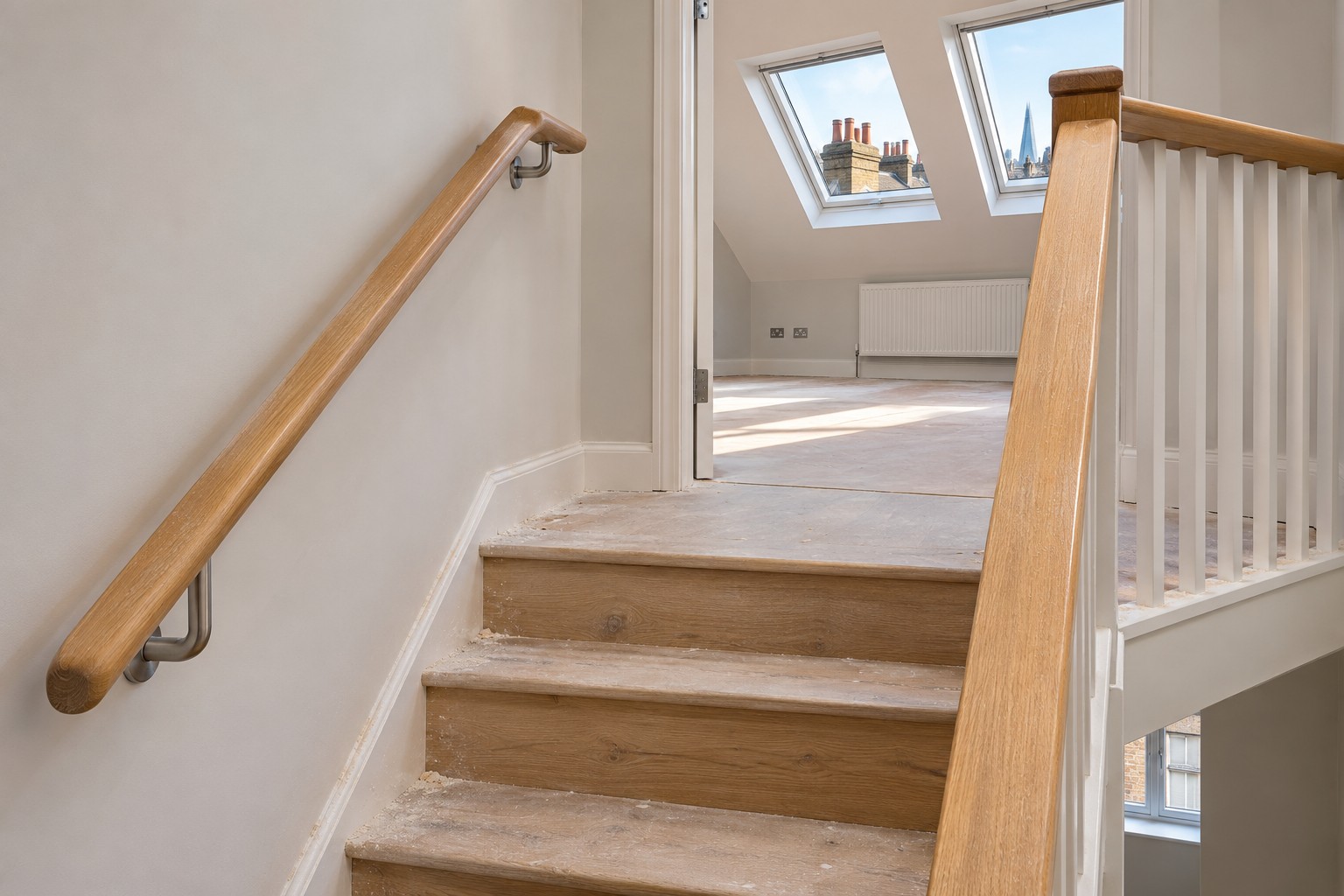
Loft work affects more than the top floor. Dust travels through the stairwell and onto lower landings, especially where materials have been carried through occupied rooms. Map the route used by the builders, including turns, handrails and any temporary floor protection. Decide which lower surfaces are included in the clean and what remains outside the agreed scope.
Check that temporary boards and coverings may be removed. Pulling tape from a newly finished stair tread can be more consequential than wiping the dust above it. Ask the installer how to lift protection and whether the exposed floor is ready for cleaning. Keep pathways clear for equipment and do not block the only route out of the loft with bags or tools.
Inspect slopes, eaves and storage openings
Sloping ceilings make fine dust visible in angled daylight, but the narrow edges below them are easy to miss. Identify accessible ledges, low cupboards and eaves doors before work begins. Open only the storage areas included in the quote and released by the contractor. A hatch concealing services, insulation or unfinished work is not an ordinary cupboard.
Look for loose debris at the junction between the slope and floor. Collect it with equipment suited to the finish, taking care not to rub grit into fresh paint or a soft skirting edge. If an eaves door catches or a panel moves unexpectedly, leave it for the joiner. Cleaning should reveal installation snags, not force the new joinery into place.
Treat roof windows as specialist components
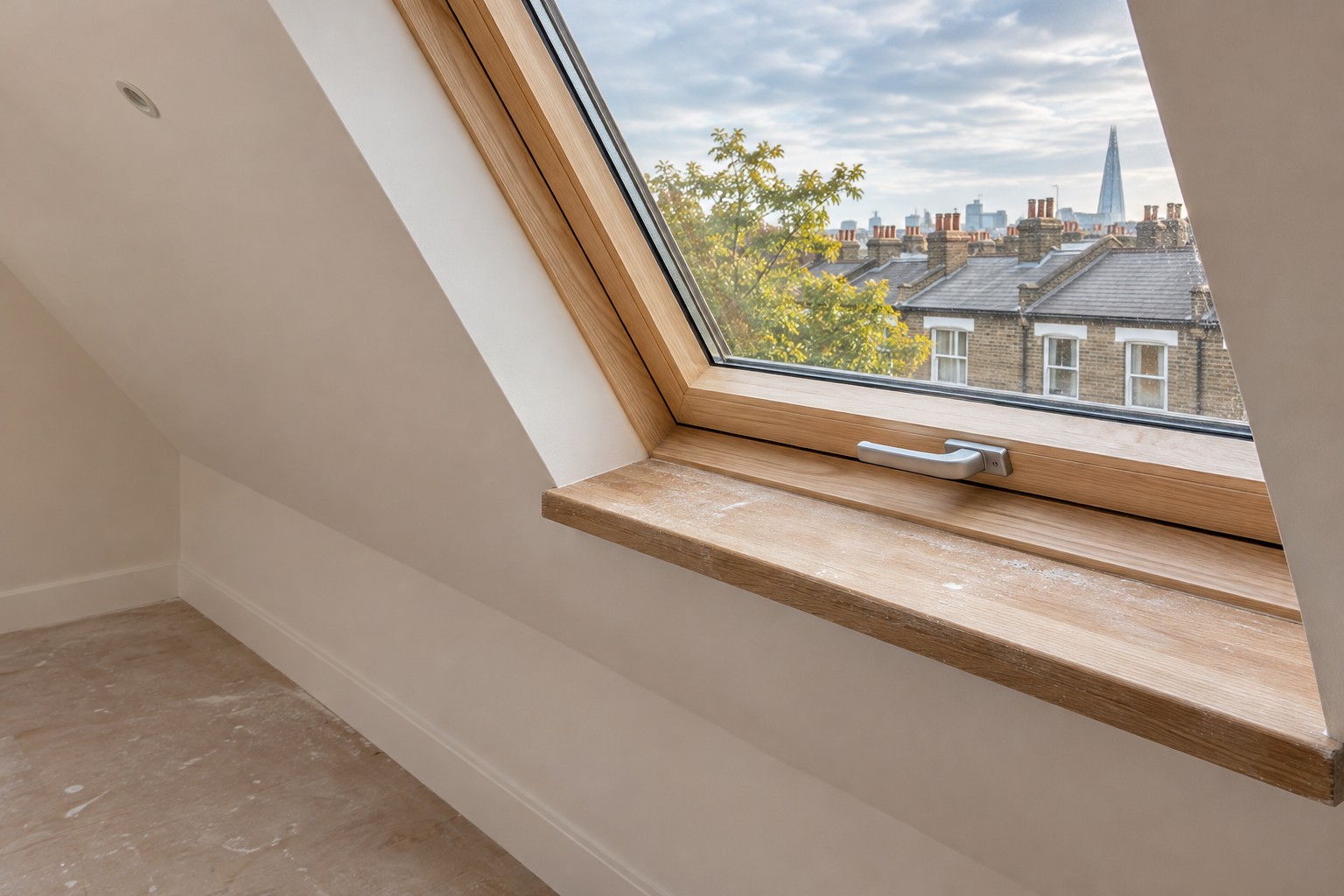
Roof windows combine glass, frames, vents, blinds and sometimes motorised controls. Ask for the manufacturer’s care instructions and confirm whether protective film or labels should remain. A pane above head height may need a separate access method. Do not lean through an opening or stand on furniture to reach an external face during an ordinary room clean.
Inspect the accessible inside of the glass and frame under natural light. Dust in a window recess can fall back onto the sill when the sash moves, so include an agreed check after operation by the responsible person. Our window cleaning service may be appropriate where roof glazing requires its own access plan and scope. Leave glazing defects and operating faults with the installer.
Match the floor method to the new material
A loft may have engineered timber, laminate, carpet, vinyl or tile, sometimes with a different finish on the stair. Obtain the exact product and first-clean instructions rather than using one method throughout. Remove loose construction grit before any permitted damp stage. Check under the edge of a radiator or fitted desk, where cuttings and packaging can remain.
Freshly fitted carpet needs a different inspection from a hard floor. Note loose fibres, marks, adhesive at a threshold and damage from trade traffic. Do not assume a strong machine pass is suitable for every new carpet. Ask the supplier about any initial care limits and record stains that require a decision before treatment.
Keep vents, electrics and heating within their boundaries
The accessible outside of a ventilation grille can be included if the system has been handed over. Duct cleaning, filter commissioning and adjustment belong to the relevant installer or maintenance provider. If debris appears inside a vent, photograph it and ask who is responsible for internal access. Avoid pushing a brush through the opening just to make it look clear.
Check that light fittings, sockets and controls are complete before cleaning near them. Surface dust can be removed using a compatible dry or carefully controlled method, but no cleaner should dismantle an electrical fitting. A newly installed radiator may have a painted or coated surface with specific care instructions; dust behind connected pipework is not a reason to disconnect it.
If the loft will become a bedroom, plan the first clean before bedding, clothes and boxes arrive. Soft belongings catch dust and make cupboards harder to inspect. Allow time for a second look after the heating and ventilation have run, because disturbed particles can settle on surfaces. This is an inspection point, not a promise that all dust can be eliminated in one visit. If it reveals debris from an unfinished cavity or service, send the finding to the contractor with photographs and the room location.
Finish with a room and route handover
Inspect the loft after surfaces are dry and the dust has settled. Look along slopes in daylight, open released storage, check the staircase from both directions and note any residue at thresholds. Separate cleaning left to do from work that the builder must finish. Give the owner a short record of surfaces that could not yet be cleaned and the reason.
For a whole property, an after builders cleaning visit can include the loft and the route affected by construction when those areas are released. Share the room plan, material instructions and any remaining trade dates before agreeing the scope. The useful result is a loft that can be occupied without hidden dust returning from unfinished work, while defects and system checks remain with the people responsible for the conversion.