

Renovation journal
Checking a newly fitted bathroom before its first clean
A bathroom can look complete while its finishes are still being handed over. The basin is fitted, the grout looks dry and the shower screen is in place, yet the installer may still need to adjust a door, finish a seal or confirm when a surface can be wetted. A first clean should make the room usable without turning those unanswered questions into damage. Begin with the handover information, then decide which accessible surfaces are ready for cleaning.

Confirm what has actually been finished
Ask the contractor for a list of outstanding tasks. A final adjustment to the shower door, drilling for an accessory or sealing around the bath can create more dust after the room has been cleaned. Check whether the tiler, plumber and electrician have each finished their work. A photograph of the whole room helps, but take closer images of corners, joins and any marks before changing them.
Keep product information for tiles, sanitaryware, taps, glass and flooring. “Porcelain” or “chrome” is useful but may not describe a coating or a manufacturer restriction. Ask specifically about the first clean, not just the routine care that will apply months later. If a finish is still subject to an installer restriction, label that area and leave it alone for now.
Separate dust, deposits and defects
Loose building dust, a raised adhesive spot and a scratch on a basin need different responses. Collect ordinary loose residue only after the contractor has assessed the work area and finished dusty activities. Do not infer a substance from its colour. If material is unknown or work involving hazardous dust remains, ask the responsible contractor for the appropriate assessment before routine cleaning begins.
Inspect marks in good light before rubbing them. A dull patch on a tap may be residue, a changed coating or a manufacturing issue. Record where it is and ask the installer what product or activity could have caused it. Cleaning can remove some deposits, but it cannot repair a damaged finish. A clean before a condition record can make responsibility harder to establish.
Check grout and sealant before adding water
The presence of grout does not establish that the tiled area is ready for a wet clean. Ask the tiler about the installed grout, any sealer and the manufacturer’s first-clean directions. Note where joints meet a different material, particularly at the shower tray, bath and basin splashback. A stiff brush or acidic product chosen by habit can alter some finishes or joints.
Sealant has its own instructions. If a bead has just been applied or an area is due to be resealed, keep water and cleaning products away until the installer confirms it is ready. Do not use cleaning to test whether a joint is watertight. Report gaps, uneven areas or movement to the installer, and keep the condition photographs with the handover record.
Clean sanitaryware by its finish
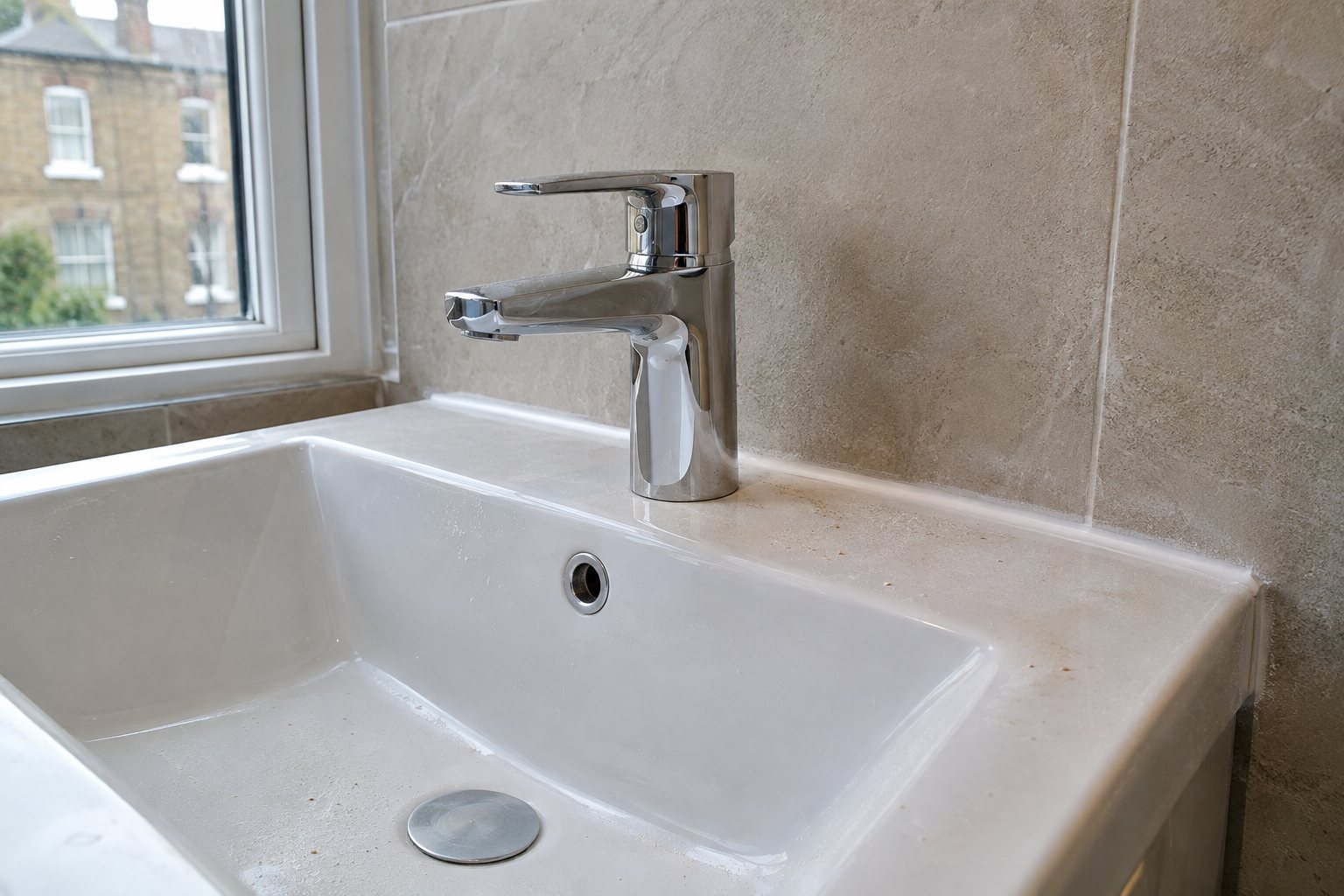
A basin, bath and toilet may be different materials even when they look equally white. Read the care information for acrylic, enamel, ceramic or composite before selecting a cloth or cleaner. First remove loose particles with a method suitable for the surface; grit trapped beneath a cloth can leave a line where the fixture should have a uniform sheen.
Pay attention to overflow openings, plug edges and the exposed base of taps, but do not dismantle fittings to reach hidden dust. Keep water away from unsealed furniture edges and electrical components. If you find a persistent ring, rough spot or chip, stop and identify it before repeating the same action with more pressure. The point of the first pass is to reveal the condition of the installation as well as to clean it.
Treat glass, mirrors and metal as separate surfaces
Ask whether shower glass has a coating and whether a protective film or label should stay in place. A mark on the glass may sit on the surface, within a coating or beneath a layer of protection. Avoid blades unless the glazing supplier expressly permits them for that exact pane. Our window cleaning service can be discussed alongside the bathroom clean when glazing needs a separate scope or access plan.
Mirrors deserve care at their edges, where excessive moisture can reach vulnerable backing. On taps, hinges and towel rails, check the stated finish before trying a descaler, solvent or abrasive pad. Use a clean cloth that does not carry grit from the tiles. Photograph any mark that remains after a gentle compatible pass, rather than trying successive products without knowing what is underneath.

Inspect storage, ventilation and the floor
Empty vanity drawers and cabinets before their interiors are cleaned. Check runners, shelf supports and the back of units for loose dust, packaging or unfinished fitting work. A drawer that catches or a shelf that shifts is an installation issue; it should not be forced as part of cleaning. Leave manuals and spare components together for the owner.
The accessible outside of a ventilation grille may need attention, but filter changes, duct cleaning and commissioning belong to the installer or maintenance provider. Ask whether the system has been tested before normal bathroom use. For the floor, identify its material and the location of any recently sealed perimeter. Collect grit from corners and around the toilet base before using moisture that the finish permits.
Agree a practical handover check
Inspect the room after surfaces have dried. Look at the basin in daylight, view the glass from more than one angle and check the floor edge where people will step out of the shower. Record three categories separately: cleaning still required, an installation snag and a surface waiting for permission to clean. This prevents a cleaner from being asked to solve a defect with a stronger chemical.
If several rooms have just been refurbished, discuss an after builders cleaning visit with a list of released areas and material instructions. Confirm what is included before booking, and keep any later trade visit in the programme. The bathroom is ready for everyday use when the installer has handed over its systems and finishes, and the agreed clean has been checked in the actual light of the room.
Keep a record of the scope, permitted products and the person responsible for unresolved marks. It will help with maintenance and prevent a cleaner from repeating an experiment.